हिंदी
कर्नाटक बोर्ड पी.यू.सी.पीयूसी विज्ञान 2nd PUC Class 12

Which of the following compounds is most reactive towards nucleophilic addition reactions? - Chemistry

Advertisements
Advertisements

प्रश्न

Which of the following compounds is most reactive towards nucleophilic addition reactions?

विकल्प

  • \[\begin{array}{cc}
    \phantom{...}\ce{O}\\
    \phantom{...}||\\
    \phantom{}\ce{CH3 - C - H}
    \end{array}\]

  • \[\begin{array}{cc}
    \phantom{.}\ce{O}\\
    \phantom{.}||\\
    \phantom{}\ce{CH3 - C - CH3}
    \end{array}\]
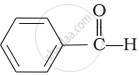
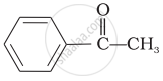
MCQ
Advertisements

उत्तर

\[\begin{array}{cc}
\phantom{...}\ce{O}\\
\phantom{...}||\\
\phantom{}\ce{CH3 - C - H}
\end{array}\]

Explanation:

\[\ce{CH3CHO}\] is most reactive towards nucleophilic addition reactions. Carbonyl compounds are polar with positive charge on carbon atom which is attacked by nucleophiles. Two electron releasing alkyl groups in ketones make carbonless electron deficient than aldehydes. Benzene ring exhibits + R-effect which thereby decreases the ease of nucleophilic addition reaction in benzaldehyde and acetophenone. Hence the reactivity order is

\[\begin{array}{cc}
\phantom{...}\ce{H}\phantom{..........}\ce{H}\phantom{.........}\ce{R}\phantom{.......}\\
\phantom{......}\backslash\phantom{...........}\backslash\phantom{.........}\backslash\phantom{........}\\
\phantom{.......}{\overset{δ+}{\ce{C}} = \overset{δ-}{\ce{O}} > \phantom{..}\overset{δ+}{\ce{C}} = \overset{δ-}{\ce{O}} > \phantom{..}\overset{δ+}{\ce{C}} = \overset{δ-}{\ce{O}}}\phantom{}\\
\phantom{.......}/\phantom{...........}/\phantom{...........}/\phantom{........}\\
\phantom{.....}\ce{H}\phantom{..........}\ce{R}\phantom{..........}\ce{R}\phantom{.........}\\
\end{array}\]

shaalaa.com
  क्या इस प्रश्न या उत्तर में कोई त्रुटि है?
अध्याय 12: Aldehydes, Ketones and Carboxylic Acids - Multiple Choice Questions (Type - I) [पृष्ठ १६८]

APPEARS IN

एनसीईआरटी एक्झांप्लर Chemistry [English] Class 12
अध्याय 12 Aldehydes, Ketones and Carboxylic Acids
Multiple Choice Questions (Type - I) | Q 2 | पृष्ठ १६८

संबंधित प्रश्न

What is meant by the following term? Give an example of the reaction in the following case.

Cyanohydrin


What is meant by the following term? Give an example of the reaction in the following case.

Schiff’s base


Predict the products formed when cyclohexanecarbaldehyde reacts with the following reagents.

Excess ethanol and acid


How will you bring about the following conversion in not more than two steps?

Bromobenzene to 1-Phenylethanol


Complete the synthesis by giving missing starting material, reagent or product.


How are the following compounds prepared?

acetophenone from benzene


Write balanced chemical equations for action of ammonia on - acetone


What is the action of the following reagents on ethanoic acid?

1) `LiAlH_4"/"H_3O^+`

2) `PCl_3 , "heat"`

3) `P_2O_5, "heat"`


Write the structure of Phenylmethanamine.


Which one of the following gives only one monochloro derivative?


The product "P" in the above reaction is:


The increasing order of the following compounds towards HCN addition is:

(i)
(ii)
(iii)
(iv)

In the following reaction

\[\ce{Carbonyl compound + MeOH <=>[HCl] acetal}\]

Rate of the reaction is the highest for ______.


Aldehydes and ketones react with hydroxylamine to form ______.


Out of p-tolualdehyde and p-nitrobenzaldehyde, which one is more reactive towards nucleophilic addition reactions, why?


Draw structure of the following derivative.

The ethylene ketal of hexan-3-one


Draw the structure of the following derivative.

Acetaldehydedimethylacetal


Draw the structure of the following derivative.

The ethylene ketal of hexan-3-one


Draw the structure of the following derivative.

Acetaldehydedimethylacetal


Draw structures of the given derivatives.

The ethylene ketal of hexan-3-one


Share
Notifications

Englishहिंदीमराठी


      Forgot password?
Use app×