Advertisements
Advertisements
प्रश्न
What are amines?
Advertisements
उत्तर
Amines are the organic derivatives of ammonia in which one, two or all the three hydrogens atoms attached to nitrogen are replaced by equivalent number of same or diferent alkyl or aryl group.
APPEARS IN
संबंधित प्रश्न
Write balanced chemical equations for action of ammonia on - formaldehyde
Arrange the following in the increasing order of their reactivity towards nucleophilic addition reaction:
C6H5COCH3, CH3-CHO, CH3COCH3
Write the structures of the main products when acetone (CH3 − CO − CH3) reacts with the following reagent :
H2N − NHCONH2/H+
Write the products formed when CH3CHO reacts with the following reagents : HCN
Predict the product of the following reaction:

Predict the product of the following reaction:
\[\begin{array}{cc}
\phantom{..............}\ce{O}\\
\phantom{..............}||\\
\ce{R - CH = CH - CHO + NH2 - C - NH - NH2 ->[H+]}\end{array}\]
Predict the products formed when cyclohexanecarbaldehyde reacts with the following reagents.
Semicarbazide and weak acid
Predict the products formed when cyclohexanecarbaldehyde reacts with the following reagents.
Excess ethanol and acid
Acetaldehyde, Acetone, Di-tert-butyl ketone, Methyl tert-butyl ketone (reactivity towards HCN)
Complete the synthesis by giving missing starting material, reagent or product.

Write balanced chemical equations for action of ammonia on - acetaldehyde
Which of the following is the correct representation for intermediate of nucleophilic addition reaction to the given carbonyl compound (A):
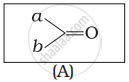
(i) 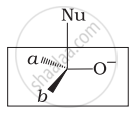
(ii) 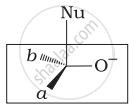
(iii) 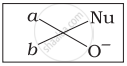
(iv) 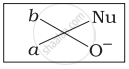
Reaction of aqueous sodium hydroxide on chlorobenzene gives which of the following products?
The pH of blood does not appreciably change by a small addition of acid or base because
Which one of the following gives only one monochloro derivative?
Acetaldehyde and acetone differ in their reaction with
What happens when propanone is treated with CH3MgBr and then hydrolysed?
Which of the following is most reactive in nucleophilic addition reactions?
Draw structures of the given derivatives.
The ethylene ketal of hexan-3-one
Draw structure of the following derivative.
The ethylene ketal of hexan-3-one
Draw structures of the following derivative.
The ethylene ketal of hexan-3-one
Draw the structure of the following derivative.
The ethylene ketal of hexan-3-one
Draw structures of the following derivatives.
Acetaldehydedimethylacetal
Draw structure of the following derivative.
The ethylene ketal of hexan-3-one
Give an example of the reaction in the following case.
Oxime
Give an example of the reaction in the following case.
Imine
