मराठी
कर्नाटक बोर्ड पी.यू.सी.पीयूसी विज्ञान 2nd PUC Class 12

Which of the following compounds is most reactive towards nucleophilic addition reactions? - Chemistry

Advertisements
Advertisements

प्रश्न

Which of the following compounds is most reactive towards nucleophilic addition reactions?

पर्याय

  • \[\begin{array}{cc}
    \phantom{...}\ce{O}\\
    \phantom{...}||\\
    \phantom{}\ce{CH3 - C - H}
    \end{array}\]

  • \[\begin{array}{cc}
    \phantom{.}\ce{O}\\
    \phantom{.}||\\
    \phantom{}\ce{CH3 - C - CH3}
    \end{array}\]
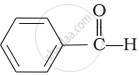
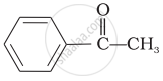
MCQ
Advertisements

उत्तर

\[\begin{array}{cc}
\phantom{...}\ce{O}\\
\phantom{...}||\\
\phantom{}\ce{CH3 - C - H}
\end{array}\]

Explanation:

\[\ce{CH3CHO}\] is most reactive towards nucleophilic addition reactions. Carbonyl compounds are polar with positive charge on carbon atom which is attacked by nucleophiles. Two electron releasing alkyl groups in ketones make carbonless electron deficient than aldehydes. Benzene ring exhibits + R-effect which thereby decreases the ease of nucleophilic addition reaction in benzaldehyde and acetophenone. Hence the reactivity order is

\[\begin{array}{cc}
\phantom{...}\ce{H}\phantom{..........}\ce{H}\phantom{.........}\ce{R}\phantom{.......}\\
\phantom{......}\backslash\phantom{...........}\backslash\phantom{.........}\backslash\phantom{........}\\
\phantom{.......}{\overset{δ+}{\ce{C}} = \overset{δ-}{\ce{O}} > \phantom{..}\overset{δ+}{\ce{C}} = \overset{δ-}{\ce{O}} > \phantom{..}\overset{δ+}{\ce{C}} = \overset{δ-}{\ce{O}}}\phantom{}\\
\phantom{.......}/\phantom{...........}/\phantom{...........}/\phantom{........}\\
\phantom{.....}\ce{H}\phantom{..........}\ce{R}\phantom{..........}\ce{R}\phantom{.........}\\
\end{array}\]

shaalaa.com
  या प्रश्नात किंवा उत्तरात काही त्रुटी आहे का?
पाठ 12: Aldehydes, Ketones and Carboxylic Acids - Multiple Choice Questions (Type - I) [पृष्ठ १६८]

APPEARS IN

एनसीईआरटी एक्झांप्लर Chemistry [English] Class 12
पाठ 12 Aldehydes, Ketones and Carboxylic Acids
Multiple Choice Questions (Type - I) | Q 2 | पृष्ठ १६८

संबंधित प्रश्‍न

What is meant by the following term? Give an example of the reaction in the following case.

Oxime


Give plausible explanation for the following:

Cyclohexanone forms cyanohydrin in good yield but 2, 2, 6 trimethylcyclohexanone does not.


Write the structure of Phenylmethanamine.


Give a simple chemical test to distinguish between 


Write the main product formed when propanal reacts with the following reagents: 
H2N- NH2  followed by heating with KOH in ethylene glycol.


Reaction of aqueous sodium hydroxide on chlorobenzene gives which of the following products?


The pH of blood does not appreciably change by a small addition of acid or base because


Grignard reagent on reaction with acetone forms.


A Idol condensation will not be observed in


Paraldehyde is formed as a result of polymerisation:-


Which among the following is most reactive to give nucleophilic addition?


Write the name of product formed, when acetone is treated with 2, 4-dinitrophenyl hydrazine.


In the following reaction

\[\ce{Carbonyl compound + MeOH <=>[HCl] acetal}\]

Rate of the reaction is the highest for ______.


The product of following reaction is

\[\ce{CH3 - CH = CH - CH2 - CHO ->[i) LiAlH4][ii) H3O+]}\] ______?


Which of the following is most reactive in nucleophilic addition reactions?


Draw structures of the following derivative.

The ethylene ketal of hexan-3-one


Draw structures of the following derivatives.

Acetaldehydedimethylacetal


Draw structure of the following derivative.

The ethylene ketal of hexan-3-one 


Share
Notifications

Englishहिंदीमराठी


      Forgot password?
Use app×