Advertisements
Advertisements
Question
What is digestion? Why do only animals require a digestive system?
Advertisements
Solution
Digestion is the process of breaking down complex food materials into simpler substances by the action of enzymes.
Need for a digestive system:
(i) Large complex molecules like carbohydrates, proteins and lipids need to be broken down to simpler molecules. These simpler molecules can then be absorbed and utilized by the body.
(ii) The breaking down of complex food molecules into their simpler form is possible only through the process of digestion.
(iii) During digestion, large complex macromolecules present in food are converted into small simpler molecules, which can be simplified in different compartments of digestive system only.
APPEARS IN
RELATED QUESTIONS
Where is digested food absorbed into blood in human body?
Gastric juice contains
Write the function of the following in the human alimentary canal:
Bile juice
Define the following term:
assimilation
State the four ways in which saliva is useful to us.
Write true or false for the below statement. Rewrite the false statements correctly.
The pancreas secretes bile juice
Answer in detail.
Name the four types of teeth and their functions
Define with examples: Carnivores
Define digestion.
Mark odd one in the series:
Name the organs of the digestive system
Name the salivary glands in our mouth?
State whether true or false. If false, correct the statement.
During digestion, proteins are broken down into amino acids.
(i)______ and (ii)______ form the common bile duct.
The contraction and expansion movement of the walls of the food pipe is called ____________.
______ is a major organ for the digestion of food materials.
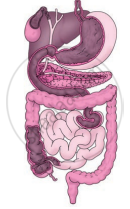
Label the following parts in Figure and name them.
- The largest gland in our body.
- The organ where protein digestion starts.
- The organ that releases digestive juice into the small intestine.
- The organ where bile juice gets stored.
______ is the vestigeal organ in human.
Urea is a main excretory product in humans. How is it formed?
