Advertisements
Advertisements
Question
The diagram given below represents the results of an experiment conducted on two freshly taken leafy shoots of a herbaceous plant. The lower ends of the shoots dip in ordinary water.
(i) What is the aim of the experiment?
(ii) Some parts of the stem in both the shoots have been removed. Name the conducting tissue in shoot (a) and in shoot (b) that has been removed.
(iii) What are the results of this experiment?

Advertisements
Solution
(i) The aim of the experiment is to show that conduction of water in plants takes place through xylem.
(ii) In shoot, (a) phloem has been removed. In shoot (b), xylem has been removed.
(iii) In shoot (b), xylem has been removed so the leaves are wilted. But in shoot (a), xylem has not been removed so the leaves are turgid.
APPEARS IN
RELATED QUESTIONS
The phenomenon of loss of water through a cut stem or injured part of plant is called ___________.
What part is played by the following in the uptake of water into the root hair?
The cell wall
Draw a cross-section of root showing association of soil particles with root hairs.
Given below is an experimental demonstration.
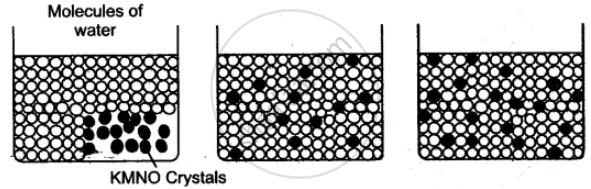
(i) Which phenomenon has been demonstrated in the given figure?
(ii) What is the solute and what is solvent in the above experiment?
(iii) Define the phenomenon in Q. (i) above.
(iv) Give one example from your daily life experiences based on this principle.
Multiple Choice Question:
In soil, water available for absorption by root is ______.
Outer layer of root hair is made up of ________.
Write a note on the morphological structure of the root.
Part of the root that absorbs water from the soil is ______.
Roots of the plants absorb water from the soil through the process of ____________.
