Advertisements
Advertisements
Question
Discuss the following statement in groups of two pairs, each pair in a group taking opposite points of view.
The story is called ‘The Adventure’. Compare it with the adventure described in ‘We’re Not Afraid to Die...’
Advertisements
Solution
The story is called "The Adventure" Compare it to the adventure described in "We Are Not Afraid to Die." The underlying theme of both the stories, "The Adventure" and "We Are Not Afraid. to Die" is the same. However, the execution is very different. One deals with the adventure in a real life situation and the other one is about the adventure that was mentally experienced. In the story, "We Are Not Afraid to Die", the characters take a hazardous sea voyage, to overcome the odds and survive. Whatever the dangers were, they were very real. In the story, The Adventure", the protagonist does not embark upon an adventurous journey. His collision with the truck triggers his mind to travel to a world, which is different from the world that he lives in.
APPEARS IN
RELATED QUESTIONS
Answer any four of the following question in 30 – 40 words each:
(a) ''What a thunderclap these words were to me!'' (Franz). What were those words and what was their effect of Franz?
(b) Why did Douglas fail to come to the surface of the pool as he hoped to?
(c) What was Kamala Das's childhood fear?
(d) How is the Earth a source of life when all seems dead on it? Keeping Quiet)
(e) How does Mr. Lamb react when Derry enters his garden?
(f) Which problem did the Maharaja face when he had killed seventy tigers? How did he solve it?
What strategy do chimps use to open hard shells and fruits ?
Read the passage carefully and complete the activities given below :
A1 True or False
A2 Mention the two things that were found when the tall grass was hacked.
A3 The narrator prayed that Rex should not make any sudden movements meets. Explain giving reasons.
Underline the important words and phrases.
Tick the statement that is true.
Rajendra Desphande was a historical event.
This play, written in the 1950s, is a humorous and satirical depiction of the status of the mother in the family.
Do you think it caricatures these issues or do you think that the problems it raises are genuine? How does the play resolve the issues? Do you agree with the resolution?
What do you think is the message that the author seems to convey through the story?
What were the voices that Paul heard? Did they lead him to success in the real sense?
Examine the communication channels in the story between Paul's mother and his uncle.
Comment on the symbols used in ‘A Munda Song’. What aspect of the tribal worldview do they reflect?
Name the world-famous personality who reached great heights despite of humble circumstances.
Make a list of the preparations made for an assault on Tiger Hill.
Throughout the last week of June 1999, 18 Grenadiers ____________.
The mother was working, when the Swallow brought the yellow jewel.
Answer the given question in your own words.
To whom did the Prince gift the two gemstones of his eyes?
Pick out a word from the poem to complete the sentence meaningfully.
Stephen Hawking was a ______ (famous) Astrophysicist.
Read the lesson and name the following.
The First surgeon to perform operations ______
Draw a picture of the scene described in the poem.
Choose the odd one out :
Bottom, Moth, Mustardseed, Cobweb.
Write a short note on the following:
The living world on Rakata
Enact the ad by playing the roles of Didi and her relatives. One more child acts as the salesman of ‘Hemagauri’ and presents the text given in white letters in pink bubbles.
Find the pairs of rhyming words used at the end of the lines in the poem.
Correct the following sentence using facts from the passage.
The great heroes avoided one another.
Read the following:
- Charging along like troops in a battle.
- Fly as thick as driving rain.
Using your imagination, write one or two comparisons each with -
- like ______
- as ______ as
Find three lines, that contain images of nature in the autumn season.
At night
- ______________________
- ______________________
- ______________________
Find one example of the following given below from the poem: Metaphor
Rewrite in your own words.
One event from the story.
Which lines are repeated in the poem? What do they mean?
How does the following character in the story live up to their name? Provide points from the story.
Taffimai Metallumai
Imagine the following and write about it in your own words:
What the world looks like to a fish.
What difficulties do the people in the play face in the morning?
Guess the meaning of the following word.
finely
Do you think that the young seagull’s parents were harsh to him? Why?
Have you ever seen a bird making its first-ever attempt to fly?
Rearrange the following sentences in a coherent order.
- He ordered Ariel to torment the inmates of the ship.
- Miranda was attracted by Ferdinand and had more concern towards him.
- Prospero and Miranda came to an island and lived in a cave.
- Prospero forgave them and restored his dukedom, Milan.
- He raised a violent storm in the sea to wreck the ship of his enemies.
- Prospero wanted to test Ferdinand and gave a severe task to perform.
- Using his powers, Prospero released the good spirits from large bodies of trees.
- The King of Naples, and Antonio the false brother, repented the injustice they had done to Prospero.
- Ariel was instructed to bring Ferdinand, the prince of Naples to his cave.
- Ferdinand was the second human whom Miranda had seen after her father
What made the reporter gaze at the author?
What did Aravind confess?
‘ If only her son were there, it would have been a different kind of Eid’! What had happened to her son?
Write the name of the toy against the picture.

Sea turtles come to rest on land.
Rearrange the following jumbled sentences in the correct order.
- Payal’s house was a home for abandoned animals.
- It was a small ball of brown and grey.
- She found an owlet in one corner.
- Payal’s mother picked her up gently.
- Payal’s mother opened the carton.
- One day they got a carton.
Grandmother had wanted the peepul tree cut down because______.
What does the peepul do?
A tiny bird looked for a place to lay her eggs.
What should we do to save the Earth?
Where is Jaswantgarh located?
Why did the bird catcher need fire?
Write the correct form for the present perfect tense.
They ______ (start) playing.
Answer using Yes or No and pick sentence from the story to support your answer.
Was Robinson alone in the island?
The old man put _____ on the mouth of the gourd.
Fill in the blank
Moles dig ______ to catch earth worms.
We shouldn't ______ ever.
Name the animal and sound it makes.
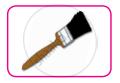
Name the pictures and match it with the rhyming words.
 |
dancer | |
 |
floor | |
 |
will | |
 |
rush |
How can we do our work better?
How did Miss Sullivan help Helen?
What was the most important thing that Helen finally understood?
Being a bachelor, the stranger had no patience with children.
Arrange a ‘Jokes’ session in the classroom where each student tells a joke. The jokes must be told in English.
