Advertisements
Advertisements
Question
Tick the statement that is true.
Rajendra Desphande was a historical event.
Options
True
False
Advertisements
Solution
Rajendra Deshpande was a historian. (True)
APPEARS IN
RELATED QUESTIONS
Answer any four of the following in 30−40 words each:
(a) What did garbage mean to the children of Seemapuri and to their parents?
(b) How did Rajkumar Shukla establish that he was resolute?
(c) 'Life is what it is all about;...' How is keeping quiet related to life?
(d) Mention any four things of beauty that add joy to our life.
(e) The manner of his (the Tiger King's) death is a matter of extraordinary interest. Comment.
(f) In what condition did Dr. Sadao find the American soldier at the seashore?
Notice the kind of English Tsetan uses while talking to the author. How do you think he picked it up?
Indian society has moved a long way from the way the marriage is arranged in the story. Discuss.
What does the phrase 'as if he were on needles' mean? Can you think of another phrase with a similar meaning substituting the word 'needless'?
Considering that this is an excerpt from a lecture, how does the commentary provided by the speaker string the arguments together?
What do you understand of the three voices in response to the question 'What does a novel do' ?
How does the poet tossed back from ecstasy into despair?
Fill in the blank.
Moru Dada wanted to spray __________ on the moong crop.
Name the world-famous personality who reached great heights despite of humble circumstances.
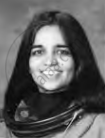
How do stories/biographies of such famous people help youngsters?
Answer in your own words.
How did the plants react to the fast rhythmic music?
complete the following sentence.
Ajoy reported about ________________.
Write 3 to 4 lines about the following in your own words.
First Neurosurgeon
Honey-bees live an organized life like human beings. Discuss what work the following honey-bees do, as per the poem. Write it down in your own words, in your notebook.
- King/Emperor bee
- Magistrate bees
- Merchant bees
- Soldier bees
- Mason bees
- Civilian bees
- Porter bees
- Judge bee
Read the description of the Kabaddi match and do the following:
Write, in your own words, what happened in the second half.
Differentiate between characters and characterization.
The characters are a part of the stage setting. How does this reflect when the characters of the play range from the Duke and the Indian boy to the faeries?
Explain the following statement with reference to the context.
Because your father can't do without my help.
What are the games/play activities, entertainments that use a wheel?
Draw word webs for the following. Begin with the given word and go on writing as many other words associated with it, as you can. Use these words to write other related words to form a word web.

Read the following sentence aloud. Write who said it and to whom.
“What! ... how ! ... That’s impossible! ”
Many changes had occurred on the earth in the hundred years before Sayali’s trip to the moon.
Find three lines, that contain images of nature in the autumn season.
At night
- ______________________
- ______________________
- ______________________
What do you like better - the original poem or the parody? Why?
Find the words that mean the following from the first stanza.
- Gold hammered into a flat, thin shape: ______
- show off proudly: ______
- tilt, move at an angle: ______
- across, especially in a slanting direction: ______
Read: ‘The Open Window’ by H. H. Munro (Saki).
Find out when and where we get strawberries in Maharashtra.
Find the meaning of the following word.
abused
Name the following.
Not comfortable with the wet ground.
Write other meaningful words that begin/end with springtime.
What did the important-looking man tell Gulliver?
Guess the meaning of the following word in the poem.
lined
What does the poet want to know from the goldfish?
What conclusions did grandfather jump to when he saw the cops?
Read the following line from the poem and answer the question given below.
Nothing goes right with the folks you meet
Down on that gloomy Complaining Street.
- What is the opinion about the folks you meet down the street?
- What does the word ‘gloomy’ mean here?
Why did Dr. Ashok’s cousin call him?
What is inclusion? Why is it important?
Write the names of the characters in this story.
1. ______ 2. ______ 3. ______
Look at the number pattern. Fill the blank in the middle of the series or end of the series.
CMM, EOO, GQQ, ______, KUU
What was the reaction of the inhabitants?
Read the line and answer the question.
And the wheel’s kick and the winds song and the white sail’s shaking
What according to the poet are the pleasures of sailing?
Write a summary based on the flow chart.
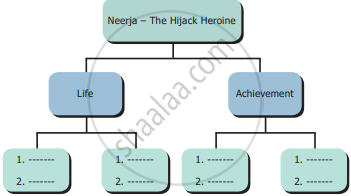
Ridleys come to lay their eggs in the month of January.
Listen to your teacher read the first part of the story. Many things described in the story can be seen in the picture. Find and name them.
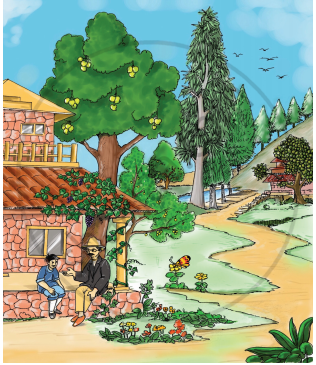
Write a paragraph about 50 words describing the scenes that the poet passed by.
Read the lines and answer the questions given below.
Spring is pretty
but short and sweet
when you can smell the grass
from your garden seat
- How does the poet describe the spring season?
- Which line tells you that the garden is fresh?
- Who does ‘you’ refer to?
Match the planet with its feature.
| 1. | Mars | blue ice giant |
| 2. | Saturn | red storm |
| 3. | Jupiter | red planet |
| 4. | Neptune | ring and moons |
Where is the poet going in the dream?
The scene is set inside a thick forest and it is nearing dusk. Relate this time frame with the behaviour of the animals in the forest.
Look at the picture and Choose the correct word.

Choose the correct option from the given homophones.
I saw a ______ on the flower.
Write the rhyming word.
Tree - ______.
Fill in the blank
Do you like apple______ orange?
Who were the guest to Kani’s home?
If we didn’t have boundaries, we don’t need _______.
Fill in the blank with rhyming word.
larder- ______
Whose word are these? Name the character.
“We do not have money to buy anything.”
Why did Bala go to Chennai with his father?
What does the earth do when the day is over?
What did the carpenter buy?
