Advertisements
Advertisements
Question
Name the organisms belonging to the second and the fourth trophic levels in the food chain comprising the following :
Frogs, Plants, Snakes, Hawk, Insects
Advertisements
Solution
The second trophic level consists of insects, and the fourth trophic level consists of snakes.
APPEARS IN
RELATED QUESTIONS
List two important roles play in the environment by decomposers.
What are trophic levels? Give an example of a food chain and state the different trophic levels in it.
Explain how the pesticides enter a food chain and subsequently get into our body.
Fill in the following blank with suitable word :
Decomposer organisms are..........in their action.
Name one decomposer.
What is a trophic level?
A student went to study a local pond. In one part of the pond she noticed tadpoles scraping at some pond weed. In another part she saw a water beetle holding a tadpole in its jaws.
(a) Construct a food chain for the pond.
(b) How many links are there in this chain?
Which of the following group of organisms are not constituents of a food chain?
- grass, lion, rabbit, wolf
- plankton, man, fish, grasshopper
- wolf, grass, snake, tiger
- frog, snake, eagle, grass, grasshopper
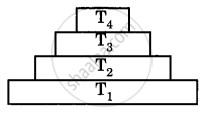
In the figure given alongside, the various trophic levels are shown in the form of a pyramid. At which trophic level the maximum energy is available?
In the food chain comprising of a snake, grass, insect, and frog, the secondary consumer is :
(a) insect
(b) snake
(c) frog
(d) grass
The sea water contains water beetles, tadpole, fish and weeds.
- Write a food chain comprising all the given organisms.
- Which organisms in the food chain are (i) herbivore, and (ii) carnivores?
- Which organisms are (i) predators, and (ii) prey?
- Which organisms can trap solar energy to make food?
- Which organism is a secondary consumer?
A food chain occurring in the sea which provides food for many people can be written as :
phytoplankton → zooplankton → X → Y
Name two zooplanktons.
Name the process in which a harmful chemical enters the food chain and gets concentrated at each trophic level.
Why are there rarely more than five links (or five organisms) in a food chain?
Will the levels of biological magnification be different at different levels of the ecosystem?
If the energy available at the producer level in a food chain is 150 J, how much energy will be transferred to : tertiary consumer?
(a) 15 J
(b) 10 J
(c) 1.50 J
(d) 0.15 J
Green plants utilize ______ percent of sun’s energy to prepare their food by the process of photosynthesis.
If a harmful chemical enters a food chain comprising peacocks, plants, rats and snakes, which of these organisms is likely to have the highest concentration of the chemical in its body? Justify your answer. Name the process involved and define it.
Which organism in the food chain Grass → Insects → Thrush → Sparrow Hawk is classified as a tertiary consumer?
