Advertisements
Advertisements
Question
Find the second order derivative of the function.
tan–1 x
Advertisements
Solution
Let, y = tan–1 x
Differentiating both sides with respect to x,
`dy/dx = d/dx tan^-1 x`
= `1/((1 + x^2))`
Differentiating both sides again with respect to x,
`(d^2 y)/dx^2 = d/dx 1/((1 + x^2))`
= `((1 + x^2) d/dx (1) - (1) d/dx (1 + x^2))/(1 + x^2)^2`
= `((1 + x^2) xx 0 - 1 xx (0 + 2x))/(1 + x^2)^2`
= `(0 - 2x)/(1 + x^2)^2`
= `(-2x)/(1 + x^2)^2`
APPEARS IN
RELATED QUESTIONS
If x = a sin t and `y = a (cost+logtan(t/2))` ,find `((d^2y)/(dx^2))`
If y=2 cos(logx)+3 sin(logx), prove that `x^2(d^2y)/(dx2)+x dy/dx+y=0`
Find the second order derivative of the function.
x2 + 3x + 2
Find the second order derivative of the function.
x . cos x
Find the second order derivative of the function.
ex sin 5x
Find the second order derivative of the function.
e6x cos 3x
Find the second order derivative of the function.
sin (log x)
If y = Aemx + Benx, show that `(d^2y)/dx^2 - (m+ n) (dy)/dx + mny = 0`.
If y = (tan–1 x)2, show that (x2 + 1)2 y2 + 2x (x2 + 1) y1 = 2
If x7 . y9 = (x + y)16 then show that `"dy"/"dx" = "y"/"x"`
Find `("d"^2"y")/"dx"^2`, if y = `"x"^5`
Find `("d"^2"y")/"dx"^2`, if y = `"x"^-7`
sec(x + y) = xy
(x2 + y2)2 = xy
If x sin (a + y) + sin a cos (a + y) = 0, prove that `"dy"/"dx" = (sin^2("a" + y))/sin"a"`
The derivative of cos–1(2x2 – 1) w.r.t. cos–1x is ______.
Derivative of cot x° with respect to x is ____________.
Let for i = 1, 2, 3, pi(x) be a polynomial of degree 2 in x, p'i(x) and p''i(x) be the first and second order derivatives of pi(x) respectively. Let,
A(x) = `[(p_1(x), p_1^'(x), p_1^('')(x)),(p_2(x), p_2^'(x), p_2^('')(x)),(p_3(x), p_3^'(x), p_3^('')(x))]`
and B(x) = [A(x)]T A(x). Then determinant of B(x) ______
If x = a cos t and y = b sin t, then find `(d^2y)/(dx^2)`.
Read the following passage and answer the questions given below:
|
The relation between the height of the plant ('y' in cm) with respect to its exposure to the sunlight is governed by the following equation y = `4x - 1/2 x^2`, where 'x' is the number of days exposed to the sunlight, for x ≤ 3.
|
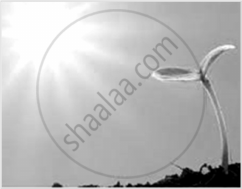
- Find the rate of growth of the plant with respect to the number of days exposed to the sunlight.
- Does the rate of growth of the plant increase or decrease in the first three days? What will be the height of the plant after 2 days?
Find `(d^2y)/dx^2` if, `y = e^((2x + 1))`
Find `(d^2y)/dx^2` if, `y = e^((2x + 1))`
Find `(d^2y)/dx^2` if, y = `e^(2x +1)`
If y = 3 cos(log x) + 4 sin(log x), show that `x^2 (d^2y)/(dx^2) + x dy/dx + y = 0`
Find `(d^2y)/dx^2, "if" y = e^((2x+1))`
Find `(d^2y)/dx^2` if, `y = e^((2x+1))`
Find `(d^2y)/(dx^2) "if", y = e^((2x + 1))`
Let \[y=f(x)\]. What is the first derivative of \[y\] with respect to \[x\]?
Which expression defines the second order derivative of \[y\] with respect to \[x\]?
Which of the following is NOT a stated notation for the second derivative of \[f(x)\]?
Higher order derivatives are obtained by which process?
If \[y=\mathrm{A}\sin x+\mathrm{B}\cos x\], what is \[\frac{dy}{dx}\]?
After differentiating \[\sqrt{1-x^2}\cdot\frac{dy}{dx}=1\], which equation results?
Differentiating \[(1-x^2)y_{1}^{2}=1\] gives which expression?
Which equation follows from \[(1-x^2)\cdot2y_{1}y_{2}+y_{1}^{2}(0-2x)=0\]?
