Advertisements
Advertisements
Question
Discuss the following and write about the following in your own words in 5-6 lines.
What opinion do you form about Mathilde’s husband from her story?
Advertisements
Solution
Monsieur Loisel, Mathilde's husband, is a very supportive and loving husband. Not only does he listen to and fulfil her requests even when he can't, but he also stands by her in times of trouble. He doesn't blame her for losing the necklace. When he could have easily avoided helping her, he waits by her side and works hard to pay back for the necklace. He is an ideal partner, and Mathilde is lucky to have him.
RELATED QUESTIONS
In what way is the poet relevant to our times?
Describe in your own words the poet’s feelings when he sees the host of golden daffodils ?
(A) As soon as she reached home, she learnt that she had to leave for London.
(B) Hardly……………………………
Join the following sentences to make one complete sentence without using and, but or so.
- He is good at gymnastics. His handwriting must improve.
- Her grandfather gifted her a paint box. He knew she was good at art.
- Ravi fractured his arm. He insisted on playing the match.
- Mona has been ill for a month. She stood first in the examination.
He drew a beautiful diagram________ the board.
You have not received your Roll Number card for the Class XII examination. Write a letter to the Registrar, Examination Branch, CBSE asking for it.
Examine the structure of the short story ‘Adventure of the Three Garridebs’ with the help of this framework
- The narrator of the story
- Introduction of the topic of the story
- Introduction of the main characters in the plot
- Development of the plot
- Climax
- Resolution of the mystery.
Approval from the outside world and approval within the family.
How does the bond of affection between Mrs. Croft and the narrator evolve?
Find out the information about the qualification and eligibility required in the profession related to wildlife such as:
Geologist
Imagine that you are the fellow pilgrim and you wish to share your experience of the incident in the poem.
Write a short article about it for a magazine/journal. Also, convey what change it has brought in your life.
Write your views/opinions in brief on the following topic.
We must always cast our votes.
The cherry tree is a narrative poem. Features that make it a narrative poem are given below. Justify them with proper examples.
It is a time-bound poem.
Write an appreciation of the poem considering the following points:
- About the poem/poet/title.
- Theme
- Poetic devices, language, style
- Special features/ novelties/focusing elements
- Values, message
- Your opinion about the poem.
Make a paraphrase of the poem ‘Leisure’ in your own simple words. Write it down in your notebook.
“Lend thy ears to all but few thy tongue”…. is a famous quote by William Shakespeare. Justify.
Form pairs and make a 'pair presentation' of any one of the two stories. To do so, each person presents only one sentence at a time, and the next one is immediately presented by the partner. Thus, each person in the pair presents alternate sentences without breaking the flow of the narration.
Given below are the prerequisites for an interview. Fill up the boxes with suitable actions to be undertaken with reference to the given points.

Place the given areas of questioning from the list in the appropriate columns.
- future plans
- inspiration
- overcoming hurdles/ struggle
- coach/ mentor/ guide/ teacher
- message for the youngsters
- family support
- alternate career choice
- first or maiden award/ achievement /success /setbacks
- a turning point in life/ success formula/technique.
| Section of the interview | Aspects to be covered | |
| 1. | Introduction | Welcoming/Greeting, Introduction of the guest/Occasion. |
| 2. | Opening questions | |
| 3. | Main body | |
| 4. | Concluding questions | |
| 5. | Summing up | Concluding the statement, Expressing gratitude. |
You can add your points.
From the passage, find and write any two examples of the following:
Sentences containing
- 'must'
- 'can'
Given in a mixed order below are some good human attributes of the family. Pick out from the box and write it against the line that reflects it.
Father taught the boys geometry and how to use triangles to measure big objects.
Choose any novel/book that you enjoyed. Prepare a synopsis of the novel. It should include the major events and the links between them as described in the novel. You may prepare a chapter-wise outline first and then put the outlines together to write a brief synopsis.
Write what you think about the following thoughts and actions of Mathilde :
Mathilde and her husband paid off the debt in ten years.
Answer the following question :
What are the benefits of travel?
Write an autobiography of a hundred-rupee note. (8-10 lines.)
Your goal, this year, is to successfully pass out from secondary school. So let us be SMART and note down the following.
(a) Specific Area:
(Subjects) and number of units/lessons
- English 4 units
- ...........
- ...........
- ...........
- ...........
- ...........
(b) Measurable:
Comparison of scores in previous examinations and in recent one.
| Test I | Test II | Semester I | |
| 1. | Poor | Fair | Fair |
| 2. | |||
| 3. | |||
| 4. | |||
| 5. | |||
| 6. |
(c) Achievable goal:
(Target scores/performance in SSC Exams.)
- Good %
- ...........
- ...........
- ...........
- ...........
- ...........
(d) Realisitc approach:
Plan of action that matches with your expertise/resources.
For example:
- Make a study time table and follow it regularly.
- ...........
- ...........
- ...........
- ...........
(e) Time-bound Action:
Days required for revision
| Subject | Days for revision | |
| 1. | English | |
| 2. | ||
| 3. | ||
| 4. | ||
| 5. |
Have you experienced any unexpected turn of events in your life? What happened? How did you feel about it at that moment? How do you feel about it now?
Write an article for your school magazine describing your experience in about 150 words.
Read the given slogans and match them appropriately with their theme.
| 1. | One for all and all for one | Junk food |
| 2. | Limit your fast food otherwise, it would be your last food | Save water |
| 3. | Restricting a woman restricts the growth of the family | Cleanliness |
| 4. | Clean and green makes perfect scene | Woman empowerment |
| 5. | It takes a lot of blue to stay green | Unity |
Venba was walking along the beach. When she saw a beautiful green perfume bottle that had been washed up on the shore she bent down and picked it up. There was something inside the bottle and it was calling her. When she opened the bottle….?!!!
Imagine you are Venba and act the situations in the class. Then conclude this mysterious story in your own words. Write at least five or six sentences with the help of the words given in the box.
| Tiny | Sing | Talk | Bird | Free | Fly | Gift | Thank |
“The Himalayas are the highest mountain ranges.” He knew that the Himalayas ______ the highest mountain ranges.
Punctuate the following sentences using capital letters, full stops (.) commas (,) question marks (?) apostrophe ( ' ) exclamation mark (!) wherever necessary.
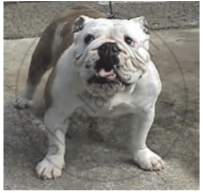
dear samir,
i am sending you a photograph of my newest pet frisky is a bulldog and a very playful puppy by next summer he should be old enough to go with us on our long walks i m sure you are looking forward to seeing him I know you will like him
warm regards
sanju
Punctuate the following sentence.
wasn't tim born on the 26th of january 1989.
Discuss and write –
- Why do cats and dogs fight?
- Why do we walk across the road, not run?
- Why do people like ice-cream?
In the sentence below the capital letter, comma, full stop and question mark are missing. Put these in the correct place.
what is the colour of the sky
‘Tell me who your friends are and I shall tell you who you are’. How will you explain this statement in the light of Jimmy’s and Bob’s friendship?
The photographer made the author wait for ______.
Write the full form for the following.
who's - ______
Translate the following sentence into your mother tongue.
The second question to ask is - is it pleasant?
Using the given informal letter as a model, write a letter about the topic given below.
Write letter to your father asking permission to go on a educational tour.
