Advertisements
Advertisements
Question
“Caste inequalities are still prevalent in India.” Examine the statement.
Advertisements
Solution
Caste inequalities have not completely disappeared from India. Even today, most people marry within their own caste or tribe. Despite the constitutional prohibition, Untouchability has not ended completely. Education is not easily available to the so-called ‘low castes’. Economic status is closely linked to the caste system. In modern India, like in pre-independence India, the poor are mostly the ‘low castes’, while the rich are the ‘high castes’, thereby showing that caste inequalities are still continuing.
APPEARS IN
RELATED QUESTIONS
If two sides of a triangle are 8 cm and 13 cm, then the length of the third side is between a cm and b cm. Find the values of a and b such that a is less than b.
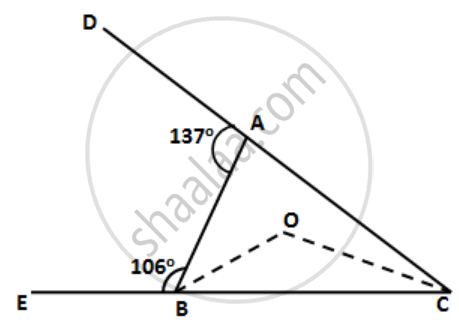
Arrange the sides of ∆BOC in descending order of their lengths. BO and CO are bisectors of angles ABC and ACB respectively.
In the following figure, ∠BAC = 60o and ∠ABC = 65o.
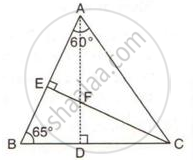
Prove that:
(i) CF > AF
(ii) DC > DF
In the following figure ; AC = CD; ∠BAD = 110o and ∠ACB = 74o.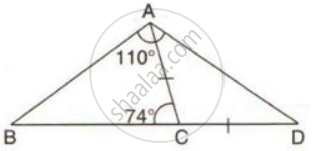
Prove that: BC > CD.
"Issues of caste discrimination began to be written about in many printed tracts and essays in India in the late nineteenth century." Support the statement with two suitable examples.
Name the greatest and the smallest sides in the following triangles:
ΔABC, ∠ = 56°, ∠B = 64° and ∠C = 60°.
In a triangle ABC, BC = AC and ∠ A = 35°. Which is the smallest side of the triangle?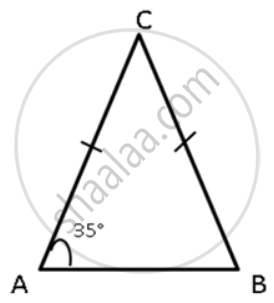
In ΔPQR, PS ⊥ QR ; prove that: PQ > QS and PQ > PS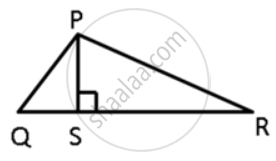
In ΔPQR is a triangle and S is any point in its interior. Prove that SQ + SR < PQ + PR.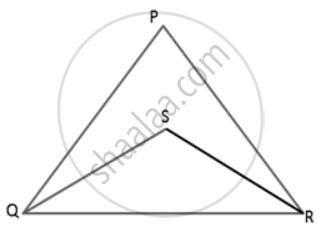
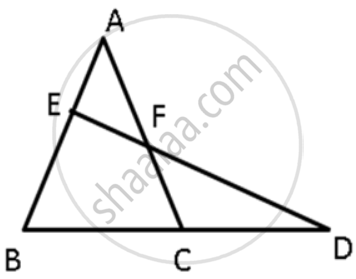
ΔABC in a isosceles triangle with AB = AC. D is a point on BC produced. ED intersects AB at E and AC at F. Prove that AF > AE.