Advertisements
Advertisements
Question
Account for the following:
Methylamine in water reacts with ferric chloride to precipitate hydrated ferric oxide.
Advertisements
Solution
Due to the +I effect of −CH3 group, methylamine is more basic than water. Therefore, in water, methylamine produces OH− ions by accepting H+ ions from water.
\[\ce{CH3-NH2 + H-OH -> H3N+-CH3 + OH-}\]
Ferric chloride (FeCl3) dissociates in water to form Fe3+ and Cl− ions.
Then, OH− ion reacts with Fe3+ ion to form a precipitate of hydrated ferric oxide.
\[\ce{FeCl3 -> Fe^{3+} + 3Cl^-}\]
\[\ce{2Fe^{3+} + 6OH^- -> \underset{(Brown precipitate)}{Fe2O3.3H2O}}\]
RELATED QUESTIONS
Write the IUPAC name of the following compound and classify it as primary, secondary and tertiary amine.
(CH3)2CHNH2
Write the IUPAC name of the following compound and classify it as primary, secondary and tertiary amine.
CH3(CH2)2NH2
Write the IUPAC name of the following compound and classify it as primary, secondary and tertiary amine.
(CH3CH2)2NCH3
How will you convert methanol to ethanoic acid?
How will you convert ethanoic acid into propanoic acid?
How will you convert methanamine into ethanamine?
Accomplish the following conversion:
Benzoic acid to aniline
Complete the following reaction:
\[\ce{C6H5NH2 + H2SO4 (conc.)}\]
Complete the following reaction:
\[\ce{C6H5NH2 + Br2 (aq) ->}\]
Give reasons Although –NH2 is o/p directing group, yet aniline on nitration gives a significant amount of m-nitroaniline
Do the following conversions in not more than two steps :
Propanone to Propene
Write the structure of 2,4-dinitrochlorobenzene
What is the action of p-toluenesulphonychloride on ethylamine and diethylamine?
Write the IUPAC name of the given compound :
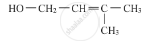
Do the following conversions in not more than two steps:
\[\begin{array}{cc}
\ce{CH3CN to CH3 - C - CH3}\\
\phantom{...........}||\\
\phantom{...........}\ce{O}
\end{array}\]
Predict the product 'A' in the following reaction.
\[\ce{\underset{(Acetyl chloride)}{CH3COCl}->[H2][Pd-BaSO4]A + HCl}\]
