Advertisements
Advertisements
Question
Give one chemical test to distinguish between the following pair of compounds.
Methylamine and dimethylamine
Advertisements
Solution
Methylamine and dimethylamine can be distinguished by the carbylamine test.
Carbylamine test: Aliphatic and aromatic primary amines on heating with chloroform and ethanolic potassium hydroxide form foul-smelling isocyanides or carbylamines. Methylamine (being an aliphatic primary amine) gives a positive carbylamine test, but dimethylamine does not.
\[\ce{\underset{Methylamine (1^\circ)}{CH3 - NH2} + CHCl3 + 3KOH ->[\Delta] \underset{(foul smell)}{\underset{Methyl isocyanide}{CH3 - NC}} + 3KCl + 3H2O}\]
\[\ce{\underset{Dimethylamine}{(CH3CH2)2NH} ->[CHCl3/KOH (alc.)][Heat] No reaction}\]
APPEARS IN
RELATED QUESTIONS
Convert aniline into 1, 3, 5-tribromobenzene.
Write the IUPAC name of the following compound and classify it as primary, secondary and tertiary amine.
(CH3)3CNH2
Write the IUPAC name of the following compound and classify it as primary, secondary and tertiary amine.
C6H5NHCH3
Write the IUPAC name of the following compound and classify it as primary, secondary and tertiary amine.
(CH3CH2)2NCH3
Give one chemical test to distinguish between the following pair of compounds.
Secondary and tertiary amines
Give one chemical test to distinguish between the following pair of compounds.
Ethylamine and aniline
Give one chemical test to distinguish between the following pair of compounds.
Aniline and benzylamine
Give one chemical test to distinguish between the following pair of compounds.
Aniline and N-methylaniline
Account for the following:
Ethylamine is soluble in water, whereas aniline is not.
Account for the following:
Methylamine in water reacts with ferric chloride to precipitate hydrated ferric oxide.
How will you convert hexanenitrile into 1-aminopentane?
How will you convert methanamine into ethanamine?
How will you convert nitromethane into dimethylamine?
Do the following conversions in not more than two steps :
Ethyl benzene to Benzoic acid
Write the structure of 2,4-dinitrochlorobenzene
Write the IUPAC name of the given compound :
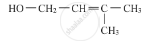
Identify the incorrect IUPAC name.
Do the following conversions in not more than two steps:
\[\begin{array}{cc}
\ce{CH3CN to CH3 - C - CH3}\\
\phantom{...........}||\\
\phantom{...........}\ce{O}
\end{array}\]
