Advertisements
Advertisements
प्रश्न
What kind of a person do you think the narrator is?
Advertisements
उत्तर
A model answer has been provided for students' reference.
It is strongly recommended that students prepare the answer on their own.
Shyama, a person who is too attached to his soil and his village, is the narrator of Ranga's Marriage. When the story starts the reader expects something about a marriage happening. However, the narrator takes the reader on a tour of his village, Hosahalli, explaining the specialities about it. He does not believe in the English culture. He tells how 10 decades ago there was no such culture and how he thinks that the language has changed the atmosphere totally. How a distinction has descended between those who speak English and those who do not. Shyama is person who respects a person who believes in her/his culture; for example, when Ranga payed homage to him, he bowed down and touched Shyama's feet as a namaskar. This made Shyama happy that even after studying away from home Ranga had not forgotten his roots. Even though Ranga was an educated boy and was determined to get married to a girl who is mature enough, Shyama got him married to Ratna, who was much younger and not at all the kind of girl he would have married. This shows his beliefs in arrange marriage and also that he was a determined person who always got done what he had decided. He was a person who strongly believed in his tradition and culture.
संबंधित प्रश्न
Answer any four of the following in 30-40 words each:
(a) Why was the peddler amused at the idea of the world being a rattrap?
(b) Why did Gandhiji agree to a settlement of mere 25 percent?
(c) Aunt Jennifer's efforts to get rid of her fear proved to be futile. Comment.
(d) What does Stephen Spender want to be done for the children of the school in a slum?
(e) How did the ten-day-old baby (the future Tiger King) react to the prediction about his future made by the astrologers?
(f) Why was Dr. Sadao not sent abroad along with the troops?
Read the passage and complete the activities given below :
B1 Pick out
The correct answers from the statements given below:
B2 Fill in the gaps with the information given in the passage :
Discuss in groups of four.
The reasons why people willingly undergo the travails of difficult journeys.
How does the poet tossed back from ecstasy into despair?
' Kummi', ' ghumar' and 'dandia' are some dance forms mentioned in the text. Make an inventory of folk dance forms in the different regions of the country.
Read the extract and state whether the following statement is true or false. Correct the false statement.
The aroma of the ‘desi’ rice would spread around the village.
Answer in your own words.
What helped Revathi to claim her plants - her belief in magic or the belief in her convictions? Explain your choice.
The kite - Bazar in Ahmedabad, is open day and night for a week.
Using points from the lesson, give the details of the following in a short paragraph.
The kite Bazar of Ahmedabad.
Match the terms in ‘A’ with their explanation in ‘B’.
| 'A' | 'B' | ||
| (1) | tooth- extraction | (a) | a cut made for surgery |
| (2) | cardiac | (b) | having length, breadth, and depth |
| (3) | sedative | (c) | plastic surgery |
| (4) | tumor | (d) | related to the heart |
| (5) | incision | (e) | a control unit for a robotic surgery |
| (6) | a console | (f) | removing a decayed tooth |
| (7) | 3-D | (g) | a substance that makes a person sleep |
| (8) | Cushing clip | (h) | an extra growth in the body |
| (i) | a device to stop blood loss in neurosurgery |
Show the stages in the process in which Krakatoa collapsed and then Anak Krakatoa formed in the course of volcanic eruptions. Use the flowchart given below.
How do the following avoid giving anything to the traveller?
Motiram
(Answer in one or two lines.)
List five questions from the play which can be answered with 'yes' or 'no'.
Write a conversation between a donkey and a school boy.
Visit a library:
Read stories about Gautama Buddha. Relate one story in the class.
List the various people and places mentioned in the passage. The places Milo visits and the people he meets have unusual names. Write the meanings of those names.
Write a review of your favorite book. Use the following points:
- Title of the book
- Author/Authors
- The central idea or story
- The important characters
- Some special features of the book
- Why it is your favourite book.
Discuss:
Is it necessary to develop a good accent? Why? What efforts can you take to improve your pronunciation? With your teacher’s help, find out how to use online dictionaries for the purpose.
Read: ‘Last Chance to See’ by Douglas Adams and Mark Carwardine.
Turn the story into a play as a group activity and present the scenes in the classroom.
Describe a crocodile in your own words.
Find the names of the exotic musical instruments and animals mentioned in the poem.
Read the poem again. Does it have a uniform rhyme scheme throughout?
Write down the rhyme scheme of every stanza separately.
- 1st stanza ______
- 2nd stanza ______
- 3rd stanza ______
- 4th stanza ______.
Pick out from the poem, two lines each that reflect an optimistic (positive) attitude and pessimistic (negative) attitude.
Optimism :
- ______
- ______
Pessimism :
- ______
- ______
Say whether you agree or disagree.
The wolf could not trace Bertha because she was behind a myrtle bush.
Read the poem and answer the following.
What are the two different ways of eating strawberries?
Write what the following do, with the help of the poem.
ripples
What does the poet want to know from the goldfish?
Based on your understanding of the poem, complete the following passage by the using the phrases given in the box.
| youth to old age | up or down the hill | to hurry nor move away | |
| high adventure | joyful | mourn | looking ahead |
The poet wants to live his life __________, willing to do something. He neither wants __________from his goal. He does not want to _______ the things he has lost, not hold back for fear of the future. He instead prefers to live his life with a whole and happy heart which cheerfully travels from __________. Therefore, it does not matter to him whether the path goes __________, rough or smooth, the journey will be __________. He will continue to seek what he wanted as a boy - new friendship, __________ and a crown (prize). His heart will remain courageous and pursue his desires. He hopes that every turn in his life's journey will be the best.
What commotion did the boomerang cause in the neighborhood?
Who was the first person to withdraw cash from the ATM?
Read the data below and answer the following question.
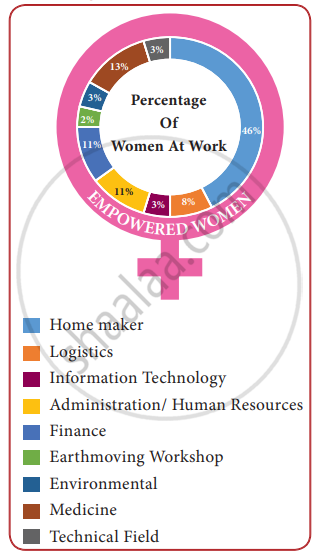
Choose the correct answer.
What is the data about?
What scared Usha during the dark rainy night?
In what ways are we doing injustice to nature?
Fill in the blank
______ is the festival which fills our hearts with delight.
What does the poet mean by ‘Festival of flowers’?
Imagine you are a marketing executive for a company in a specific industry (toothpaste, soup, hair care products, automobiles, etc) and are developing a product with a brand name that refers to a character from the story.
For example: You want to sell bandages that have little pictures of Don Quixote on them. Your company’s name is Kure-All and you decide to call them “Kure-All Quixote Bandages”.
The slogan might be: “Had a tough day with windmills? When you take a fall, use Kure-All.”
You can use exciting words, a catchy new slogan and a jingle among other things to promote sales of your item.
Read these lines and answer the questions given below.
Our lays are of cities whose lustre is shed,
Here ‘Lays’ means______
Identify the speaker/character.
Don't worry, Madam, it's only a warning.
Identify the speaker/character.
A man fell into the sea. Please save him.
Turtles are different from tortoises.
Match the following.
| cuckoo | blows |
| breeze | sings |
| river | swims |
| fish | flows |
How did the second daughter use the grain?
What are the three parts of a robot
Answer using Yes or No and pick sentence from the story to support your answer.
Was Robinson alone in the island?
Answer using Yes or No and pick sentence from the story to support your answer.
Do cannibals eat people?
Arrange the actions of Robinson by numbering from 1 to 10.
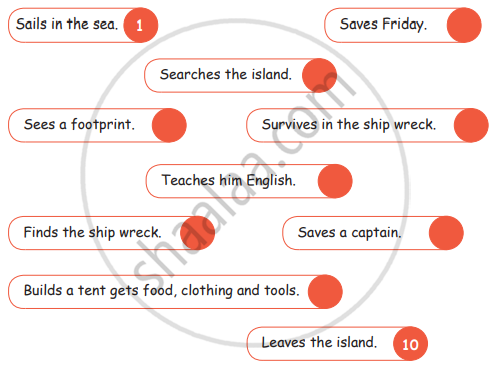
______helped Bujju to reach his family.
Why did Kani run to the kitchen?
Who helped Tenzin in learning English words?
Fill in the blank with rhyming word.
tree- ______
What do you save? Why it is needed?
The king shouted at Ani.
Write the word with same meaning.

tap- ______
Let us learn a few more word by joining the dots. Join the dots and fill the table below.
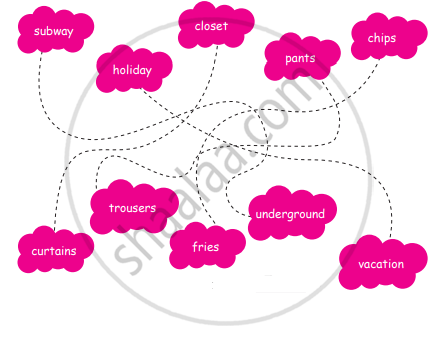
| subway | |
| holiday | |
| closet | |
| pants | |
| chips |
If the fisher draws his net soon, he won’t get ______ in the net.
Match the animals with their sounds.
 |
bray |
 |
croak |
 |
bark |
 |
hum |
 |
neigh |
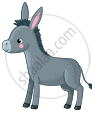 |
mew |
Why is your nose important for you?
The fir tree was sad ______.
How did he challenge everybody?
