Advertisements
Advertisements
प्रश्न
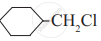
Observe the following and answer the question given below.

Can it react by SN1 mechanism? Justify your answer.
Advertisements
उत्तर
It will not react by SN1 mechanism. The bond between sp2 hybridized carbon atom and halogen is a strong bond. Also, the electrons of the –X atom are in conjugation with the π bond. Thus, C – X bond acquires a double bond character. Thus, when nucleophile approaches the sp2 carbon, it gets repelled by the π-electrons of the double bond.
APPEARS IN
संबंधित प्रश्न
from the following pair would undergo SN2 faster from the other?

Name the reagent used to bring about the following conversion.
Chlorobenzene to biphenyl
Arrange the following in the increasing order of boiling points.
- 1-Bromopropane
- 2- Bromopropane
- 1- Bromobutane
- 1-Bromo-2-methylpropane
Give reasons:
Haloarenes are less reactive than haloalkanes.
Distinguish between SN1 and SN2 mechanism of substitution reaction.
Convert the following:
2-Chloropropane to propan-1-ol
Complete the following reaction sequence by writing the structural formulae of the organic compound 'A', 'B' and 'C'.
\[\ce{Isopropyl alcohol ->[\triangle][PBr3] A ->[][NH3 excess] B}\]
Observe the following and answer the question given below.
Comment on the bond length of C–X bond in it.
Nucleophilic substitution reaction of 2, 4-dinitrochlorobenzene is faster than p-nitrochlorobenzene. Give reason.
Explain primary benzylic halide shows higher reactivity by SN1 mechanism than other primary alkyl halide.
Dehydrohalogenation of an alkyl halide is ____________.
When C2H5Br is treated with excess of alc. NH3, the major product obtained is ____________.
Identify 'B' in the following reaction.
\[\ce{2-Bromobutane ->[KOH alc.][\Delta] A ->[HI] B}\]
What is the major product obtained in the sulphonation of chlorobenzene with concentrated sulphuric acid?
Write the product formed when alkyl halide reacts with silver nitrite.
The major product formed when 2-bromobutane is treated with alcoholic KOH is ______.
With which halogen the reactions, of alkanes are explosive?
Complete the following reactions giving a major product.
\[\begin{array}{cc}
\ce{CH3}\phantom{................}\\
|\phantom{..................}\\
\ce{CH3 - C - CH2 - Cl ->[Na/dry ether] A}\\
|\phantom{..................}\\
\ce{CH3}\phantom{................}
\end{array}\]
Complete the following reaction sequences by writing the structural formulae of the organic compounds 'A', 'B' and 'C'.
\[\ce{2-Bromobutan ->[alc. KOH] A ->[][Br2] B ->[][NANH2] C}\]
Define and explain the SN1 mechanism with a suitable example.
Identify the chiral molecule from the following.
Complete the following reaction giving major product.
\[\begin{array}{cc}
\ce{CH3}\phantom{................}\\
|\phantom{..................}\\
\ce{CH3 - C - CH2 - Cl ->[Na/dry ether]A}\\
|\phantom{..................}\\
\ce{CH3}\phantom{................}
\end{array}\]
Give a reason for the following:
Ethoxy ethane with conc. HI at 373 K gives C2H5OH and CH3I but not CH3OH and C2H5I.
Complete the following reaction giving major product.
\[\begin{array}{cc}
\ce{CH3}\phantom{................}\\
|\phantom{...................}\\
\ce{CH3 - C - CH2 - Cl ->[Na/dry ether] A}\\
|\phantom{...................}\\
\ce{CH3}\phantom{................}\\
\end{array}\]
Which of the following pair of compounds on heating gives butanenitrile?
