Advertisements
Advertisements
प्रश्न
Notice these expression in the text. Infer their meaning from the context.
billowed
Advertisements
उत्तर
billowed: filled with the air and swelled out
APPEARS IN
संबंधित प्रश्न
Answer the following in 30-40 words each:
(a) Why do you think the booking clerk refused to accept the money? Why did the narrator get out so fast?
(b) Why could the Russian research vessel, ‘The Akademik Shokaskiy’ not move any further? What did the captain decide then?
(c) What sort of hunts did the Maharaja offer to organize for the high-ranking British officer? What trait of the officer does it reveal?
(d) What did Jo want the wizard to do when Mommy Skunk approached him?
Look up the dictionary for the meaning of the word ‘diaspora’. What do you understand of the Indian diaspora from this piece?
We 'draw up a deed'. Complete the following phrase with an appropriate word.
________one's will
We 'draw up a deed'. Complete the following phrase with an appropriate word.
________ends meet
Make a list of the expressions that imbue the watch with human attributes.
You notice a sense of urgency in the poet's request – what is the reason for this?
How does the poem bring out the elusive nature of happiness in human existence?
Study the pictures below and note down the differences.
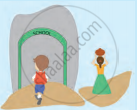
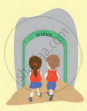
Using a dictionary/internet note down the main difference between a remote-sensing satellite and a natural satellite.
Discuss in groups, reasons/ consequences/ effects:
The life of the cherry tree was threatened.
Rearrange the following in the proper order and insert them into a flow chart as per the poem.
- The plate turned to lead when it was gifted to false-hearted claimants.
- Many claimants donated their wealth to receive the plate of gold.
- For almost two years, no claimants received the plate of gold.
- A plate of gold fell in a temple from Heaven.
- The peasant offered comfort and courage to a blind miserable beggar, whom all had ignored.
- The priests announced that the one who loved God most of all would receive the gift from Heaven.
- When the priest gave the plate of gold to that peasant, it shone with thrice its luster.
- A simple peasant, who had nothing to offer, came to that temple.
Discuss in your class.
How can we take help of robots in our daily life?
Read the lesson and name the following.
The Father of modern neurosurgery ______
Write a sentence each about three of your friends. Each time you should say what your friend cannot do, and yet, pay a compliment to your friend.
Write in short about what your parents/guardians feel when they send you to school.
Read aloud the account of how Flying Officer Nirmal Jit Singh Sekhon sacrificed his life to defend our country.
What is described in the poem?
The description of the character is given below. Identify the character from the play. Find some sentences which support your choice.
He is the centre of the play.
Give reasons :
Oberon and Titania fight for the custody of the Indian boy because - Titania wants ______________________.
Read the passage and find the verbs used with the following nouns and phrases:
- volcano
- molten rock
- volcanic mountain
- dust
- 165 village and towns
- the wind and the sea
- seeds
- bird
Shakespeare’s poetry has come to be valued for its own sake on the stage. Comment with reference to the play ‘A Midsummer Night’s Dream.’
What is implied in the following phrases or lines?
- A silver house in the lovely sky
- It takes two weeks to build it up
- And two to pull it down.
Form groups and hold debates on the following topic. Make bulleted lists of points in favour of the topic (pros) and those against it (cons). (3-6 points each).
Boys cannot cook or do any housework.
Shylock was not at all generous.
Write the conditions that Portia put down to warn Shylock.
Relate the themes of the Fair to your science textbook by writing the relevant chapter numbers under each theme.
Write one line about the following with the help of the poem.
wind in the autumn evening
Complete the following diagram.
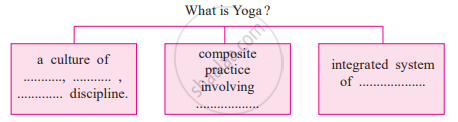
List the adverbs/adverbial phrases used in the passage.
Form groups of 4. Find all the references to the time given in the passage. Then make a chart to show the events described in the passage along with the time when they occur. Example:
| All night long: | The crew stayed on their feet. |
| Near midnight: | ________________________ |
| At 12.53: | ________________________ |
(Use as many lines as you need.)
Write in your own words.
How does the poet glorify his home in the first stanza?
Rearrange the following in their proper order as in the poem. Write the serial number against each line:-
(a) The Ostad sang the Malkous Raga enchantingly.
(b) Akbar followed Tansen, dressed miserably.
(c) I request you to sing such a song that will I experience unmatched joy.
(d) Ostad was nowhere to be seen.
(e) O Divine Teacher, please gift us the joy of your song.
(f) One day, the singer sang Deepak Raga in the court.
(g) Akbar expressed his wish to meet the Teacher.
(h) He experienced heavenly delight.
(i) Tansen sings to please the earthly king but Ostad devotes his songs to God.
(j) She sang Raga Malhar, which had a cooling effect.
Guess the meaning of the following word.
novel
Find two examples of the following from the lesson.
An Exclamation
Guess the meaning of the following word.
finely
Answer the question in a paragraph of about 100 – 150 word.
Narrate how Prospero made his enemies repent to restore his dukedom.
Where was the author when he heard the noise?
An Anagram is a word or a phrase formed by rearranging the letters of a different word or phrase, typically using all the original letters exactly once.
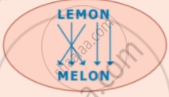
Now try to solve these anagrams
| 1. | ELBOW | |
| 2. | SECTION | |
| 3. | VIEWER | |
| 4. | RIPPLES | |
| 5. | NEEDLESS |
Read the data below and answer the following question.
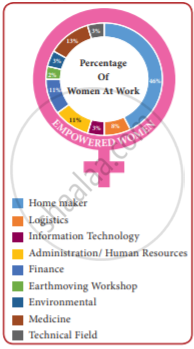
Choose the correct answer.
In which field of work is women’s involvement the second highest?
Read the lines and answer the questions.
They are of all forms and shapes
They all have an excellent ending
What do have an excellent ending?
Give a picturesque view through which the train travels.
Which mode of transport did Fogg choose?
What qualities of Mr. Phileas Fogg are highlighted in this extract? Support your answer with suitable examples.
Write a summary based on the flow chart.
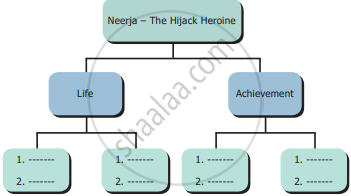
Work in pairs and answer the following.
Pick out the rhyming words.
It is a problem for sea turtles to come ashore because ______.
Read the lines and answer the questions given below.
Summer comes
in a blaze of heat with
sunny smiles
and dusty feet
- Does the poet welcome the summer? How do you know?
- Which line tells you that there is no rain in summer?
Our planet is called the _____.
How does the poet describe the Indian seasons? Write in your own words in about 50 words.
How did the aliens know the boys' language?
Flag day is observed on the _________.
Why did Yazhini want to join the military?
Read scene I of the play carefully and answer the question below.
Whom does Mother Wolf talk about? How does she describe him?
Appu felt hungry and ate a______.
Which is as important as our health?
A Shepherd had a _______.
Mostly piggy banks look like______.
Draw the garden of your dreams.
Activity: Live English: Packs, packets, pouches, wrappers

Given above is the picture of an imaginary food item’s packet. Let us see how to ‘read’ the matter on the packet as a vigilant consumer.
- Look at the wrapper and complete the sentences.
- The name of the food item is ______.
- It is made by ______.
- It is a ______ food item. (Veg/Non-veg)
- The ______ sign indicates whether it is a Veg or Non-veg food item.
- The ingredients are ______, ______, ______, ______.
- The date of packing is ______ and the expiry date is ______.
- It should be consumed before ______ from the date of manufacturing.
- Try and obtain more information about the various symbols printed on the packet.
- Discuss the following -
- Why the ‘recipe’ is given on the packet.
- Why the packet tells us to visit the website of the company.
- What ideas are used to make the packet attractive?
- How you will verify whether something is good for you to eat.
Arrange a ‘Jokes’ session in the classroom where each student tells a joke. The jokes must be told in English.
