Advertisements
Advertisements
प्रश्न
Notice the following uses of the word ‘tell’ in the text.
1. Her fingers were busy telling the beads of her rosary.
2. I would tell her English words and little things about Western science and learning.
3. At her age, one could never tell.
4. She told us that her end was near.
Given below are four different senses of the word ‘tell’. Match the meanings to the uses listed above.
1. make something known to someone in spoken or written words
2. count while reciting
3. be sure
4. give information to somebody
Advertisements
उत्तर
1. Make something known to someone in spoken or written words: I would tell her English words and little things of western science and learning.
2. Count while reciting: Her fingers were busy telling the beads of her rosary.
3. Be sure: At her age, one could never tell.
4. Give information to somebody: She told us that her end was near.
APPEARS IN
संबंधित प्रश्न
With reference to ‘The Story of My Life’, describe how a teacher can positively impact a child’s life ?
What do elephants do to prevent water from evaporating ?
Mention three reasons why the author’s grandmother was disturbed when he started going to the city school.
Briefly explain the following statement from the text.
“You neither travelled to the past nor the future. You were in the present experiencing a different world.”
Paul's final bet his family richer but cost him his life. Explain.
What were the attempts made by the author to get his watch repaired?
How does Shelley's attitude to science differ from that of Wordsworth and Keats?
List the distinctive features of the tribal arts.
The following common word is used in a different sense in the poem. Guess what it means.
Explain the phrase.
Time's fool
Why does the poet prefer to be a primitive Pagan rather than a member of civilised society?
Answer in your own words.
Read and write down 5 points which prove that Tomba, (Lanthoi’s father) firmly believes in gender equality.
Read the poem aloud and you will find some old outdated words that we do not use in the everyday language now.
However, some writers/poets use them to impart an old-fashioned flavour to suit the background of their write-up. Such words are called Archaic words.
Give the modern words for the archaic words from the poem.
- thy
- being
- bestow'd
- thee
- thou
- cans't
Discuss in groups, reasons/ consequences/ effects:
The life of the cherry tree was threatened.
Sue and Johnsy were very close friends.
Go through the poem and state whether the following statement is true or false.
Planners make their plans mathematically perfect, at the same time they calculate their profit.
The term 'Anaesthesia' in the poem means - 'The planner gives beautiful pictures of the new modern city'. Now find out what is Amnesia and Hypnosis in the given context.
Say WHY. . . . . .
Hardy and Ramanujan could not talk freely with each other.
Make a list of the channels available on your TV under the following categories: News, entertainment, sports, movies, music, etc. Which are the channels on which you can watch programs on animals, wildlife, conservation of the environment, etc.?
Find one more example which shows that a beautiful appearance is not enough.
Go through the following web that highlights the essential qualities of a compere. Discuss with your partner the essential qualities and also the precautions that a compere should take while compering a program.

Precautions to be taken :
- __________________________
- __________________________
- __________________________
- __________________________
Comment on the given statement after reading the given dialogue -
And if we get him itself, nothing but abuse on our heads for it from the people, and maybe from our own relations -
you may begin like this
We do not think about society at large _________________________________________________.
Discuss the following question after you have seen a presentation of the ‘ad’.
How many times is the name Krispy Krunchy repeated in the ad? Why?
Enact the ad by playing the roles of Didi and her relatives. One more child acts as the salesman of ‘Hemagauri’ and presents the text given in white letters in pink bubbles.
List the characters in the play and write one or two lines about each.
Antonio had gone on a long voyage.
How long does the whole event described in this passage take? Work it out by reading the passage.
Answer in your own words.
How is the boy from the 1500s dressed?
Answer in your own words.
What did Neel realise from his encounter with his ancestors?
How does the following character in the story live up to their name? Provide points from the story.
Teshumai Tewindrow
Write in your own words.
How should that person sing?
Form groups of five. Discuss how you can complete the rest of the story without referring to Part II of the story.
Correct the following sentence and rewrite it.
Papa Panov gave hot soup to the sweeper, milk to the young mother, and coffee to the beggars.
Does Marouckla get any of the things she brings?
Describe the following with the help of the (The Twelve Months) story.
Summer
Write other meaningful words that begin/end with springtime.
List the characters in the story and write a few lines about each of them.
Who is wise according to you?
Read the story again and write how these character reacted in these situation:
You are an absolute treasure…………. Dr.Krishnan………………..
Zigzag………………………..
Write the name of the toys against each picture.

Look at the number pattern. Fill the blank in the middle of the series or end of the series.
FAG, GAF, HAI, IAH, ______
Turtles are sea animals.
It is a problem for sea turtles to come ashore because ______.
Identify and write the sport's name respectively.
- ______
- ______
- ______
- ______
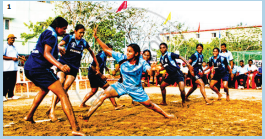


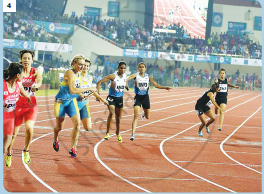
Complete the sentence given below with word/phrase.
The whole earth smelled ______ and ______.
A day in Mars is called ______.
Jaswantgarh is named after the Indian soldier ______.
Where did Anitha go?
Mother nature gives everything for all ______.
Identify the character or the speaker.
“I was cruel and selfish.”
Write the rhyming word.
away
What did the five friends call themselves?
Read the passage three times and colour a cup for eachtime.
There is a table under a tree. A man with a big hat and a hare with long ears are sitting. A young girl is sitting between them. There are many cups on the table. The girl has a cup in her hand, and the man has a pot in his hand. It seems like they are having tea. Yes, they are having tea at the tea party in Wonderland. The girl is Alice, and she is in Wonderland.

What were the people excited about?
Bala's home doesn't have ______.
Write the word with same meaning.

purse- ______
Why did the headmaster give Megala a special prize?
How did Alice reach Wonderland?
Read the passage given below and make notes.
To match the best cities across the world, the Government of India initiated ‘smart cities’ to drive economic growth and improve the quality of life of people. The agenda under smart city promises to resolve urban sustainability problems. Urban forests provide a range of important ecosystem services that are critical for the sustainability of cities. Urban forestry, which is defined more as ‘Management of Trees’ contributes to the physiological, sociological and economic well-being of the society. Mangroves, lakes, grasslands, and forests in and around our cities, act as sponges that absorb the air and noise pollution and they present themselves as our cultural and recreational hotspots. However, these spots are rapidly being reclaimed and replaced in the name of development. Presence of urban green has shown to increase the economic value of the place.
Urban forests contribute to reduce the cost of building storm water drain systems for municipalities and neutralizing urban heat island effect. Plants not only provide shade but also help in regulating the micro-climate. They help regulate energy budgets, improve air quality, and curtail noise pollution. Trees, herbs, shrubs, and grasses arrest sedimentation and prevent other pollutants from entering our water systems. This will give a chance for our urban lakes and rivers to recover and help improve aquatic ecosystems. Biodiversity also gets a boost through the urban forestsand helps create corridors connecting the forest areas. High biodiversity areas can also help to build resilient ecosystems. Availability of forests within our urban areas gives an opportunity for children to connect to the natural environment and learn about native species.
Make groups of 10-15. In this game, each person writes three sentences about himself/herself, two of which are true and the third one is a lie. Read aloud your sentences, while others guess which two are true and which is a lie.
Examples: Hello, everyone! I am Sonali. I have a brother and a sister. I live in Amalner. We have a pet dog at home.
In the game ‘Two Truths, One Lie!’, it is necessary to use details which can be verified to see whether they are true or false. For example, you cannot use sentences like ‘I once had a blue sweater.’
