Advertisements
Advertisements
प्रश्न
How does Russell's definition of knowledge differ from what is commonly understood by the term?
Advertisements
उत्तर
Knowledge is a treasure and Russell was a seeker of it. He craved to know and understood the Pythagorean power by which a number holds sway over the flux. He was a much learned man. He did believe that he achieved a little of it as well and yet he yearned for more. The understanding of the higher subjects, why the stars shine? He beseeched beyond all this and it in turn took him upward toward the heavens.
APPEARS IN
संबंधित प्रश्न
Helen's struggle has become a source of inspiration for all less fortunate. Comment.
How did Helen display her passion for Radcliffe College?
Read the follow ing extract and answer the questions given below:
Not gold but only men can make
A people great and strong;
Men who for truth and honor's sake
Stand fast and suffer long.
Brave men who work while others sleep,
Who dare while others fly...
They build a nation's pillars deep
And lift them to the sky.
(1) What makes a nation strong?
(2) According to you, what makes India a strong and powerful nation?.
(3) Write down the rhyme scheme used in the extract.
(4) What does the phrase 'others fly ... ' mean?
The black kite may start a fire because
Which language do you use to talk to elderly relatives in your family?
Notice these expressions in the text. Infer their meaning from the context.
-
honing our seafaring skills
-
ominous silence
-
Mayday calls
-
pinpricks in the vast ocean
-
a tousled head
The story is called ‘The Adventure’. Compare it with the adventure described in ‘We’re Not Afraid to Die...’
There lies a great difference between text book medicine and the world of practising physician. Discuss.
Discuss in pairs or in small groups
What does a novel do?
'Now I hold Creation in my foot' – explain the centrality of this assertion in the poem. What makes the hawk's assertion of its invincibility so categorical?
How does the banyan tree stand out as different from other trees? What details of the tree does the poet highlight in the poem?
Name the festival that you enjoy most of all. Fill in the facts about that festival.
- Name of the festival:
- When it is celebrated:
- Why it is celebrated:
- How it is celebrated:
- Special cuisine:
- Other special features:
Correct the following statement.
The real ivy leaf did not fall off at all.
‘Dull would he be of soul who could pass by.’
This line of the poem can be rewritten as:
'He would be of a dull soul.'
The figure of speech is known as ‘Inversion’.
Find out one more example of Inversion from the poem.
Read the lesson and name the following.
The First successful Cardiac Surgeon ______
Birbal thought Akbar was greater than God.
Suggest what you would do in the following situation:
You realise that you no longer want to pursue your studies in the stream you have selected.
Form groups and discuss the following statements, in the context of the extract.
‘If he is indeed wise, he does not bid you to enter the house of his wisdom, but rather leads you to the threshold of your own mind’ Kahlil Gibran.
Apart from the stone, how many things go into the soup?
Hold a mock trial for the following offence. There should be a complainant, a defendant, and lawyers to argue the case on behalf of them. The whole class can vote to pass the judgment. On what occasions will you plead for justice? What punishment will you suggest? When will you plead for mercy?
A very poor and honest servant has broken a vase while cleaning it. The vase was valuable and the employer liked it very much.
To whom is the poem addressed?
Write a short note on the following:
The ‘four signs’ that Prince Siddharth beheld.
Read: ‘The Open Window’ by H. H. Munro (Saki).
Correct the following sentence and rewrite it.
Papa Panov gave hot soup to the sweeper, milk to the young mother, and coffee to the beggars.
Fill in the blank choosing the appropriate word/idiom from the lesson.
He was dizzy and he ______ the room.
Rewrite the following line in your own words.
.......... ‘till off they flash
Singing sweetly their delight.’
Do you agree with the poet’s thoughts? Why?
Find a word that has a similar meaning.
Sorry
List all the pairs of antonyms you find in the passage.
What did the narrator think the unusual sound was?
What were Chulongs plans for the bird?
Use this passage to play the game. You can collect information on other famous personalities and play too.
Charlie Chaplin was born on April 16, 1889, in London England. His birth name was Charles Spencer Chaplin, though he had many nicknames growing up such as Charlie, Charlot, and The Little Tramp. His father, Charles Chaplin, and his mother, Hannah Chaplin, were inducted into the music hall of fame, leading the way to his exposure even as a young boy. His first onstage moment was when he was 5 years old; he sang a song that was intended to be sung by his own mother; she had become ill at the time of the performance, so little Charlie Chaplin stood instead and performed for his mother.
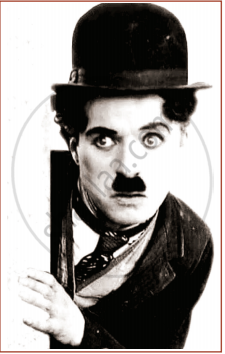
Charlie Chaplin came to the United States in 1910, at the age of 21. He was brought to New York, which was known to be a great place to start out for anyone trying to become a professional actor. Two years later, in 1913, Chaplin signed his very first contract at Keystone and it was no time before he headed to Hollywood. His first movie premiered in 1914, “Making a Living,” and went on to make over 35 movies total in that year alone. Charlie Chaplin grew to become one of the most popular and successful actors of all time. The moment that really kicked off his long career was in 1921 when he starred in, and produced, his first full-length film called “The Kid.” From then on, most people all over the world knew Charlie Chaplin and loved his movies. He had a great career and life, dying on December 25, 1977, in Vevey, Switzerland. He had apparently died of natural causes in his sleep from old age.
What did Suresh ask Usha? Why?
Teachers help me to learn ______ things.
- new
- bad
- difficult
Take a stanza from the poem. Write it in the blanks and find the rhyme scheme.
| Lines from the poem | Rhyme scheme (a/b/c/d) |
How can we make our life worth living?
What does the poet mean by ‘Festival of flowers’?
Identify the character/speaker.
You may stay if you answer my riddle.
Describe the elephant driver in your own words.
Everyone in the ship started to pray because ______.
How does the coconut tree grow?
Amma bought the vegetables from the______.
Mother called ______.
Name the planets the poet flies through.
How did the cavalry officers look? What happened to them finally?
Try your own.
It is used in the fisher’s _____.
What robot will you make? Why?
Identify the character or the speaker.
“I will camp here for the night.”
Match the rhyming words.
| 1. | flow | know |
| 2. | grow | week |
| 3. | seek | blow |
Meena's village was hit by waves on a______.
Find and write the clues.
Clue for lame ______.
A Shepherd had a _______.
Fill in the blank

The grandmother had kept the plate in memory of her ______.
What will you do if you have a gold plate?
Nithin had many ______toys.
How can we do our work better?
The garden Alice saw was
Mention any three details that should not be revealed in public domain.
