Advertisements
Advertisements
प्रश्न
Why should we close the tap after using it?
Advertisements
उत्तर
We should close the tap after using it to save water for the future generations.
APPEARS IN
संबंधित प्रश्न
The whole world is happy because children are going to school. Why is it so? Discuss it in the classroom.
Can you name different types of fabrics? Which is the most expensive fabric you know? Talk to your parents or to a textile shop assistant. Collect samples of as many types as you can and paste them into your scrapbook. Name each type.
What did Suresh ask Usha? Why?
Jaswant decided to stay in his post.
Write the rhyming word.
gale
Meena was transferred to a______.
Try your own.

Write the rhyming word.
save- ______
Write the correct word.
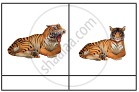
| rooster, king, hen, tiger, queen, tigress. |
Read the passage and write a summary of it. Suggest a suitable title for the summary.
|
A sparrow is a small bird which is found throughout the world. There are many different species of sparrows. Sparrows are only about four to six inches in length. Many people appreciate their beautiful songs. Sparrows prefer to build their nests in low places-usually on the ground clumps of grass low trees and low bushes. In cities, they build their nests in building nooks or holes. They rarely build their nests in high places. They build their nests out of twigs grasses and plant fibers. Their nests are usually small and well-built structures. Female sparrows lay four to six eggs at a time. The eggs are white with reddish-brown spots. They hatch within eleven to fourteen days. Both the male and female parents care for the young. Insects are fed to the young after hatching. The large feet of the sparrows are used for scratching seeds. Adult sparrows mainly eat seeds. Sparrows can be found almost everywhere where there are humans. Many people throughout the world enjoy these delightful birds. The sparrows are some of the few birds that engage in dust bathing. Sparrows will first scratch a hole in the ground with their feet then lie in it and fling dirt or sand over their bodies with flicks of their wings. They will also bathe in water or in dry or melting snow. Water bathing is similar to dust bathing with the sparrow standing in shallow water and flicking water over its back with its wings also ducking its head under the water. Both activities are social with up to a hundred birds participating at once and are followed by preening and sometimes group singing. |
