Advertisements
Advertisements
प्रश्न
How did the narrator and Lord Otori overpower the intruder?
Advertisements
उत्तर
The narrator & Lord Otori knew that there was someone outside so to be prepared & for their safety, they kept a sword & knife with them. Step by step they were trying to follow the person outside with patience. The moment he entered inside Lord Otori took him in a stranglehold & the intruder wriggled backwards wherein the narrator leaped at him and all
three of them fall into the garden.
APPEARS IN
संबंधित प्रश्न
Summers are becoming hotter with each passing year. Write a description of one such very hot day. What did you see and hear as you walked outside ?
How were birds and animals affected ?
Define the following terms from the poem: rivulet, plough share (plowshare), yon, and childing.
Explain the use of words like ‘fluttering’ and ‘dancing’ as used by the poet.
I have appointment________the dentist.
Read the following passage carefully and answer the questions that follow:
Lying in bed, Swami realized with a shudder that it was Monday morning. It looked as though only a moment ago, it had been the last period on Friday; already, Monday was here. He hoped that an earthquake would reduce the school building to dust but that my good building, Albert Mission School, had withstood similar prayers for over a hundred years now.
At nine o'clock, Swaminathan wailed, “I have a headache.”
His mother said, “Why don’t you go to school in a bullock cart?”
“So that I may be completely dead at the other end? Have you any idea what it means to be jolted in a cart?”
“Have you any important lessons today?”
“Important! Bah! That geography teacher has been teaching the same lesson for over a year now. And we have arithmetic, which means for a whole period we are going to be beaten by the teacher............ Important lessons!”
And Mother generously suggested that Swami might stay at home.
At 9:30, when he ought to have been lining up in the school prayer hall, Swami was lying on the bench in Mother’s room.
Father asked him, “Have you no school today?”
“Headache,” Swami replied,
“Nonsense! Dress up and go.”
“Headache.”
“Loaf about less on Sundays, and you will be without a headache on Monday.”
Swami knew how stubborn his father could be and changed his tactics.
“I can’t go so late to class.”
“I agree, but you’ll have to; it is your own fault. You should have asked me before deciding to stay away.”
“What will the teacher think if I go so late?”
“Tell him you had a headache, and so are late.”
“He will beat me if I say so.”
“Will he? Let us see. What is his name?”
“Mr. Samuel.”
“Does he beat the boys?”
“He is very violent, especially with boys who come late. Some days ago, a boy was made to stay on his knees for a whole period in a corner of the class because he came late, and after getting six cuts from the cane and having his ears twisted, I wouldn’t like to go late to Mr Samuel’s class.”
“If he is so violent, why not tell your headmaster about it?”
“They say that even the headmaster is afraid of him. He is such a violent man.”
And then Swami gave a lurid account of Samuel’s violence; how when he started caning, he would not stop till he saw blood on the boy’s hand, which he made the boy press to his forehead like a Vermillion marking. Swami hoped his father would be made to see that he couldn’t go to his class late. But his father’s behaviour took an unexpected turn. He became excited.
“What do these people mean by beating our children? They must be driven out of service. I will see…..”
The result was that he proposed to send Swami late to his class as a kind of challenge. He was also going to send a letter with Swami to the headmaster. No amount of protest from Swami was of any avail: Swami had to go to school.
By the time he was ready, his father had composed a long letter to the headmaster, put it in an envelope, and sealed it.
“What have you written, father?” Swaminathan asked apprehensively.
“Nothing for you. Give it to your headmaster and go to your class.”
Swami’s father did not know the truth—that, actually, Mr. Samuel was a very kind gentleman.
(a) Give the meaning of each of the following words as used in the passage. (3)
One-word answers or short phrases will be accepted.
- jolted
- stubborn
- avail
(b) Answer the following questions briefly in your own words:
- What did Swami wish for on a Monday morning? Why was his wish unlikely to be answered? (2)
- Which sentence tells us that Swami’s father was completely unsympathetic to his son’s headache? (2)
- In what way was Swami’s mother’s response different from his father’s? (2)
- Why did Swami give a colourful account of Mr. Samuel to his father? (2)
- In what way did Father’s behaviour take an unexpected turn? (2)
- What was Swami finally ordered to do by his father? (2)
(c)
(i) In not more than 60 words, describe how Swami tries to prove that Mr. Samuel is a violent man. (8)
(ii) Give a title to your summary in 3
(c). Give a reason to justify your choice. (2)
Join the following sentences to make one complete sentence without using and, but or so.
- He is good at gymnastics. His handwriting must improve.
- Her grandfather gifted her a paint box. He knew she was good at art.
- Ravi fractured his arm. He insisted on playing the match.
- Mona has been ill for a month. She stood first in the examination.
Join the following sentence to make one complete sentence without using and, but or so.
He has learned to cycle. He has yet to learn to swim.
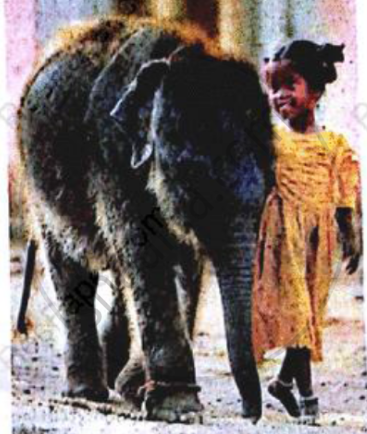
Study the picture given below. Write a story or a description or an account of what it suggests to you. Your composition may be about the subject of the picture or you may take suggestions from it; however, there must be a clear connection between the picture and your composition.
"We have had no rain since January", Ramu said.
(Begin: Ramu said that they .................. )
Below is a topic for essay writing. Follow the steps listed above to write on this topic.
Fascinating facts about water
Distinguish between the following pairs of sentences.
He was visibly moved.
Multiple Choice Question:
What does the phrase in the extract ‘turned black’ mean here?
Use the phrase in a sentence of your own, after finding out its meaning.
blast off
Colours mentioned in the hexagons given below are associated with something or the other. Discuss with your partner and fill in the blanks.

Write a character-sketch of the ‘Stranger-man’ using examples from the story to support the following attributes.
- ignorant, innocent, and polite
- calm and cool
- jumps to wrong conclusions
- hasty and unwise at times
Write a character sketch of Papa Panov in your own words.
Have you ever eaten any fruit/vegetable picking it straight from the tree or field? Write about that experience in 3-5 lines.
Discuss in groups about the procedure of planting a tree. Write the steps in bullet points and present them before the class.
Look at the image of the familiar advertisement given below. Identify the product and try to frame your own slogan for them.
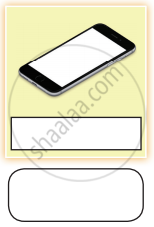
Look at the picture given below and frame your own slogan.

Write a few lines on Mithoo and his little dog named Shadow.
Which do you think would be more fun — travelling by aeroplane or sailing on a ship? Write why you think so.
State whether the following statement are true or false
Both Jimmy and Bob were of the same age.
What was her first impression of America?
Describe the photographer.
How does nature communicate with the poet?
Write a composition (300 - 350 words) on the following:
It is very important for young people to spend time quietly or alone for a short while every day. If you were given an hour to spend on your own, how will you spend it? What will you learn from the process?
Prepare a dialogue from the jumbled sentences:
- It will reach Nagpur at 7: 15 a.m.
- What is the departure time of the Vidarbha Express?
- When will it reach Nagpur?
- The departure time is 8:30 p.m.
Prepare a tourist leaflet for a historical place or a hill station using the following points.
- Place
- Special features
- Distance
- How to go there
- Accommodation
- Food
- Climate
Write a letter to your father asking permission to go on an educational tour.
