Advertisements
Advertisements
प्रश्न
Give reasons for the following statement.
The author’s experience at Hor was in stark contrast to earlier accounts of the place.
Advertisements
उत्तर
Hor was a grim, miserable place. The dust and rocks were scattered everywhere in abundance; there was little vegetation. The place seemed unfortunate and dejected, though it sat on the shore of the Lake Manasarovar. The author was flabbergasted to realise the contrast in his experience to that of the earlier read accounts. A Japanese monk, Ekai Kawaguchi, who had arrived there in 1990, was so moved by the sanctity of the lake t hat he burst into tears. The hallowed waters had a similar effect on Sven Hedin, a Swede who was not prone to sentimental outbursts. However, for the author, when he reached Hor, first he had to get two punctures mended. The only relaxation was the tea served by a Chinese youth in the only café in the town, which was constructed from badly painted concrete and had three broken windows. The good view of the lake through one of them helped to compensate however.
APPEARS IN
संबंधित प्रश्न
India, my India, where the first human eyes awoke to heavenly light! All Asia’s holy place of pilgrimage, great Motherland of might! World – mother, first giver to humankind of philosophy and sacred lore, knowledge thou gav’st to an, God – love, works, art, religion’s opened door.
O even with all that grandeur dwarfed or turned and can vaunt thy mighty name?
Before us still there floats the idea of those splendid days of gold; a new world in our vision wakes, Love’s India we shall rise to mould. India, my India, who dare call thee a thing for pity’s grace today? Mother of wisdom, worship, works nurse of the spirit inward ray!
(1) The poem is a ……………………
(a) Praise
(b) Prayer
(c) Story in the form of poem
(d) Song of condolence [Choose the correct alternative]
(2) What has India given to the world?
(3) How does the poet visualize New India?
(4) Give the rhyme scheme of the first four lines.
(5) Name and explain the figure of speech that dominates the poem.
Answer any four of the following in 30 − 40 words each:
(a) "It is his karam, his destiny." What is Mukesh's family's attitude towards their situation?
(b) What were the terms of the indigo contract between the British landlords and the Indian peasants?
(c) How will 'keeping quiet' protect our environment?
(d) Which objects of nature does Keats mention as sources of joy in his poem, 'A Thing of Beauty'?
(e) Why did the Tiger King decide to get married?
(f) What was Sadao's father's dream for him? How did Sadao realise it?
Orangutans use big leaves during a downpour because
Read the following extract carefully and complete the activities given below :
A1 Complete the following :
(i) Books were found on the _____________ and ____________.
(ii) The tales are described as ______________ and __________.
|
Have you forgotten? Don't you know?
We'll say it very loud and slow:
THEY ... USED ... TO ... READ! They'd READ and READ,
AND READ and READ, and then proceed
To READ some more. Great Scott! Gadzooks!
One-half of their lives was reading books!
The nursery shelves held books galore!
Books cluttered up the nursery floor!
And in the bedroom, by the bed,
More books were waiting to be read!
Such wondrous, fine, fantastic tales
Of dragons, gypsies, queens, and whales
And treasure isles, and distant shores
Where smugglers rowed with muffled oars,
And pirates wearing purple pants,
And sailing ships and elephants,
And cannibals crouching 'round the pot,
Stirring away at something hot.
(It smells so good, what can it be?
Good gracious, it's Penelope.)
|
Briefly explain the following statement from the text.
“You have passed through a fantastic experience: or more correctly, a catastrophic experience.”
If you were to write about these issues today what are some of the incidents, examples and problems that you would think of as relevant?
How does the insertion of dialogue in the story contribute to its interest?
We 'draw up a deed'. Complete the following phrase with an appropriate word.
________a loan
How is colour highlighted in the poem and why? List all the words in the poem that suggest colour.
Read the extract and state whether the following statement is true or false. Correct the false statement.
The author did not succeed in finding Kasbai.
Name the world-famous personality who reached great heights despite of humble circumstances.
Make groups and discuss the following:
Name a few scientists/explorers/social reformers/inventors/discoverers, who spent most of their lives to find solutions to some major problems/setbacks, that mankind faced.
Answer in your own words.
What are the provisions in the Declaration of the United Nations, to ensure the equality of men and women?
Pick out some sentences from the lesson that convey a general truth.
Have you heard of birds that fly from one part of the world to another in small or large flocks?
They are called Migratory birds.
Discuss and write down two reasons why they migrate and return.
How do we help animals and birds?
Select a season of your choice and give the following details:
- Time of the year -
- Characteristics- crops, festivals, etc.
- Features/changes - climate/weather/temperature etc.
- Advantages/Disadvantages -
Have you ever given up on something good? Share your story with your friend.
Guess the meaning of the following words and phrases:
untold wealth, closest to the Emperor’s heart, grave offence, banish.
Fill in the gap, choosing a word from the bracket to make an appropriate comparison.
(tall / quiet / humble / merry / busy / slippery / fast / sly / slow / big)
as ______ as a deer
Read the passage and answer the following question:
What makes Indra’s vajra or weapon invincible?
Shakespeare is acknowledged as the greatest writer because he understood human nature better than anyone else. Explain the statement in the context of the play.
Find the meaning of the following word.
thee
List the names of body parts used in the passage.
Read the poem again. Does it have a uniform rhyme scheme throughout?
Write down the rhyme scheme of every stanza separately.
- 1st stanza ______
- 2nd stanza ______
- 3rd stanza ______
- 4th stanza ______.
Rewrite in your own words.
One of the Caesar’s traits that makes you laugh.
Make adjectives from the following.
- harm
- continue
- believe
- fear
- thought
- wish
- question
- courage
Write in your own words.
How does the poet describe his home in the second stanza?
Correct the following sentence and rewrite it.
The best shoes that Papa Panov had made were a pair of lady’s shoes.
Describe the following with the help of the (The Twelve Months) story.
Winter
Guess the meaning of the following word.
fruitless
Read the word. Write the words that combine to make it.
anywhere
Write other meaningful words that begin/end with footprint.
Discuss the following in group.
Do’s and Don’ts for young children.
How do we come to know that Kasim was a generous man?
What is a password?
Read the following line from the poem and answer the question given below.
Let us learn to walk with a smile and a song,
No matter if things do sometimes go wrong;
- What does the poet expect everyone to learn?
- What should we do when things go wrong sometimes?
‘My tongs are like a tiger among toys.’ It means ______
Usha took shelter in the ______.
What scared Usha during the dark rainy night?
Read the comic strip and answer the following question.
How do you behave in a virtual platform?
Look at the number pattern. Fill the blank in the middle of the series or end of the series.
ELFA, GLHA, ILJA, ______, MLNA
He exercised with Louise every day.
Neerja passed on the warning in a code to the pilots because she______.
Read these lines and answer the questions given below.
And welcomes little fishes in
With gently smiling jaws!
- Who welcomes the fish? Why?
- Which line tells you that the crocodile is hungry?
Why did the author help his Grandfather plant trees?
What is as sharp as a blade?
Read the lines and answer the question given below.
Each a glimpse and gone forever;
a. What is ‘each’ over here? Why is it gone forever?
The little bird found a shallow hollow in the ground.
Rosy ______a bicycle.
The hut was very ______.
Take out the correct rhyming pair from the poem and match with the given word.
| 1. | tall | |
| 2. | light | |
| 3. | might |
Recite the poem 'Treasure Trove' with the correct intonation.
Bala and Janani acted like the______.
Choose and write the adverbs to complete the sentence.

She won the game _____
Fill in the blank with rhyming word.
tunnels- ______
From where did the naughty boy come?
Write the related words as shown in the example:
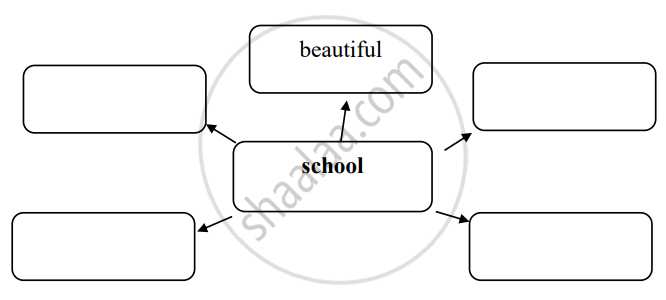
How should teenagers guard against cyber crimes?
Being a bachelor, the stranger had no patience with children.
