Advertisements
Advertisements
प्रश्न
Activation energy of a chemical reaction can be determined by ______.
पर्याय
determining the rate constant at standard temperature.
determining the rate constants at two temperatures.
determining probability of collision.
using catalyst.
Advertisements
उत्तर
Activation energy of a chemical reaction can be determined by determining the rate constants at two temperatures.
Explanation:
`log k_2/k_1 = E_a/(2.303R)(1/T_1 - 1/T_2)`
Where, Ea = activation energy
T2 = higher temperature
T1 = lower temperature
k1 = rate constant at temperature T1
k2 = rate constant at temperature T2
This equation is known as Arrhenius equation.
APPEARS IN
संबंधित प्रश्न
The rate constant of a first order reaction increases from 4 × 10⁻² to 8 × 10⁻² when the temperature changes from 27°C to 37°C. Calculate the energy of activation (Ea). (log 2 = 0.301, log 3 = 0.4771, log 4 = 0.6021)
The rate of the chemical reaction doubles for an increase of 10 K in absolute temperature from 298 K. Calculate Ea.
Consider a certain reaction \[\ce{A -> Products}\] with k = 2.0 × 10⁻² s−1. Calculate the concentration of A remaining after 100 s if the initial concentration of A is 1.0 mol L−1.
In the Arrhenius equation for a first order reaction, the values of ‘A’ of ‘Ea’ are 4 × 10¹³ sec−1 and 98.6 kJ mol−1 respectively. At what temperature will its half life period be 10 minutes?
[R = 8.314 J K−1 mol−1]
The rate constant of a first order reaction are 0.58 S-1 at 313 K and 0.045 S-1 at 293 K. What is the energy of activation for the reaction?
The decomposition of a hydrocarbon has value of rate constant as 2.5×10⁴s-1 At 27° what temperature would rate constant be 7.5×104 × 3 s-1if energy of activation is 19.147 × 10³ J mol-1 ?
Predict the main product of the following reactions: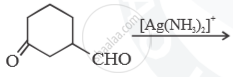
The chemical reaction in which reactants require high amount of activation energy are generally ____________.
Mark the incorrect statements:
(i) Catalyst provides an alternative pathway to reaction mechanism.
(ii) Catalyst raises the activation energy.
(iii) Catalyst lowers the activation energy.
(iv) Catalyst alters enthalpy change of the reaction.
Match the statements given in Column I and Column II
| Column I | Column I | |
| (i) | Catalyst alters the rate of reaction | (a) cannot be fraction or zero |
| (ii) | Molecularity | (b) proper orientation is not there always |
| (iii) | Second half life of first order reaction | (c) by lowering the activation energy |
| (iv) | `e^((-E_a)/(RT)` | (d) is same as the first |
| (v) | Energetically favourable reactions (e) total probability is one are sometimes slow | (e) total probability is one |
| (vi) | Area under the Maxwell Boltzman curve is constant | (f) refers to the fraction of molecules with energy equal to or greater than activation energy |
What happens to most probable kinetic energy and the energy of activation with increase in temperature?
For an endothermic reaction energy of activation is Ea and enthalpy of reaction ΔH (both of there in KJ moI–1) minimum value of Ea will be ______.
In respect of the eqn k = \[\ce{Ae^{{-E_a}/{RT}}}\] in chemical kinetics, which one of the following statement is correct?
The activation energy in a chemical reaction is defined as ______.
Arrhenius equation can be represented graphically as follows:

The (i) intercept and (ii) slope of the graph are:
The equation k = `(6.5 xx 10^12 "s"^(-1))"e"^(- 26000 " K"//"T")` is followed for the decomposition of compound A. The activation energy for the reaction is ______ kJ mol-1. (Nearest integer) (Given: R = 8.314 JK-1 mol-1)
An exothermic reaction X → Y has an activation energy 30 kJ mol-1. If energy change ΔE during the reaction is - 20 kJ, then the activation energy for the reverse reaction in kJ is ______.
Which plot of ln k vs `1/T` is consistent with the Arrhenius equation?
Activation energy of any chemical reactions can be calculated if one knows the value of:
The rate of a reaction quadruples when temperature changes from 27°C to 57°C calculate the energy of activation.
(Given: R = 8. 314 J K−1 mol−1, log 4 = 0.6021)
