Topics
National Income and Related Aggregates
- Macroeconomics Vs Microeconomics
- Representative Goods and Sectors
- Macroeconomic Agents and Government Role
- Emergence of Macroeconomics
- Context of the Present Book of Macroeconomics
- Meaning of Economic Wealth and Final Goods
- Stocks, Flows, and Depreciation
- Capital Formation, Trade-off & Circular Flow of Income
- Circular Flow of Income and Methods of Calculating National Income
- Output Method/Product Method
- Expenditure Method
- Income Method
- Factor Cost, Basic Prices and Market Prices
- Some Macroeconomic Identities
- National Disposable Income
- Private Income
- National Income Aggregates
- Real GDP and Nominal GDP
- GDP and Welfare
Introductory Macroeconomics
Introduction
- A Simple Economy
- Central Problems of an Economy
- Concepts of Production Possibility Frontier
- Organisation of Economic Activities
- Positive and Normative Economics
- Macroeconomics Vs Microeconomics
Development Experience (1947-90) and Economic Reforms since 1991
- India's Economy Before Independence
- Low Level of Economic Development Under the Colonial Rule
- Agricultural Sector in India
- Industrial Sector
- Foreign Trade of India
- Demographic Condition
- Occupational Structure
- Infrastructure
- Post-Independence Economic Systems and Planning
- Five Year Plans (FYP)
- Agriculture
- Industry and Trade
- Trade Policy: Import Substitution
- The 1991 Economic Crisis and Reforms
- Background of the New Economic Policy
- Liberalisation
- Privatisation
- Globalisation
- World Trade Organisation (WTO)
- Impact of the Economic Reforms
Money and Banking
- Concept of Money
- Functions of Money
- Demand for Money and Supply of Money
- Money Creation by Banking System
- Limits to Credit Creation and Money Multiplier
- Policy Tools To Control Money Supply
- Demand and Supply for Money : A Detailed Discussion
- The Transaction Motive
- The Speculative Motive
- Various Measures of Supply of Money
- Narrow and Broad Money
- Demonetisation
Theory of Consumer Behaviour
- Consumer Behaviour: The Problem of Choice
- Basic Concepts of Microeconomics > Utility
- Cardinal Approach (Utility Analysis)
- Derivation of Demand Curve in the Case of a Single Commodity
- Ordinal Utility Analysis/Indifference Curve Analysis
Indian Economic Development
Current Challenges Facing Indian Economy
- Concept of Human Capital
- Sources of Human Capital
- Human Capital and Economic Growth
- Human Capital and Human Development
- State of Human Capital Formation in India
- Growth of Education Sector in India
- Challenges and Future Prospects in Education
- Rural Development in India
- Credit and Marketing in Rural Areas
- Agricultural Market System
- Diversification into Productive Activities
- Sustainable Development and Organic Farming
- The Nature and Importance of Work in Society
- Workers and Employment
- Participation of People in Employment
- Self-employed and Hired Workers
- Employment in Firms, Factories and Offices
- Growth and Changing Structure of Employment
- Informalisation of Indian Workforce
- Concept of Unemployment
- Government and Employment Generation
- Environment and Sustainable Development in India
- State of India’s Environment
- Concept of Sustainable Development
- Strategies for Sustainable Development
Development Experience of India – a Comparison with Neighbours
Determination of Income and Employment
- Aggregate Demand and Its Components
- Consumption
- Investment
- Determination of Income in Two-sector Model
- Determination of Equilibrium Income in the Short Run
- Macroeconomic Equilibrium with Price Level Fixed
- Effect of an Autonomous Change in Aggregate Demand on Income and Output
- The Multiplier Mechanism
- Paradox of Thrift
- Equilibrium Output and Employment
Introductory Microeconomics
Production and Costs
- Production Function
- Concept of Production
- Some Basic Concepts - Total, Average and Marginal Physical Products
- Relation Between Total, Average and Marginal Product
- Law of Variable Proportions
- Average and Marginal Physical Products
- Changes in Production
- Fixed Cost and Variable Cost
- Behaviour of Cost in the Short - Run
- Relationship Between Average Variable Cost and Average Total Cost and Marginal Cost
- Opportunity Cost
- Revenue Concepts
- Producer's Equilibrium
- Law of Supply
- Supply Schedule
- Distinction Between Supply and Stock
- Determinants of Supply
- Movement Along the Supply Curve Or Expansion and Contraction of Supply
- Measurement of Elasticity of Supply > Percentage Method
- Methods of Measurement of National Income
- Marginal Cost (MC)
- The Law of Diminishing Marginal Product
- Shapes of Product Curves
- Costs in Long Run Period
- Returns to Scale
Government Budget and the Economy
The Theory of the Firm Under Perfect Competition
- Concept of Market
- Market Equilibrium
- Determination of Market Equilibrium
- Effects of Changes (Shifts) in Demand on Equilibrium Price and Equilibrium Quantity
- Perfect Competition
- Imperfect Competition
- Factors Determining Market Forms
- Oligopoly
- Market Forms - Perfect Oligopoly
- Market Forms - Imperfect Oligopoly
- Equilibrium Price
- Applications of Tools of Demand and Supply Price Control
- Price Ceiling
- Price Floor
- Revenue Concepts
- Profit Maximisation Objective
- Determinants of a Firm’s Supply Curve
- Supply Schedule
- Price Elasticity of Supply
Balance of Payments
- Open Economy and Its Linkages
- Concept of Balance of Payments
- Current Account
- Capital Account
- Balance of Payments Surplus and Deficit
- Foreign Exchange Market
- Foreign Exchange Rate
- Determination of the Exchange Rate
- Merits and Demerits of Flexible and Fixed Exchange Rate Systems
- Managed Floating Exchange Rate System
Market Equilibrium
- Simple Monopoly in the Commodity Market
- Other Non - Perfectly Competitive Markets
Meaning
- People can hold their wealth in the form of landed property, bullion, bonds, money, etc.
- For simplicity, all non-money assets are treated as bonds.
- Bonds are tradable papers issued by governments or firms that promise a future stream of monetary returns.
Two-Period Bond Example
A firm raises ₹100 by issuing a bond with:
- Face Value: ₹100
- Maturity Period: 2 years
- Coupon Rate: 10%
Returns:
- End of Year 1: ₹10
- End of Year 2: ₹110 (₹10 interest + ₹100 principal)
Present Value (PV)
At 5% market interest rate,
\[X=\frac{10}{1+\frac{5}{100}}\]
\[Y=\frac{110}{\left(1+\frac{5}{100}\right)^2}\]
\[\boxed{PV=X+Y}\]
Present Value (PV) ≈ ₹109.29
The bond price equals its Present Value (PV) in equilibrium.
- Price < PV: Bond is attractive → demand rises → price increases.
- Price > PV: Bond is unattractive → supply rises → price falls.
Bond Price and Interest Rate
- When the market rate of interest increases, the Present Value (PV) of the bond falls.
- Therefore, bond price and market rate of interest are inversely related.
Example:
- Interest rate 5% → PV ≈ ₹109.29
- Interest rate 6% → PV ≈ ₹107.33
Expectations, Capital Loss & Speculative Demand
People form expectations about future interest rates.
- Expected rise in interest rate → Expected fall in bond price → Capital loss → Sell bonds and hold money.
- Expected fall in interest rate → Expected rise in bond price (capital gain) → Buy bonds.
Thus, speculative demand for money arises from expectations about future interest rates and bond prices.
Relationship with Interest Rate
- High interest rate → People expect interest rates to fall → Buy bonds → Speculative demand for money is low.
- Low interest rate → People expect interest rates to rise → Sell bonds and hold money → Speculative demand for money is high.
Hence, speculative demand for money is inversely related to the market rate of interest.
CISCE: Class 12
Formula: Speculative Demand for money
\[M_d^S=\frac{r_\max-r}{r-r_\min}\]
where
\[M_d^S\] = speculative demand for money,
r = current market rate of interest,
rmax = upper limit of r,
rmin = lower limit of r.
As r falls towards rmin, \[M_d^S\]→∞ (liquidity trap).
Money Supply & Liquidity Trap
An increase in money supply enables people to buy more bonds.
Money supply ↑ → Bond demand ↑ → Bond price ↑ → Interest rate ↓
Thus, interest rate is the opportunity cost of holding money.
Liquidity Trap
Occurs when interest rate reaches \[rminr_{min}rmin\].
- Everyone expects interest rate to rise.
- Bond prices are expected to fall.
- People hold only money.
- Additional money is held as cash instead of buying bonds.
- Interest rate cannot fall further.
- Speculative demand becomes infinitely elastic (∞).
Speculative Demand Curve
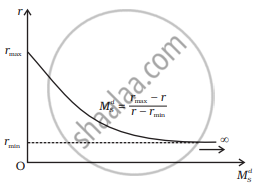
Speculative Demand Curve
- Horizontal Axis: Speculative Demand for Money
- Vertical Axis: Market Rate of Interest
- At r = rₘₐₓ, speculative demand for money is zero.
- At r = rₘᵢₙ, the economy is in a Liquidity Trap, and speculative demand becomes infinite.
Total Demand for Money
Total demand for money consists of:
- Transaction Demand
- Speculative Demand
- Transaction demand is directly related to Real GDP (Y) and Price Level (P).
- Speculative demand is inversely related to the Market Rate of Interest (r).
Formula: Total Demand for Money
\[\boxed{M_d=M_d^T+M_d^S}\]
or
\[\boxed{M_d=kPY+\frac{r_{max}-r}{r-r_{min}}}\]
Transaction demand
\[M_d^T=kPY\]
where k > 0, P = price level, Y = real GDP.
Aggregate demand for money
\[M_d=M_d^T+M_d^S\quad\Rightarrow\quad M_d=kPY+\frac{r_\max-r}{r-r_\min}\]
Key Points:
- Bonds are tradable securities promising future monetary returns.
- Bond price = Present Value (PV) in equilibrium.
- Bond price and interest rate are inversely related.
- Rising interest rates cause capital loss on bonds.
- Speculative demand for money depends on expectations and is inversely related to interest rates.
- A liquidity trap occurs at rminr_{min}rmin, where speculative demand becomes infinite.
- Total money demand = Transaction Demand + Speculative Demand.
