Advertisements
Online Mock Tests
Chapters
2: Sexual Reproduction in Flowering Plants
3: Human Reproduction
4: Reproductive Health
5: Principle of Inheritance and Variation
6: Molecular Basis of Inheritance
7: Evolution
8: Human Health and Diseases
9: Strategies for Enhancement in Food Production
10: Microbes in Human Welfare
11: Biotechnology : Principles and Processes
12: Biotechnology and Its Applications
13: Organisms and Populations
14: Ecosystem
▶ 15: Biodiversity and Conservation
16: Environmental Issues
Advertisements
Solutions for Chapter 15: Biodiversity and Conservation
Below listed, you can find solutions for Chapter 15 of CBSE, Karnataka Board PUC NCERT Exemplar for बायोलॉजी इग्ज़ेम्प्लार [अंग्रेजी} कक्षा १२.
NCERT Exemplar solutions for बायोलॉजी इग्ज़ेम्प्लार [अंग्रेजी} कक्षा १२ 15 Biodiversity and Conservation MULTIPLE CHOICE QUESTIONS [Pages 106 - 109]
Which of the following countries has the highest biodiversity?
South America
South Africa
Russia
India
Which of the following is not a cause for loss of biodiversity?
Destriiction of habitat
Invasion by allien species
Keeping animals in zoological parks
Over explotation of natural resources
Which of the following is not an invasive alien species in the Indian context?
Lantana
Cynodon
Parthenium
Eichhornia
Where among the following will you find pitcher plant?
Rain forest of north - east India
Sunder bans
Thas desert
Western Ghats
Which one of the following is not a major characteristic feature of biodiversity hot spots?
Large number of species
Abundance of endemic species
Mostly located in the tropics
Mostly located in the polar regions
Match the animals given in column I with their location in column II:
| Column I | Column II |
| A. Dodo | i. Africa |
| B. Quagga | ii. Russia |
| C. Thylacine | iii. Mauritius |
| D. Stellar's sea cow | iv. Australia |
Choose the correct match from the following:
A - i, B - iii, C - ii, D - iv
A - iv, B - iii, C - i, D - ii
A - iii, B - i, C - ii, D - iv
A - iii, B - i, C - iv, D - ii
What is common to the following plants: Nepenthes, Psilotum, Rauwolfia and Aconitum?
All are ornamental plants
All are phylogenic link species
All are prone to over exploitation
All are exclusively present in the Eastern Himalayas
The one - homed rhinoceros is specific to which of the following sanctuary?
Bhitar kaniko
Bandipur
Kaziranga
Corbett
Amongst the animal groups given below, which one appears to be more vulnerable to extinction?
Insects
Mammals
Amphibians
Reptiles
Which one of the following is an endangered plant species of India?
Rauwolfia serpentina
Santalum Album (sandal wood)
Cy as beddond
All of the above
What is common to lantana Eichhomia and African catfish?
All are endangered species of India
All are key stone species
All are mammals bound in India
All the species are neither threatened nor indigenous species of India
The extinction of passenger pigeon was due to ______.
Increased number of predatory birds.
Over exploitation by humans
Non- availability of the food
Bird flu virus infection
Which of the following statements is correct?
Parthenuim is an endemic species of our country
African catfish is not a threat to indigenous catfishes.
Steller' s sea cow is an extinct animal
Lantana is popularly known as carrot grass
Among the ecosystem mentioned below where can one bind maximum biodiversity?
Mangroves
Desert
Coral reefs
Alpire meadows
Which among the following forests is known as the "lungs of the planet earth"?
Taiga forest
Tundra forest
Amazon rain forest
Rainforests of north - east India.
The active chemical drug resespite is obtained from ______.
Datura
Rauwofia
Attropa
Papaver
Which of the following group exhibit more species diversity?
Gymnosperms
Algae
Bryophytes
Fungi
Which of the below mentioned regions exhibit lees seasonal variations?
Tropics
Temperates
Alpines
Both Tropics and Temperates
The Historic convention on Biological Diversity held in Rio de Janeiro in 1992 is known as ______.
CITES Convention
The Earth Summit
G-16 Summit
MAB programme
What is common to the techniques (i) in vitro fertilisation, (ii) Cryo preservation and (iii) tissue culture?
All are in situ conservation methods.
All are ex situ conservation methods.
All require ultra modern equipment and large space.
All are methods of conservation of extinct organisms.
NCERT Exemplar solutions for बायोलॉजी इग्ज़ेम्प्लार [अंग्रेजी} कक्षा १२ 15 Biodiversity and Conservation VERY SHORT ANSWER [Pages 109 - 110]
What characteristics make a community stable?
What could have triggered mass extinctions of species in the past?
What accounts for the greater ecological diversity of India?
According to David Tilman, greater the diversity, greater is the primary productivity. Can you think of a very low diversity man-made ecosystem that has high productivity?
What does 'Red' indicate in the IUCN Red list (2004)?
Explain as to how protection of biodiversity hot spots alone can reduce up to 30% of the current rate of species extinction.
What is the difference between endemic and exotic species?
How does species diversity differ from ecological diversity?
Why is genetic variation important in the plant Rauwolfia vomitoria?
What is Red Data Book?
Define gene pool.
What does the term ‘Frugivorous’ mean?
What is the expanded form of IUCN?
Define the terms bioprospecting
Define the terms endemism
What is common to the species shown in figures A and B?
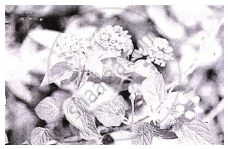 |
 |
| A | B |
What is common to the species shown in figures A and B?
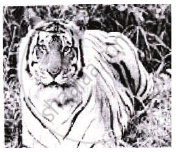 |
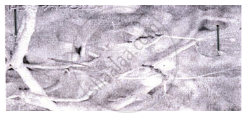 |
| A | B |
NCERT Exemplar solutions for बायोलॉजी इग्ज़ेम्प्लार [अंग्रेजी} कक्षा १२ 15 Biodiversity and Conservation SHORT ANSWER [Pages 110 - 111]
How is the presently occurring species extinction different from the earlier mass extinctions?
Of the four major causes for the loss of biodiversity (Alien species invasion, habitat loss and fragmentation, over-exploitation and co-extinctions which according to you is the major cause for the loss of biodiversity? Give reasons in support.
Discuss one example, based on your day-to-day observations, showing how loss of one species may lead to the extinction of another.
A species-area curve is drawn by plotting the number of species against the area. How is it that when a very large area is considered the slope is steeper than that for smaller areas?
Is it possible that productivity and diversity of a natural community remain constant over a time period of, say one hundred years?
There is greater biodiversity in tropical /subtropical regions than in temperate region. Explain.
Why are the conventional methods not suitable for the assessment of biodiversity of bacteria?
What criteria should one use in categorizing a species as threatened?
What could be the possible explanation for greater vulnerability of amphibians to extinction as compared to other animal groups?
How do scientists extrapolate the total number of species on Earth?
Humans benefit from diversity of life. Give two examples.
List any two major causes other than anthropogenic causes of the loss of biodiversity.
What is an endangered species? Give an example of an endangered plant and animal species each?
What are sacred groves and their role in biodiversity conservation?
Suggest a place where one can go to study coral reefs, mangrove vegetation and estuaries.
Is it true that there is more solar energy available in the tropics? Explain briefly.
Explain the concept of "co-extinction" by taking two examples.
NCERT Exemplar solutions for बायोलॉजी इग्ज़ेम्प्लार [अंग्रेजी} कक्षा १२ 15 Biodiversity and Conservation LONG ANSWER [Pages 111 - 112]
Elaborate how invasion by an alien species reduces the species diversity of an area.
How can you, as an individual, prevent the loss of biodiversity?
Can you think of a scientific explanation, besides analogy used by Paul Ehrlich, for the direct relationship between diversity and stability of an ecosystem?
Though the conflict between humans and wildlife started with the evolution of man, the intensity of conflict has increased due to the activities of modern man. Justify your answer with suitable examples.
What is an ecosystem service? List any four important ecosystem services provided by the natural ecosystems. Are you in favour or against levying a charge on the service provided by the ecosystem?
Describe the consumptive use value of biodiversity as food, drugs and medicines, fuel and fiber with suitable examples.
Species diversity decreases as we move away from the equator towards the poles. What could be the possible reasons?
Explain briefly the ‘rivet popper hypothesis’ of Paul Ehrlich.
The relation between species richness and area for a wide variety of taxa turns out to be a rectangular hyperbola. Give a brief explanation.
Solutions for 15: Biodiversity and Conservation
NCERT Exemplar solutions for बायोलॉजी इग्ज़ेम्प्लार [अंग्रेजी} कक्षा १२ chapter 15 - Biodiversity and Conservation
Shaalaa.com has the CBSE, Karnataka Board PUC Mathematics बायोलॉजी इग्ज़ेम्प्लार [अंग्रेजी} कक्षा १२ CBSE, Karnataka Board PUC solutions in a manner that help students grasp basic concepts better and faster. The detailed, step-by-step solutions will help you understand the concepts better and clarify any confusion. NCERT Exemplar solutions for Mathematics बायोलॉजी इग्ज़ेम्प्लार [अंग्रेजी} कक्षा १२ CBSE, Karnataka Board PUC 15 (Biodiversity and Conservation) include all questions with answers and detailed explanations. This will clear students' doubts about questions and improve their application skills while preparing for board exams.
Further, we at Shaalaa.com provide such solutions so students can prepare for written exams. NCERT Exemplar textbook solutions can be a core help for self-study and provide excellent self-help guidance for students.
Concepts covered in बायोलॉजी इग्ज़ेम्प्लार [अंग्रेजी} कक्षा १२ chapter 15 Biodiversity and Conservation are Patterns of Biodiversity, Loss of Biodiversity, Conservation of Biodiversity, Biodiversity, Species on Earth and Species in India, Importance of Species Diversity to the Ecosystem, Biodiversity Conservation Methods, Patterns of Biodiversity, Loss of Biodiversity, Conservation of Biodiversity, Biodiversity, Species on Earth and Species in India, Importance of Species Diversity to the Ecosystem, Biodiversity Conservation Methods, Patterns of Biodiversity, Loss of Biodiversity, Conservation of Biodiversity, Biodiversity, Species on Earth and Species in India, Importance of Species Diversity to the Ecosystem, Biodiversity Conservation Methods.
Using NCERT Exemplar बायोलॉजी इग्ज़ेम्प्लार [अंग्रेजी} कक्षा १२ solutions Biodiversity and Conservation exercise by students is an easy way to prepare for the exams, as they involve solutions arranged chapter-wise and also page-wise. The questions involved in NCERT Exemplar Solutions are essential questions that can be asked in the final exam. Maximum CBSE, Karnataka Board PUC बायोलॉजी इग्ज़ेम्प्लार [अंग्रेजी} कक्षा १२ students prefer NCERT Exemplar Textbook Solutions to score more in exams.
Get the free view of Chapter 15, Biodiversity and Conservation बायोलॉजी इग्ज़ेम्प्लार [अंग्रेजी} कक्षा १२ additional questions for Mathematics बायोलॉजी इग्ज़ेम्प्लार [अंग्रेजी} कक्षा १२ CBSE, Karnataka Board PUC, and you can use Shaalaa.com to keep it handy for your exam preparation.
