Advertisements
Advertisements
प्रश्न
What is common to the following plants: Nepenthes, Psilotum, Rauwolfia and Aconitum?
विकल्प
All are ornamental plants
All are phylogenic link species
All are prone to over exploitation
All are exclusively present in the Eastern Himalayas
Advertisements
उत्तर
All are prone to over exploitation
APPEARS IN
संबंधित प्रश्न
Suggest two practices giving one example of each, that help protect rare or threatened species.
Very short answer type question
What do you understand by the EW category of a living being?
With the help of any one example explain Alien species invasion as one of the causes of Biodiversity losses.
Match the following and choose the correct alternative.
| Column I | Column II | ||
| i. | Not evaluated | a. | Pervasive and abundant after careful assessment |
| ii. | Near threatened | b. | Information related to risk of extinction is lacking in some way |
| iii. | Least concern | c. | Described by scientist but not assessed by the IUCN |
| iv. | Data deficient | d. | May meet the criteria for threatened status in the near future |
Which among the following is an in situ conservation method for national genetic resources?
Which among the following forests is known as the "lungs of the planet earth"?
Which of the following are major causes of species losses in a geographical region?
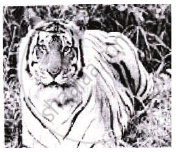
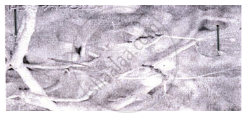
What is common to the species shown in figures A and B?
 |
 |
| A | B |
Of the four major causes for the loss of biodiversity (Alien species invasion, habitat loss and fragmentation, over-exploitation and co-extinctions which according to you is the major cause for the loss of biodiversity? Give reasons in support.
How many Biodiversity hotspots have been identified around the world?
Enlist two criteria that are used to identify a region for maximum protection as 'Biodiversity hotspots'.
Which of the following suits hotspots in ecological terminology?
Western Ghats have a large number of plant and animal species that are not found anywhere else. Which of the following terms will you use to notify such species?
Which one of the following groups faces maximum threat of extinction?
The sixth extinction in progress currently is different from all previous extinctions on earth as it is ______.
Give definitions of Invasive species.
What are the reasons for loss of biodiversity?
Which of the following pairs correctly represents examples of alien species invasion?
