Advertisements
Advertisements
Question
What is common to the following plants: Nepenthes, Psilotum, Rauwolfia and Aconitum?
Options
All are ornamental plants
All are phylogenic link species
All are prone to over exploitation
All are exclusively present in the Eastern Himalayas
Advertisements
Solution
All are prone to over exploitation
APPEARS IN
RELATED QUESTIONS
Suggest two practices giving one example of each, that help protect rare or threatened species.
Enlist any six categories into which a given species is placed once it has been thoroughly evaluated by IUCN.
Species that possess a high risk of extinction with very few surviving members (50) are categorised as ____________ by the IUCN.
Which among the following is an in situ conservation method for national genetic resources?
Which among the following forests is known as the "lungs of the planet earth"?
Which of the following is/are endangered plant species?
What is common to the species shown in figures A and B?
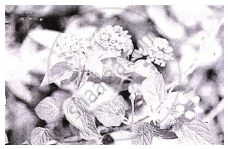 |
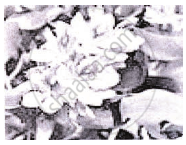 |
| A | B |
What is common to the species shown in figures A and B?
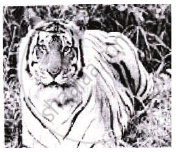 |
 |
| A | B |
What criteria should one use in categorizing a species as threatened?
How many Biodiversity hotspots have been identified around the world?
The species placed in CR category is ______.
Consider the following statements:
- Statement I: Endemism and accelerated habitat loss are characteristics of biodiversity hotspots.
- Statement II: Gene bank is an in-situ method of biodiversity conservation.
Choose the correct answer from the options given below.
The IUCN Red Data List (2004) in the last 500 years documents the extinction of nearly 784 species including ______.
Which one of the following is NOT one of the 'Evil Quartet' responsible for the loss of biodiversity?
Which of the following species pairs are examples of 'Extinct in the Wild' (EW) category?
Reduced biodiversity in an ecosystem leads to which of the following ecological effects?
Which of the following is an example of a species in the 'Least Concern' (LC) IUCN category?
Which of the following sets correctly lists all extinct (EX) species mentioned in the IUCN classification?
Which of the following represents the correct pairing of species to IUCN category?
