हिंदी

(English Medium) ICSE Class 10 - CISCE Important Questions

Advertisements
विषयों
अध्याय
विषयों
मुख्य विषय
अध्याय

Please select a subject first

Advertisements
Advertisements
< prev  3821 to 3840 of 3901  next > 

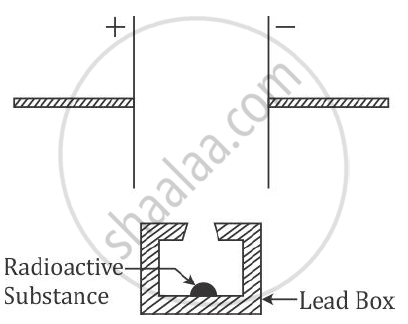
The graph (fig A) illustrates the correlation between the number of protons (x-axis) and the number of neutrons (y-axis) for elements A, B, C, D, and E in the periodic table. These elements are denoted by the letters rather than their conventional symbols. When the element C, depicted in the graph, undergoes radioactive decay, it releases radioactive rays. When these rays are directed into the plane of the paper in the presence of a magnetic field, as indicated in the fig B, they experience deflection, causing them to move upwards.

Name the law used to identify the radioactive radiation emitted by the element.

Appears in 1 question paper
Chapter: [10] Electro-Magnetism
Concept: Force on a Current Carrying Conductor in a Magnetic Field

Define heat capacity and state its SI unit.

Appears in 1 question paper
Chapter: [11] Calorimetry
Concept: Specific Heat Capacity

A solid of mass 50 g at 150 °C is placed in 100 g of water at 11 °C when the final temperature recorded is 20 °C. Find the specific heat capacity of the solid. (specific heat capacity of water = 4.2 J/g °C)

Appears in 1 question paper
Chapter: [11] Calorimetry
Concept: Specific Heat Capacity

You have a choice of three metals A, B, and C, of specific heat capacities 900 Jkg-1 °C-1, 380 Jkg-1 °C-1 and 460 Jkg-1 °C-1 respectively, to make a calorimeter. Which material will you select? Justify your answer.

Appears in 1 question paper
Chapter: [11] Calorimetry
Concept: Specific Heat Capacity

Calculate the mass of ice needed to cool 150 g of water contained in a calorimeter of mass 50 g at 32 °C such that the final temperature is 5 °C. Specific heat capacity of calorimeter = 0.4 J g-1 °C-1, Specific heat capacity of water = 4.2 J g-1°C-1, latent heat capacity of ice = 330 J g-1.

Appears in 1 question paper
Chapter: [11] Calorimetry
Concept: Specific Heat Capacity

Calculate the mass of ice required to lower the temperature of 300 g of water 40°C to water at 0°C.

(Specific latent heat of ice = 336 J/g, the Specific heat capacity of water = 4.2J/g°C)

Appears in 1 question paper
Chapter: [11] Calorimetry
Concept: Specific Heat Capacity

What do you understand by the following statements:

The heat capacity of the body is 60JK-1.

Appears in 1 question paper
Chapter: [11] Calorimetry
Concept: Specific Heat Capacity

What do you understand by the following statements:

The specific heat capacity of lead is 130 Jkg-1K-1.

Appears in 1 question paper
Chapter: [11] Calorimetry
Concept: Specific Heat Capacity

State two factors upon which the heat absorbed by a body depends

Appears in 1 question paper
Chapter: [11] Calorimetry
Concept: Specific Heat Capacity

A copper vessel of mass 100 g contains 150 g of water at 50°C. How much ice is needed to cool it to 5°C?

Given: Specific heat capacity of copper = 0.4 Jg-1 °C-1

The Specific heat capacity of water = 4.2 Jg-1 °C-1

The Specific latent heat of fusion ice = 336 Jg-1

Appears in 1 question paper
Chapter: [11] Calorimetry
Concept: Specific Heat Capacity

What property of water makes it an effective coolant?

Appears in 1 question paper
Chapter: [11] Calorimetry
Concept: Specific Heat Capacity

Water in lakes and ponds do not freeze at once in cold countries. Give a reason is support of your answer.

Appears in 1 question paper
Chapter: [11] Calorimetry
Concept: Specific Heat Capacity

A refrigerator converts 100 g of water at 20°C to ice at -10°C in 35 minutes. Calculate the average rate of heat extraction in terms of watts.

Given: Specific heat capacity of ice = 2.1 J g-1°C-1

Specific heat capacity of water = 4.2 J g-1°C-1

Specific latent heat of fusion of ice = 336 J g-1

Appears in 1 question paper
Chapter: [11] Calorimetry
Concept: Specific Heat Capacity

50 g of metal piece at 27°C requires 2400 J of heat energy so as to attain a temperature of 327°C . Calculate the specific heat capacity of the metal.

Appears in 1 question paper
Chapter: [11] Calorimetry
Concept: Specific Heat Capacity

Heat energy is supplied at a constant rate to 100g of ice at 0 °C. The ice is converted into water at 0° C in 2 minutes. How much time will be required to raise the temperature of water from 0 °C to 20 °C? [Given: sp. heat capacity of water = 4.2 J g-1 °C-1, sp. latent heat of ice = 336 J g-1].

Appears in 1 question paper
Chapter: [11] Calorimetry
Concept: Specific Heat Capacity

Specific heat capacity of substance A is 3.8 J g-1K-1 whereas the  specific heat capacity of substance B is 0.4 J g-1 K-1
(i) Which of the two is a good conductor of heat?
(ii) How is one led to the above conclusion?
(iii) If substances A and B are liquids then which one would be more useful in car radiators?

Appears in 1 question paper
Chapter: [11] Calorimetry
Concept: Specific Heat Capacity

A liquid X has the maximum specific heat capacity and is used as a coolant in Car Radiators. Name the liquid X.

Appears in 1 question paper
Chapter: [11] Calorimetry
Concept: Specific Heat Capacity

A solid metal weighing 150 g melts at its melting point of 800 °C by providing heat at the rate of 100 W. The time taken for it to completely melt at the same temperature is 4 min. What is the specific latent heat of fusion of the metal?

Appears in 1 question paper
Chapter: [11] Calorimetry
Concept: Specific Heat Capacity

Heat supplied to a solid change it into liquid. What is this change in the phase called?

Appears in 1 question paper
Chapter: [11] Calorimetry
Concept: Specific Heat Capacity

During the phase change does the average kinetic energy of the molecules of the substance increase?

Appears in 1 question paper
Chapter: [11] Calorimetry
Concept: Specific Heat Capacity
< prev  3821 to 3840 of 3901  next > 
Advertisements
Share
Notifications

Englishहिंदीमराठी


      Forgot password?
Use app×