Advertisements
Advertisements
प्रश्न
Notice the italicized sentence placed at the top of the article which tells us at a glance what the article is about.
Advertisements
उत्तर
For this, students just need to read the italicized sentence at the top of the article and notice how it puts forth the main idea of the article
APPEARS IN
संबंधित प्रश्न
Answer any four of the following questions in 30 – 40 words each :
(a) After initial reluctance why did the lawyers tell Gandhiji that they were ready to follow him into jail?
(b) What is Mukesh's attitude towards the family business of making bangles?
(c) How does the poet show the futility of Aunt Jennifer's efforts?
(d) Stephen Spender in his poem, 'An Elementary School Classroom in a Slum' paints a dismal picture of poverty. Comment.
(e) Jackson went through the contents of Rev. McLeery's suitcase. Which object therein puzzled him sorely? What was his comment on that?
(f) How did the servants react when they realized that Dr. Sadao was going to save the life of an enemy?
Put down the images that come to your mind immediately when you see the words in the box.
| Cat cupboard wall pond bird |
What do you understand of Einstein’s nature from his conversations with his history teacher, his mathematics teacher and the head teacher?
“I can see clear bridges between my life experiences and my work in dance.” How does Kumudini Lakhia weave episodes from the two realms in her account?
What decision taken by Dick changed his fortune?
Select any one of the famous personalities mentioned in ‘Warming up 1’ on page no. 5. From the library or internet find out their success story. Write it in your own words in about 20 to 30 lines of your notebook.
Give your write-up a suitable title.
Answer in your own words.
How did the plants respond when Revathi played her favourite tune?
Say why the speaker of the poem wishes to be a-
hawker
Find evidence from the lesson and write in your own words.
In Israel, the media have a positive outlook and self-respect.
Justify the verdict delivered in the poem.
I can support my answer with the help of the following suitable arguments:
- _______________________
- _______________________
- _______________________
Read the lesson and name the following.
The First surgeon to perform operations ______
Match the terms in ‘A’ with their explanation in ‘B’.
| 'A' | 'B' | ||
| (1) | tooth- extraction | (a) | a cut made for surgery |
| (2) | cardiac | (b) | having length, breadth, and depth |
| (3) | sedative | (c) | plastic surgery |
| (4) | tumor | (d) | related to the heart |
| (5) | incision | (e) | a control unit for a robotic surgery |
| (6) | a console | (f) | removing a decayed tooth |
| (7) | 3-D | (g) | a substance that makes a person sleep |
| (8) | Cushing clip | (h) | an extra growth in the body |
| (i) | a device to stop blood loss in neurosurgery |
The characters are a part of the stage setting. How does this reflect when the characters of the play range from the Duke and the Indian boy to the faeries?
Explain the following statement with reference to the context.
From now on The Herald shall be my artillery.
Complete the following sentence using your idea:
I can ______.
Visit a library:
Find more information/stories about scholars of the ancient world - Aryabhatta, Bhaskaracharya, Varahamihira, Charaka, Nagarjuna, Jeevaka.
Read the following words. Write the words that are combined to make these words.
- faraway
- nobleman
- whoever
- moneylender
- sometimes
Add ten more words to the list on your own. Each of the component words must be meaningful.
Guess the meaning of the following from the context.
The garden still is alight with lilies.
Read aloud a paragraph of your choice from the passage.
List the phrases that indicate sorrow or pain.
Read the poem aloud with the proper rhythm. What does the rhythm remind you of?
Explain the use of the following property in the development of the play.
An envelope containing the letter
The Emperor says he had realised earlier that Abdul has great talent. Does this tally with his actions? Give your opinion.
Fill in the blank choosing the appropriate word/idiom from the lesson.
In the examination, I did not know the answer, so I ______.
Rewrite the following line in your own words.
'Never one comes flying by
But will flutter down to drink.'
Write some more expressions like ‘hundreds of’. Expand each expression.
Example, ‘Hundreds of children in the school.’
How did Helen overcome her handicaps?
What part did Anne Sullivan play in Helen’s life?
Where did Chulong catch the bird?
Does Chulong want to earn money honestly?
The taxi driver took away the narrator’s suitcase.
Why did Dr. Ashok’s cousin call him?
Read the comic strip and answer the following question.
How do you behave in a virtual platform?
Underline the words or phrases that tell you what the wind does to the village.
What challenges does Alice face and how does she overcome them?
Read the line and answer the question.
And all I ask is a merry yarn from a laughing fellow rover.
What kind of human company does the poet want?
The hatchlings use a tiny egg-tooth to come out of the eggs.
When Amma said,'Don’t upset our foreign visitor' she meant______.
Raj did not buy______.
Women should not be compared with men in cricket, says Mithali.
Identify and write the sport's name respectively.
- ______
- ______
- ______
- ______
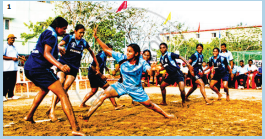
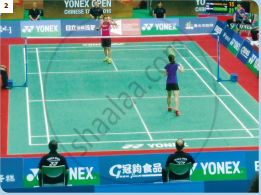
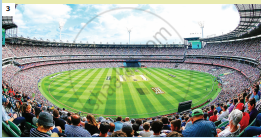
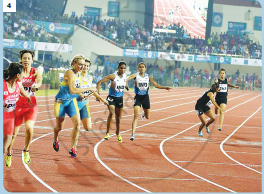
The poor farmer’s crop was______.
The boy and the girl were taken by the cavalry to explain their action.
Who is the wisest of all? Why?
Why do the soldiers (people) die? When will it stop?
Jaswant decided to stay in his post.
Who is the hero of this story?
Circle the animals which are in the voyage.

Who is incharge of this case?
What is the name of the girl?
Read the advertisement and answer the question given below.

What is the advertisement about?
Fill in the blank
Read the passage three times and colour a dustbin each time.
|
I am Mani. I had to take a bus to nearby city. I crossed the road to reach the bus stand. I got the bus, sat down, and read a book. Before I started to read, I just looked at the people around me. The two men sitting next to me were talking loudly. Some were listening to music on their phone. I was unable to focus on reading. The men were talking about cleaning the city. As they were talking, they opened a pack of biscuits to eat. After some time I dozed off. When I opened my eyes, the bus had reached the city. The two men were not there but pieces of the biscuits and wrappers were there. I cleaned the wrappers and put them in the dustbin.
|

- What did Mani take out?
- What did Mani find on the seat when he woke up?
- If you were Mani, what would you do?
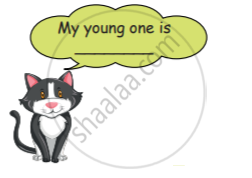
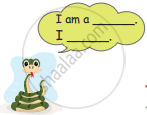
Name the animal and sound it makes.
What incident made Mugund make a wooden drum?
How many marks did he score in his 12th board exam?
What happens when the day is over?
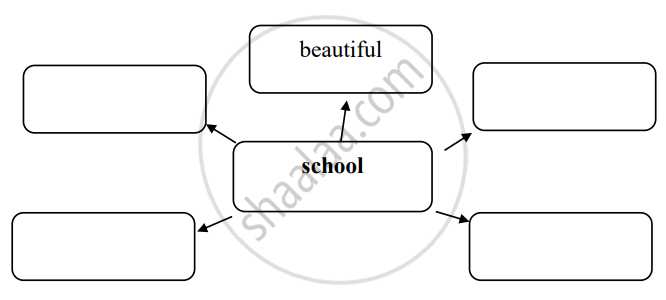
Write the related words as shown in the example:
Should children be discouraged from playing online games?
