Advertisements
Advertisements
प्रश्न
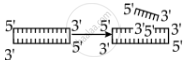
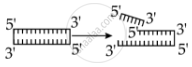
Identify the activity of endonuclease and exonuclease in the given image.
विकल्प
Endonuclease Exonuclease 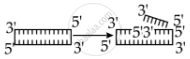
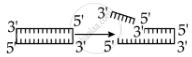
Endonuclease Exonuclease 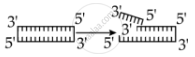
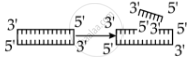
Endonuclease Exonuclease 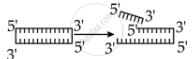
Endonuclease Exonuclease 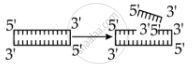
Advertisements
उत्तर
| Endonuclease | Exonuclease |
|
|
Explanation:
Endonucleases are a type of restriction enzyme that cuts the DNA at a specified location. It is widely used to clip the sequence in order to obtain DNA fragments with sticky ends. Sticky ends are single-stranded DNA segments that can establish hydrogen bonds with adjacent cut DNA segments. The enzyme ligase later joins these ends. Exonuclease is a restriction enzyme that removes nucleotides from the 5' and 3' ends of DNA strands.
APPEARS IN
संबंधित प्रश्न
Collect 5 examples of palindromic DNA sequences. Better try to create a palindromic sequence by following base-pair rules.
Explain the roles of the following with the help of an example each in recombinant DNA technology :
Restriction Enzymes
Give a reason why :
Single cloning site is preferred in a vector.
Which of the following radioisotope is not suitable for DNA labeling based studies?
The role of DNA ligase in the construction of a recombinant DNA molecule is ______.
Restriction enzymes that are used in the construction of recombinant DNA are endonucleases which cut the DNA at ‘specific-recognition sequence’. What would be the disadvantage if they do not cut the DNA at specific-recognition sequence?
Hind II always cuts DNA molecules at a particular point called recognition sequence and it consists of ______.
Which of the following was the very first restriction endonuclease to be isolated and characterized?
In the restriction endonuclease EcoRI, what do the letter 'R' and the Roman numeral 'I' represent?
Why is it mandatory to cut both the vector DNA and the foreign source DNA with the exact same restriction enzyme when constructing recombinant DNA?
