Advertisements
Advertisements
प्रश्न
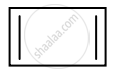
Identify giving reason whether the following compound is aromatic or not.
Advertisements
उत्तर
The compound is non-aromatic since it has 4π electrons and hence, does not obey the Huckel rule of aromaticity.
APPEARS IN
संबंधित प्रश्न
Predict the possible product of the following reaction.
bromination of phenol
Predict the possible product of the following reaction.
nitration of toluene
Identify A, B, C in the following reaction sequence:
\[\ce{CH3 - CH = CH2 ->[Br2/CCl4][room temperature] A ->[Zn] B ->[dil. alkaline][KMnO4] C}\]
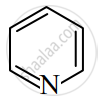
Identify giving reason whether the following compound is aromatic or not.
Name two reagents used for acylation of benzene.
Which of the following compounds will not undergo Friedal – crafts reaction easily ? (NEET)
An alkane is obtained by decarboxylation of sodium propionate. Same alkane can be prepared by ______.
Suggest a simple chemical test to distinguish propane and propene.
Write the structure of the following alkanes.
5 – (1, 2 – Dimethyl propyl) – 2 – methylnonane
How will you prepare propane from a sodium salt of fatty acid?
How will distinguish 1 – butyne and 2 – butyne?
Which of the following is an aromatic compound?
When acetylene is passed through red hot iron tube at 873 K, ____________ is/are obtained as product/s.
A compound with molecular formula C4H4O has all the four carbon atom and the oxygen atom in the ring. It also has two carbon-carbon double bonds. The compound is ____________.
Which of the following is NOT alicyclic compound?
The alkane formed on heating sodium butanoate with sodalime is ______.
α-butylene when subjected to hydroboration oxidation reaction, yields ____________.
Which of the following reagents can bring about following conversion?
\[\ce{But-1-ene -> Butan-2-ol}\]
Read the following reaction and answer the questions given below.
\[\begin{array}{cc}
\phantom{..............................}\ce{CH3}\\
\phantom{...........................}|\\
\ce{CH3 - C = CH2 + HBr ->[benzoyl][peroxide]CH3 - CH - CH2Br}\\
|\phantom{....................................}\\
\ce{CH3}\phantom{.................................}\\
\end{array}\]
- Write the IUPAC name of the product.
- State the rule that governs the formation of this product.
Read the following reaction and answer the questions given below.
\[\begin{array}{cc}
\phantom{..............................}\ce{CH3}\\
\phantom{............................}|\\
\ce{CH3 - C = CH2 + HBr ->[benzoyl][peroxide] CH3 - CH - CH2Br}\\
|\phantom{....................................}\\
\ce{CH_3}\phantom{.................................}
\end{array}\]
- Write the IUPAC name of the product.
- State the rule that governs the formation of this product.
Read the following reaction and answer the questions given below.
\[\begin{array}{cc}
\phantom{..............................}\ce{CH3}\\
\phantom{...........................}|\\
\ce{CH3 - C = CH2 + HBr ->[benzoyl][peroxide] CH3 - CH - CH2Br}\\
|\phantom{....................................}\\
\ce{CH3}\phantom{.................................}
\end{array}\]
- Write the IUPAC name of the product.
- State the rule that governs the formation of this product.
Identify ortho and para-directing groups from the following:
\[\ce{\underset{I}{–CHO},\underset{II}{–NHCOCH3},\underset{III}{–OCH3},\underset{IV}{–SO3H}}\]
Which of the following is most stable?
Benzene reacts with CH3COCl + AICl3 to give ______.
