English

Spam

Advertisements

Topics

  • Exception Handling in Python
    • Introduction of Exception Handling in Python
    • Syntax Errors in Python
    • Exceptions in Python
    • Built-in Exceptions in Python
    • Raising Exceptions in Python
    • Handling Exceptions in Python
    • Finally Clause in Python
  • File Handling in Python
    • Introduction to File Handling in Python
    • Types of Files in Python
    • Opening and Closing a Text Files in Python
    • Writing to a Text File in Python
    • Reading from a Text File in Python
    • Setting Offsets in a File in python
    • Creating and Traversing a Text File in Python
    • The Pickle Module in Python
  • Stack
    • Concepts of Stacks in Python
    • Operation on Stack in Python
    • Implementation of Stack in Python
    • Notations for Arithmetic Expressions in Python
    • Conversion from Infix to Postfix Notation in Python
    • Evaluation of Postfix Expression in Python
  • Queue
    • Concept of Queue in Python
    • Operations on Queue in Python
    • Implementation of Queue using Python
    • Concept of Deque in Python
    • Implementation of Deque using Python
  • Sorting
    • Introduction to Sorting in Python
    • Bubble Sort in Python
    • Selection Sort in Python
    • Insertion Sort in Python
    • Time Complexity of Algorithms in Python
  • Searching
    • Introduction to Searching in Python
    • Linear Search in Python
    • Binary Search in Python
    • Search by Hashing in Python
    • Collision Techniques in Python
  • Understanding Data
    • Concept of Data
    • Data Collection
    • Data Storage
    • Data Processing
    • Statistical Techniques for Data Processing
  • Database Concepts
    • Introduction to Database Concepts
    • File System
    • Database Management System (DBMS)
    • Relational Data model
    • Keys in a Relational Database
  • Structured Query Language (SQL)
    • Concepts of Structured Query Language (SQL)
    • Data Types and Constraints in MySQL
    • SQL for Data Definition
    • SQL for Data Manipulation
    • SQL for Data Query
    • Data Updation and Deletion
    • Functions in SQL
    • GROUP BY Clause in SQL
    • Operations on Relations
    • Using Two Relations in a Query
  • Computer Networks
    • Concept of Computer Network
    • Evolution of Networking
    • Types of Networks
    • Network Devices
    • Networking Topologies
    • Identifying Nodes in a Networking Communication
    • Internet, Web and the Internet of Things
    • Domain Name System (DNS)
  • Data Communication
  • Security Aspects
    • Threats and Prevention
    • Malware
    • Antivirus
    • Spam
    • HTTP vs HTTPS
    • Firewall
    • Cookies
    • Hackers and Crackers
    • Network Security Threats
  • Project Based Learning
    • Introduction of Project Based Learning
    • Approaches for Solving Problems
    • Teamwork
    • Project Descriptions
CBSE: Class 9

Spam Emails and Their Risks

1) Purpose and Caution in Using Email

  • Email is widely used to send and receive messages, documents, and information across the Internet.
  • However, users must be cautious, as not all emails are safe.
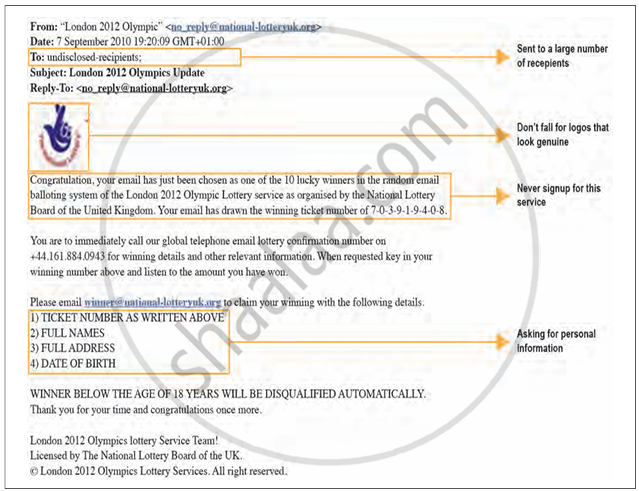
  • Some emails may come from unknown or suspicious sources and try to mislead or trick users these types of emails are called spam emails. 
2) Examples of Suspicious Emails

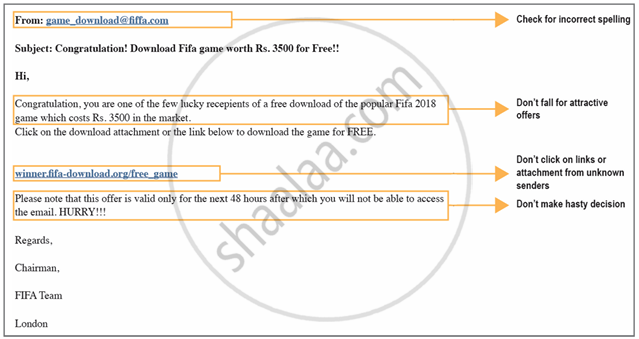
  • Example 1: An email claims to offer a popular game worth ₹3,500 for free and asks you to download it. Risk: The file may contain malware (malicious software) that can harm your device.

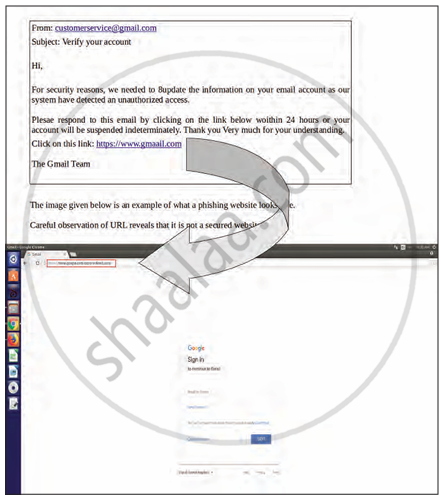
  • Example 2: An email contains a link asking you to verify your account details.  Risk: Clicking the link might redirect you to a phishing website that steals your personal data.
3) Identifying Common Signs of Spam Emails 

  • The email is from an unknown sender.
  • The subject line sounds too good to be true (free gifts, prizes).
  • Contains urgent requests for personal details.
  • Encourages you to click unknown links or download attachments.
  • Poor grammar, spelling mistakes, or a suspicious-looking sender address.
Advertisements
Share
Notifications

Englishहिंदीमराठी


      Forgot password?
Use app×