Advertisements
Chapters
1: Reproduction in Organisms
2: Sexual Reproduction in Flowering Plants
3: Human Reproduction
4: Reproductive Health-Problems and Strategies
Unit 2 – Genetics and Evolution
5: Principles of Inheritance and Variation
6: Chromosomes, Sex-Linked Inheritance and Human Genetic Disorders
▶ 7: Molecular Basis of Inheritance
8: Evolution-Origin of Life
9: Theory of Evolution and Evolution of Man
Unit 3 – Biology and Human Welfare
10: Human Health and Diseases
Chapter 11: Adolescent Issues: Alcoholism and Drugs
Chapter 12: Animal Breeding for Improvement in Food Production
Chapter 13: Plant Breeding to Enhance Food Production
Chapter 14: Microbes in Human Welfare
Unit 4 – Biotechnology
Chapter 15: Biotechnology: Principles and Processes
Chapter 16: Biotechnology and Its Applications
Unit 5 – Ecology and Environment
Chapter 17: Organisms and Populations
Chapter 18: Ecosystem
Chapter 19: Biodiversity and Conservation
Chapter 20: Environmental Issues
![Sarita Aggarwal solutions for Biology [English] Class 12 ISC chapter 7 - Molecular Basis of Inheritance - Shaalaa.com](/images/biology-english-class-12-isc_6:65d11b7ee3eb4277bbdac77874c6c42a.jpg "Sarita Aggarwal solutions for Biology [English] Class 12 ISC chapter 7 - Molecular Basis of Inheritance")
Advertisements
Solutions for Chapter 7: Molecular Basis of Inheritance
Below listed, you can find solutions for Chapter 7 of CISCE Sarita Aggarwal for Biology [English] Class 12 ISC.
Sarita Aggarwal solutions for Biology [English] Class 12 ISC 7 Molecular Basis of Inheritance EXERCISES [Pages 405 - 425]
А. OBJECTIVE QUESTIONS Multiple choice questions Choose the correct answer:
In a DNA helix, complementary pairing is always between ______.
A and C
A and G
A and T
C and T
The S-strain of bacteria Diplococcus pneumoniae ______.
are not virulent
form rough colonies
are capsulated
are non-capsulated
What had happened when heat-killed S cells along with the live R cells were injected into mice?
mice survived and showed live S cells
mice died and showed live S cells
mice survived and showed live R cells
mice died and showed live R cells
In radioactive phages P32 gets incorporated in ______.
protein coat
DNA
both protein coat and DNA
rhizoid fibres
The enzyme that joins the newly synthesised fragments of DNA is called ______.
helicase
primase
DNA polymerase
DNA ligase
The enzyme that polymerises deoxyribonucleotides in 5' → 3' direction only is called ______.
helicase
primase
DNA polymerase
DNA ligase
Which one of the following is a non-sense codon?
UAA
UAC
AUG
UUU
Which of the following is a starting codon?
UAA
UAC
AUG
UUU
Which of the following RNA has a clover leaf structure in the two dimensional form?
mRNA
tRNA
rRNA
mitochondrial RNA
If the sequence of bases on DNA is ATG, what will be the bases in the anticodon of tRNA in protein synthesis?
UAC
TAC
AUG
ATG
If the sequence of bases on the anticodon of tRNA is AUG, what will be the base sequence of mRNA?
GUA
GTA
UAC
AUG
The formation of tRNA from one of the DNA strands is known as ______.
translocation
transcription
translation
transformation
The formation of polypeptide from mRNA is called ______.
translocation
transcription
translation
transformation
The shifting of tRNA from A site to Р site is called ______.
translocation
transcription
translation
transformation
Insertion or deletion of a single base in a DNA segment causes ______.
frameshift mutation
jumping genes
Wobble changes
base substitution
A change in the wobble position of a gene means a change in the ______.
first base of codon
second base of codon
third base of codon
whole of codon
Semi-conservative mode of replication was showed by ______.
Griffith
Hershey and Chase
Meselson and Stahl
MacLeod and Avery
During the process of transcription, the molecule formed is ______.
DNA
polypeptide chain
ribosomes
mRNA
A codon contains ______.
one base
two bases
three bases
four bases
In the Lactose operon model, the repressor proteins bind to which of the following genes?
regulator gene
promoter gene
operator gene
structural gene
RNA polymerase binds to the ______.
regulator gene
promoter gene
operator gene
structural gene
The function of the operator gene is dependent on ______.
structural genes
promoter gene
regulator gene
inducer gene
The regions on the gene that do not code for any protein are known as ______.
intron
exons
protooncogenes
oncogenes
Amplification in DNA fingerprinting refers to ______.
extraction of DNA
separation of DNA fragments
polymerase chain reaction
tagging by probes
During which process the changed molecule of DNA fragments separate out according to their molecular size?
electroporation
electrophoresis
amplification
Southern blotting
Length of DNA with 23 base pairs is ______.
78.4 Å
78.2 Å
78 Å
74.8 Å.
The ratio constant for a species is ______.
A + G/C + T
T + C/G + A
A + C/T + G
G + C/A + T
During replication of a bacterial chromosome DNA synthesis starts from a replication origin site and ______.
is facilitated by telomerase
moves in one direction of the site
is facilitated by DNA ligase
RNA primers are involved
During transcription, if the nucleotide sequence of the DNA strand that is being coded is ATACG, then the nucleotide sequence in the mRNA would be ______.
TCTGG
UAUGC
UATGC
TATGC
A gene of operon which synthesizes a repressor protein is ______.
regulator gene
operator gene
structural gene
promoter gene
The concept of lac operon was proposed by ______.
Jacob and Monod
F. Griffith
McCarty and Macleod
Watson and Crick
All the terminator codons begin with ______.
adenine
cytosine
uracil
guanine
Which one of the following group of codons is called as degenerate codons?
UAA, UAG and UGA
GUA, GUG, GCA, GCG and GAA
UUC, UUG, CCU, CAA and CUG
UUA, UUG, CUU, CUC, CUA
AAC, AAG, GAC and CGG
During protein synthesis in an organism at one point the process comes to a halt. Select the group of the three codons from the following, from which any one of the three could bring about this halt.
UUU, UCC, UAU
UUC, UUA, UAC
UAG, UGA, UAA
UUG, UCA, UCG
During transcription, RNA polymerase holoenzyme binds to gene promoter and assumes a saddle-like structure. The DNA binding sequence is ______.
AATT
TTAA
TATA
CACC
The two polynucleotide chains in DNA are ______.
discontinuous
antiparallel
semi-conservative
parallel
Central dogma of genetic information is modified by the discovery of ______.
reverse transcriptase
DNA polymerase
RNA polymerase
ligase
tRNA consisting of three unpaired bases constitute ______.
codon
anticodon
clover-leaf model
acceptor loop
The codon AUG is ______.
ochre
amber
initiation codon
termination codon
During the replication of DNA, the synthesis of DNA as lagging strand takes place in segments, these segments are called ______.
double helix segments
satellite segments
Kornberg segments
Okazaki segments
Initiation codon of protein synthesis is ______.
AUG
GUA
GCA
CCA
Which is true according to Chargaff's rule?
A + G = T + C
A = C
G = T
`\frac{A + T}{C + G} = 1`
Which one is a terminator codon?
AGG
UAA
AUG
UUA
In DNA molecule, adenine is 15%. What would be percentage of guanine?
15%
30%
35%
70%
Antiparallel strands of a DNA molecule means that ______.
one strand turns anticlockwise
phosphate groups at the ends of the two DNA strands share the same position
phosphate groups at the start of two DNA strands are in opposite position
one strand turns clockwise
Which one is wrongly matched?
adenine, thymine—Purines
thymine, uracil—Pyrimidines
uracil, cytosine—Pyrimidines
guanine, adenine—Purines
Meselson and Stahl experiment proved ______.
DNA is genetic material
central dogma
transformation
semi-conservative DNA replication
transduction
The basis of DNA fingerprinting is ______.
the double helix
errors in base sequence
polymorphism in sequence
DNA replication
DNA coiling
Select the correct option.
In the DNA molecule ______.
the proportion of adenine in relation to thymine varies with the organism
there are two strands which run antiparallel—one in 5' → 3' direction and other in 3' → 5'
the total amount of purine nucleotides and pyrimidine nucleotide is not always equal
there are two strands which run parallel in the 5' → 3' direction
Fill in the blanks
______ is the technique by which the three-dimensional structure of macromolecules can be studied.
The DNA molecule takes a complete turn after every ______ base pairs.
A nucleotide consists of a ______, a ______and a nitrogenous base.
The experiment on DNA using 15N isotope proved that its replication is ______.
______ are enzymes that unwind DNA helices while ______ break and reseal the strands.
New strands of DNA are formed only in the ______ direction.
A sequence ofthree nitrogenous bases that code for an amino acid is called ______.
______ is a segment of DNA strand on which a new strand is produced.
______ in RNA replaces thymine in DNA.
______ has the shape of a clover-leaf.
The formation of a peptide bond is catalysed by the enzyme ______.
Sickle cell anaemia is caused due to a change from glutamic acid to ______ at position 6 in the β chain.
In lac operon concept the three structural genes are regulated by a single gene called ______.
In DNA fingerprinting, the separated DNA fragments are transferred from the gel to a nylon membrane by a technique called ______.
A lab technique called ______ quickly creates unlimited copies of even a tiny fragment of DNA.
State whether the following is true or false.
Prokaryotic cell contains only one chromosome.
State whether the following is true or false.
Each chromosome consists of a number of genes.
State whether the following is true or false.
DNA is a part of a gene.
State whether the following is true or false.
Complementary base for guanine is adenine.
State whether the following is true or false.
Acrocentric chromosome has centromere near the extreme end.
State whether the following is true or false.
Hershey and Chase experiment proves the semi-conservative mode of replication of DNA.
State whether the following is true or false.
DNA ligase can join together the short sections of newly synthesised DNA fragments.
State whether the following is true or false.
Both prokaryotes and eukaryotes have only one RNA polymerase that transcribe different RNAs.
State whether the following is true or false.
The promoter gene is present between the operator gene and regulator gene in tryptophan operon.
State whether the following is true or false.
Exon regions of mRNA do not code for any polypeptide.
Match the following.
| Column A | Column B |
| 1. Bacteriophages | (a) Polymerisation of free DNA nucleotides |
| 2. Bacterial transformation | (b) Join together short fragments of DNA |
| 3. Semiconservative replication of DNA | (c) Breaking the weak hydrogen bonds between DNA strands |
| 4. DNA polymerase | (d) Meselson and Stahl's |
| 5. DNA ligase | (e) Hershey and Chase |
| 6. Helicases | (f) Griffith |
| 7. RNA polymerase I | (g) tRNA |
| 8. Clover leafshaped tructure | (h) mRNA |
| 9. Genetic code | (i) Variable number of tandem repeats |
| 10. DNA fingerprinting | (i) Transcribes TRNA |
Answer the following in one or two words.
Chromosome with centromere at its extreme end.
Answer the following in one or two words.
Bonds present between the complementary bases in DNA.
Answer the following in one or two words.
The complementary nitrogenous base for a cytosine.
Answer the following in one or two words.
Chromosome that appears V-shaped in anaphase stage.
Answer the following in one or two words.
Condensed or constricted part of chromosome where chromatids are attached.
Answer the following in one or two words.
Three base sequences present on tRNA complementary to codon on mRNA.
Answer the following in one or two words
Newly synthesised short fragments of DNA formed on lagging strand.
Answer the following in one or two words.
mRNA having number of cistrons or gene segments transcribed on it.
Answer the following in one or two words.
Viruses that have RNA as the genetic material and capable of reverse transcription.
Answer the following in one or two words.
Process by which single strand of RNA is transcribed from one strand of DNA.
Answer the following in one or two words.
The coding regions of DNA.
Answer the following in one or two words.
A process by which number of copies of a DNA fragment are made by polymerase chain reaction.
Answer the following in one or two words.
Largest known human gene identified by human genome project.
Answer the following in one or two words.
Enzyme needed for activation of amino acids in the cytoplasm.
Answer the following in one or two words.
Codons in genetic code that do not code for any aminoacid.
Label the following:
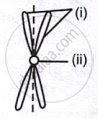
Label the following:
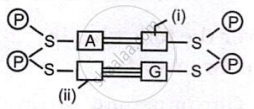
In the questions given below, there are two statements marked as Assertion (A) and Reason (R). Read the statements and choose the correct option.
Assertion (A): The two chains of a DNA double helix are anti-parallel.
Reason (R): Nucleotides in the each helix are joined together by phosphodiester bonds.
Both assertion (A) and reason (R) are true, and reason is the correct explanation of assertion.
Both assertion (A) and reason (R) are true, but reason is not the correct explanation of assertion.
Assertion (A) is true but reason (R) is false.
Both assertion (A) and reason (R) are false.
Assertion (A): DNA is associated with basic proteins called histones.
Reason (R): Negatively charged DNA is wrapped around histone octamers to form a structure called nucleosome.
Both assertion (A) and reason (R) are true, and reason is the correct explanation of assertion.
Both assertion (A) and reason (R) are true, but reason is not the correct explanation of assertion.
Assertion (A) is true but reason (R) is false.
Both assertion (A) and reason (R) are false.
Assertion (A): Sequences of bases in one polynucleotide chain of DNA can determine the sequence of bases in the other chain.
Reason (R): There are three hydrogen bonds between A and T and two between C and G.
Both assertion (A) and reason (R) are true, and reason is the correct explanation of assertion.
Both assertion (A) and reason (R) are true, but reason is not the correct explanation of assertion.
Assertion (A) is true but reason (R) is false.
Both assertion (A) and reason (R) are false.
Assertion (A): In Griffith's experiment, a mixture of heat-killed virulent bacteria R and live non-virulent bacteria S, lead to the death of mice.
Reason (R): Transforming principle got transferred from heat-killed R strain to S strain and made it virulent.
Both assertion (A) and reason (R) are true, and reason is the correct explanation of assertion.
Both assertion (A) and reason (R) are true, but reason is not the correct explanation of assertion.
Assertion (A) is true but reason (R) is false.
Both assertion (A) and reason (R) are false.
Assertion (A): DNA is a better genetic material than RNA.
Reason (R): DNA is more reactive and mutates at a faster rate.
Both assertion (A) and reason (R) are true, and reason is the correct explanation of assertion.
Both assertion (A) and reason (R) are true, but reason is not the correct explanation of assertion.
Assertion (A) is true but reason (R) is false.
Both assertion (A) and reason (R) are false.
Assertion (A): Central dogma is the flow of information from DNA to mRNA and then decoding it in the form of protein.
Reason (R): In retroviruses, reverse of central dogma occurs.
Both assertion (A) and reason (R) are true, and reason is the correct explanation of assertion.
Both assertion (A) and reason (R) are true, but reason is not the correct explanation of assertion.
Assertion (A) is true but reason (R) is false.
Both assertion (A) and reason (R) are false.
Assertion (A): UAA, UAG and UGA codons on mRNA terminate protein synthesis.
Reason (R): These codons are not recognised by tRNA.
Both assertion (A) and reason (R) are true, and reason is the correct explanation of assertion.
Both assertion (A) and reason (R) are true, but reason is not the correct explanation of assertion.
Assertion (A) is true but reason (R) is false.
Both assertion (A) and reason (R) are false.
Assertion (A): mRNA has some untranslated regions that are not translated.
Reason (R): UTRs are required for efficient translation.
Both assertion (A) and reason (R) are true, and reason is the correct explanation of assertion.
Both assertion (A) and reason (R) are true, but reason is not the correct explanation of assertion.
Assertion (A) is true but reason (R) is false.
Both assertion (A) and reason (R) are false.
Assertion (A): Repetitive sequences make up a very large portion of the human genome.
Reason (R): Repetitive sequences do not have direct coding functions in the genome.
Both Assertion (A) and Reason (R) are true and Reason (R) is the correct explanation of the Assertion (A).
Both Assertion (A) and Reason (R) are true, but Reason (R) is not the correct explanation of the Assertion (A).
Assertion (A) is true, but Reason (R) is false.
Assertion (A) is false, but Reason (R) is true.
Assertion (A): DNA fingerprinting is applied in paternity testing in case of disputes.
Reason (R): It employs the principle of polymorphism in DNA sequences as the polymorphisms are inheritable from parent to children.
Both assertion (A) and reason (R) are true, and reason is the correct explanation of assertion.
Both assertion (A) and reason (R) are true, but reason is not the correct explanation of assertion.
Assertion (A) is true but reason (R) is false.
Both assertion (A) and reason (R) are false.
Read the sources given and answer any four from the questions given below:
| In prokaryotes, the DNA is circular, has only one chromosome and present in the cytoplasm. In eukaryotes, the DNA is linear, packed in a number of chromosomes and mainly confined to the nucleus. DNA or deoxyribonucleic acid is a long polymer of nucleotides. DNA is the genetic material for most organisms while RNA is the genetic material in some viruses. DNA is composed of three components, a phosphate group, a deoxyribose sugar and a nitrogenous base. There are two types of bases purines and pyrimidines. Adenine (A) and Guanine (G) are purines while Cytosine (C), Thymine (T) and Uracil (U) are pyrimidines. DNA has A, G, C and T while in RNA thymine is replaced by uracil. The bases are paired by Chargaff's rule by which A pairs with T and C pairs with G. DNA being more stable than RNA. DNA is said to be better for storage of genetic information, hence better genetic material. RNA has ribose sugar which has 2'-ОН group present in every nucleotide. It is a reactive group and makes RNA catalytic and easily degradable. Hence comparatively DNA is chemically less reactive and structurally more stable than RNA. |
- The type ofnuclear matter present in prokaryotes
- circular RNA in nucleus
- circular RNA in cytoplasm
- linear DNA in cytoplasm
- circular DNA in cytoplasm
- RNA is a polynucleotide having the following components
- phosphate group, A,U,T,G and deoxyribose sugar
- phosphate group, A,C,T,U and deoxyribose sugar
- phosphate group, U,C,T,G and ribose sugar
- phosphate group, A,C,U,G and ribose sugar
- Which of the following statements is not true for RNА?
- highly stable
- contains base uracil
- genetic material in some viruses
- has 2-OH group in nucleotides
- Why is DNA considered to be better genetic material than RNA because it is
- more easily degradable
- structurally more stable
- catalytic in nature
- contains bases A, T, C and G
- RNA is the genetic material in
- eukaryotes
- prokaryotes
- viruses
- both (b) and (c)
Read the sources given and answer any four from the questions given below:
| It is a well-known fact that every individual has a unique DNA fingerprint or DNA profile. It is same for each and every cell of the body. It is an ideal way to distinguish one individual from another. DNA fingerprinting is used to analyse DNA present in the biological materials like body fluids (saliva, semen) or in the cells like WBCs, hair roots, bone or any cell that contains nucleus. DNA of an individual contains various types of segments like (i) some code for proteins, (ii) some have regulatory functions, (iii) some are intervening sequences that do not code for proteins called introns and (iv) some are short repetitive DNA sequences. For DNA fingerprinting, these short repetitive nucleotide sequences are of importance as these differ at certain sites from person to person. These are called as Variable Number Tandem Repeats (VNTR). The VNTR of two persons may be of same length and sequence at certain sites but vary at other sites. In DNA fingerprinting, DNA is first extracted from the cells and then divided into fragments by restriction enzymes. The fragment are then separated according to their size by electrophoresis. The separated fragments form a pattern of parallel bands specific to an organism. |
- For DNA fingerprinting, DNA can be taken from
- only body fluids
- only body cells
- only living cells
- both (a) and (b)
- DNA of an individual contains various types of segments like
- some code for proteins and fats
- some do not code for proteins
- some code for very long repetitive DNA sequences
- both (a) and (b)
- Importance of VNTR is that
- two people can have same length of VNTR
- VNTR vary at some sites in two people
- these are made of short nucleotides
- these are repetitive in nature
- DNA extracted from a cell is divided into fragments by
- DNA polymerase
- introns
- ligases
- restriction enzymes
- During electrophoresis the DNA fragments
- get aligned according to their weight
- get separated into VNTR
- get aligned according to their size
- get separated into one line
Read the sources given and answer any four from the questions given below:
| Tryptophan is an amino acid which is always needed by the bacterial cells for protein synthesis and hence produced by a sequential action of five enzymes. In the tryptophan operon concept, when tryptophan is added in the medium, the switch in the bacterial cell is set off and the cell stops preparing it, as it is easily available without any effort. The repressor protein binds with tryptophan called the co-repressor to form a repressor-co-repressor complex called functional repressor molecule. The functional repressor molecule then binds with the operator gene switching it off and hence the structural genes are not expressed. There is a promoter gene present between the operator gene and the regulator gene. Promoter gene is the binding site for enzyme RNA polymerase which moves along the DNA during transcription ofmRNA. When the operator gene is on, the RNA polymerase transcribes mRNA but when the operator gene is switched off, the RNA polymerase also gets blocked and cannot transcribe. RNA polymerase also decides which strand of DNA would act as a template for synthesis of mRNA. |
- In the bacterial cell,functional repressor molecule binds with the operator gene when
- operator gene is switched on
- tryptophan is added in medium
- structural gene is switched off
- repressor protein binds with regulator gene
- What is a co-repressor?
- repressor + RNA
- tryptophan + enzymes
- repressor + operator
- tryptophan
- What is the position of promoter gene in tryptophan operon?
- after operator gene
- before regulator gene
- after structural genes
- between operator and regulator gene
- Importance of promoter gene is
- binding site of RNA polymerase
- binding site for structural enzymes
- bind with tryptophan
- bind with repressor molecule
- Function of RNA polymerase is to
- block operator gene
- bind with operator gene
- transcribe mRNA
- transcribe DNA
B. SUBJECTIVE QUESTION Very short answer type questions (1 mark)
Name the bacteria, Griffith did his experiments with.
Give 3 important features of the S-strain of pneumococcus bacteria.
What happened when Griffith injected heat-killed S bacteria into mice?
What happened when heat-killed bacteria along with live R bacteria were injected into mice?
On which organism did Harshey and Chase work?
What are bacteriophages?
Name the bacteriophage, Hershey and Chase and taken for the experiments.
What is the basic structure of T2 bacteriophage?
What happened when Tz phage were grown in E. coli in medium containing radio active sulphur S35?
In which part of bacteriophage was radioactive phosphorus incorporated?
When T2 phage DNA labelled with P32 were introduced in E. coli, after multiplication and centrifugation, where did the radioactive P32 appear?
Which scientist explained the semiconservative mode of DNA replication?
Which bases are complementary to Adenine and Thymine?
What was the meaning of hybrid DNA?
How many origin of replication are there in prokaryotes?
On which strand of DNA is the replication continuous?
Name the enzyme the joins the Okazaki fragments.
On which strand are Okazakhi fragments formed?
What is the function of DNA polymerase?
Which enzyme breaks and reseals and strand of DNA?
What do helicases do?
Which is a nitrogen base that pairs with adenine in DNA?
Name the bases present in RNA?
Name the initiation starting codon?
Name 3 nonsense codons?
Where is mRNA formed?
Where does mRNA get attached for protein synthesis?
What does anti codon correspond to?
What is the role of aminoacyl tRNA synthetase?
How are amino acids joined together?
Name the inducer in the lac-operon in E.coli.
Name the gene that controls the three genes in lac-operon in E.coli.
What is meant by an operon?
How many nucleotide bases are present in one codon of a genetic code?
If in a mRNA the codon UAA appears, which amino acid will it code for?
What are synonymous codons?
Which RNA has clover leaf shape structure?
3'-end site of tRNA that has CCA sequence for which specific function?
Which RNA has the codons in it?
What is the role of represser protein?
In the lac-operon, the functioning of the operator gene is dependent on which gene?
What exactly an inhibitor gene does in lac-opereon?
What happens to the operator gene in the presence of inducer like lactose?
In the tryptophan operon, what is the function of regulator gene?
Under which condition do structural genes express themselves in tryptophase operon model?
What happens to operator gene in the presence of tryptophan?
What is the study of genes called?
How many nucleotide bases pairs are present in a human genome?
What is the full form of HGP?
How many genes does human genome contain approximately?
What is the haploid number of rice-Oryza sativa?
Which human chromosome has the fewest genes?
What is the full form of snips?
Do two individuals have same DNA fingerprints?
From which cell is DNA taken for DNA fingerprinting?
Who is a pioneer in the technique of fingerprinting?
What is repetitive DNA?
What is cDNA?
How is cDNA formed?
What are VNTRs?
The term used for technique used to make a number of copies of DNA by polymerase chain reaction?
By which technique are fragments of DNA separated?
Which technique is used to transfer the DNA fragments from gel to a nylon membrane?
What kind of molecules are used as probes in DNA fingerprinting?
What is molecular photocopying?
Why do anthropologists and archeologists study DNA of animals and plants?
Short answer type questions (2 marks)
Why did the mice die when heat-killed S cells and live R cells were injected together?
Why was protein coat of bacteriophage not considered to be the hereditary material?
What is Chargaff's rule?
Why does lagging strand form short fragments of DNA?
Suppose you begin with one molecule of DNA, after 4 replications, how many daughter DNA molecules would have original parental strands?
Explain the structure of tRNA.
How are amino acids activated?
One of the codons of mRNA is AUG. Draw the structure of tRNA adapter molecule for this codon. Explain the uniqueness of this tRNA.
Given below is a part of the template strand of a structural gene:
TAG CAT TAG GAT
Write its transcribed mRNA strand with its polarity.
Given below is a part of the template strand of a structural gene:
TAG CAT TAG GAT
Explain the mechanism involved in initiation of transcription of this strand.
Explain the process of charging of tRNA adapter molecule. Why is it essential in translation?
Draw the structure of the initiater tRNA adapter molecule.
Why tRNA is called an adapter molecule?
Study the mRNA segment given below which is ready and complete to be translated into a polypeptide chain.

- Write codons 'a' and 'b'.
- What do they code for?
- How is peptide bond formed between two amino acids in the ribosome?
Short answer type questions (3 marks)
Explain Hershey-Chase experiment. What was proved through this experiment?
What is 'semi-conservative' DNA replication? How was it experimentally proved and by whom?
Why is DNA molecule more stable genetic material than RNA? Explain.
'Unambiguous' 'degenerate' and 'universal' are some of the salient features of genetic code. Explain.
Draw a labelled schematic structure of a transcription unit. Explain the function of each component of the unit in the process of transcription.
What is the role of constitutive enzymes?
Why is tryptophan called co-repressor?
What do you understand by gene library?
What is the significance of contact inhibition in cell division?
What is the principle of DNA profiling?
What is amplification in DNA fingerprinting?
How many chromosomes are present in a prokaryotic cell?
Name the nitrogenous bases that pair with adenine.
Name the nitrogenous bases that pair with guanine.
Name the nitrogenous bases that pair with thymine.
What kind of bonds are present between the two polynucleotide chains?
Differentiate between the following:
Purines and Pyrimidines
Differentiate between the following:
Nucleosides and Nucleotides
Differentiate between the following:
Prokaryotic and Eukaryotic chromosome
Differentiate between the following:
Telocentric and Acrocentric chromosomes
Differentiate between the following:
S-strain and R-strain of Pneumococcus bacteria
Differentiate between the following:
DNA polymerase and RNA polymerase
Differentiate between the following:
Helicases and DNA ligase
Differentiate between Exons and introns.
Differentiate between the following:
Promoter and Structural gene
Differentiate between the following:
mRNA and tRNA
Distinguish between the following.
Transcription and Translation
Differentiate between the following:
Translation and Translocation
Long answer type questions (5 marks)
Explain protein synthesis with respect to initiation, elongation and termination.
Explain Griffith's experiment on bacteria transformation.
How did Hershey and Chase prove DNA as the hereditary material?
Explain semi-conservation mode of replication of DNA with the help of one example.
Describe the process of transcription.
Describe various kinds of RNA.
Explain the Lac operon concept.
What do you understand by enzyme repression?
Give an example of enzyme repression.
How is a continuous linear sequence of genes on mRNA formed in eukaryotes?
Explain various modes of genetic recombination in bacteria.
How does the presence of lactose, switch on the operator?
Explain the technique of DNA fingerprinting by Southern-blot.
How does DNA fingerprinting help in settling the paternity disputes?
Write an essay on structure of DNA.
List important features of Watson and Crick model of DNA.
E. BOARD QUESTIONS 1 mark
Give one significant contribution of the following scientists:
F. Griffith
Give one significant contribution of the following scientists:
P. Ehrlich
Each of the following questions has four choices. Choose the best option in each case:
Length of DNA with 23 base pairs is ______.
78.4 Å
78.2 Å
78 Å
74.8 Å.
During which phase of the cell cycle, does DNA replication take place?
How many sets of primers are required in each cycle of PCR?
Which one of the following enzymes is used to join DNA fragments?
DNA polymerase
Ligase
Primase
Endonuclease
5 marks
Give an account of Meselson and Stahl’s experiment
What is the significance of Meselson and Stahl’s experiment?
Describe post-transcriptional processing of RNA in eukaryotes.
OR
Describe Avery, McLeod and McCarty’s experiment. State its significance.
Explain the components of the structural genes in the Lac operon system in E.coli.
How does the operon function in the presence of lactose?
Solutions for 7: Molecular Basis of Inheritance
Sarita Aggarwal solutions for Biology [English] Class 12 ISC chapter 7 - Molecular Basis of Inheritance
Shaalaa.com has the CISCE Mathematics Biology [English] Class 12 ISC CISCE solutions in a manner that help students grasp basic concepts better and faster. The detailed, step-by-step solutions will help you understand the concepts better and clarify any confusion. Sarita Aggarwal solutions for Mathematics Biology [English] Class 12 ISC CISCE 7 (Molecular Basis of Inheritance) include all questions with answers and detailed explanations. This will clear students' doubts about questions and improve their application skills while preparing for board exams.
Further, we at Shaalaa.com provide such solutions so students can prepare for written exams. Sarita Aggarwal textbook solutions can be a core help for self-study and provide excellent self-help guidance for students.
Concepts covered in Biology [English] Class 12 ISC chapter 7 Molecular Basis of Inheritance are .
Using Sarita Aggarwal Biology [English] Class 12 ISC solutions Molecular Basis of Inheritance exercise by students is an easy way to prepare for the exams, as they involve solutions arranged chapter-wise and also page-wise. The questions involved in Sarita Aggarwal Solutions are essential questions that can be asked in the final exam. Maximum CISCE Biology [English] Class 12 ISC students prefer Sarita Aggarwal Textbook Solutions to score more in exams.
Get the free view of Chapter 7, Molecular Basis of Inheritance Biology [English] Class 12 ISC additional questions for Mathematics Biology [English] Class 12 ISC CISCE, and you can use Shaalaa.com to keep it handy for your exam preparation.
