Advertisements
Chapters
2: Locating Places on Earth
3: Movements of the Earth
4: Structure of the Earth
5: Rocks
6: Landforms of the Earth
7: Earthquakes
8: Volcanoes
9: Weathering and Denudation
10: Hydrosphere
11: Composition and Structure of Atmosphere
12: Insolation
13: Atmospheric Pressure and Winds
14: Humidity
15: Pollution-Types and Sources
16: Effects of Pollution
17: Pollution—Preventive Measures
18: Natural Regions of the World
*: Map Based Questions
![Rachna Sapra solutions for Geography [English] Class 9 ICSE chapter 1 - Earth as a Planet - Shaalaa.com](/images/geography-english-class-9-icse_6:e1464ff004d844649e81e9e1e11e08a5.jpg "Rachna Sapra solutions for Geography [English] Class 9 ICSE chapter 1 - Earth as a Planet")
Advertisements
Solutions for Chapter 1: Earth as a Planet
Below listed, you can find solutions for Chapter 1 of CISCE Rachna Sapra for Geography [English] Class 9 ICSE.
Rachna Sapra solutions for Geography [English] Class 9 ICSE 1 Earth as a Planet SOLVE AND SCORE [Pages 9 - 11]
Multiple Choice Questions (MCQs):
A spectator standing on the coast is looking for a ship. Write the correct chronological order in which the below mentioned parts of the ship will become visible to him.
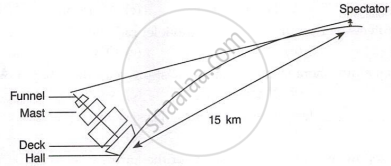
- Ship’s deck
- Funnel
- Mast
- Hull
i, ii, iii, iv
ii, iii, i, iv
iii, iv, i, ii
iii, i, ii, iv
The shape of the Earth is ______.
True sphere
Oblate spheroid
Spheroid
Spiral
Which natural cycle does the given picture depict?
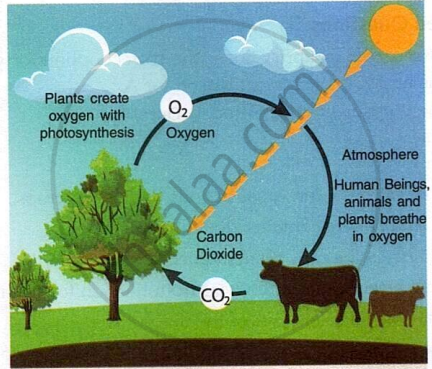
Nitrogen cycle
Oxygen cycle
Water cycle
Heat cycle
Which of the following is not an inner planet?
Jupiter
Mars
Earth
Venus
What is the main gaseous product of photosynthesis?
Nitrogen
Carbon dioxide
Oxygen
Ozone
What is the role of carbon dioxide with respect to temperature?
Lowers
Raises
No effect
Effect keeps changing
Which was the first living organism on the Earth?
Ants
Blue-green algae
Monkeys
Mosquito
Which of the following is a biotic component of the environment?
Plants
Air
Water
Rocks
Which of the following is an abiotic component of the environment?
Animals
Plants
Sand
Human beings
Identify the celestial body from the information given below.
- They are small rocky bodies which revolve around the Sun.
- They are found between the orbits of Mars and the Jupiter.
- They are the debris of the planet which once existed here.
Moon
Asteroids
Comets
Meteoroids
Which one of the following is not a realm of the Earth?
Lithosphere
Hydrosphere
Atmosphere
Stratosphere
Which gas protects us from the harmful ultraviolet radiations?
Nitrogen
Ozone
Oxygen
Argon
Which planet’s atmosphere is having the highest presence of carbon dioxide?
Saturn
Mercury
Mars
Venus
The Earth is ______ largest planet in the solar system.
Sixth
Fifth
Second
First
Which of the following resembles the shape of the Earth?
Guava
Orange
Apple
Grapefruit
Moon completes one rotation and revolution in about ______.
1 month
365 days
27 days
24 hours
Which gas is absorbed by the plants for their growth?
Nitrogen
Carbon dioxide
Ozone
Oxygen
Assertion-Reason Based Questions: Four options are given for each question. Choose the correct option for your answer.
Assertion (A): Lack of nitrogen can cause serious damage to crops.
Reason (R): Earth’s atmosphere contains 78% nitrogen.
Both A and R are true and R is the correct reason for A.
Both A and R are true but R is not the correct reason for A.
A is true and R is false.
A is false and R is true.
Assertion (A): The Earth is the only planet which supports life.
Reason (R): The Earth receives optimum heat from the Sun to sustain life.
Both A and R are true and R is the correct reason for A.
Both A and R are true but R is not the correct reason for A.
A is true and R is false.
A is false and R is true.
Assertion (A): We can see only one face of the moon.
Reason (R): Moon completes one rotation and one revolution in approximately 27 days.
Both A and R are true and R is the correct reason for A.
Both A and R are true but R is not the correct reason for A.
A is true and R is false.
A is false and R is true.
Assertion (A): The Earth belongs to the Milky Way galaxy.
Reason (R): The Milky Way galaxy appears like a faint band of white light across the night sky.
Both A and R are true and R is the correct reason for A.
Both A and R are true but R is not the correct reason for A.
A is true and R is false.
A is false and R is true.
Assertion (A): The Earth is spherical in shape.
Reason (R): The Corona formed on the Sun during the solar eclipse is covered by a circular shadow.
Both A and R are true and R is the correct reason for A.
Both A and R are true but R is not the correct reason for A.
A is true and R is false.
A is false and R is true.
Source-based Questions:
Read the diagrams and answer the questions.

- Why does the pole appear higher in one case while the same pole appears lower in the other?
- Which of the two is the real life situation?
Look at the picture and answer the following questions.
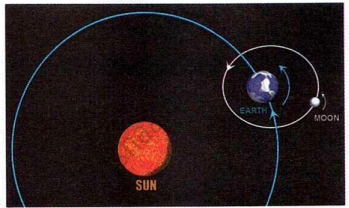
- What is the duration of rotation and revolution of the Moon?
- What is the effect of this duration on the Earth?
- How many times can one see full moon during a month?
- What is the full moon position called in Hindi?
- What is the new moon position called in Hindi?
- What is the direction of rotation and revolution of the Moon?
Answer the following questions:
What is the shape of the Earth?
Name the three realms of the earth on which biosphere is dependent.
What is the importance of the ozone layer for life on earth?
Define the term of the biosphere.
What is the mean average temperature of the earth and why is it important?
Why is earth called a blue planet?
How many terrestrial planets are there in the solar system? Which is the largest planet in the solar system?
What conditions favour life on the Earth?
What is “Geoid”?
Which planets have rings around them?
Which planets are known as the Twin planets in the solar system and why?
What is the position of the earth with respect to the sun?
What do you mean by oxygen cycle?
Name the two scholars who had initially stated that the earth is spherical.
Mention four proofs which helped people accept the fact that the Earth is spherical.
Name the planet which was declared Dwarf Planet in 2006.
Mention the three conditions that a celestial body must fulfil to be called a planet.
Where does the asteroid belt lie?
Distinguish between inner and outer planets.
What are meteors?
Solutions for 1: Earth as a Planet
Rachna Sapra solutions for Geography [English] Class 9 ICSE chapter 1 - Earth as a Planet
Shaalaa.com has the CISCE Mathematics Geography [English] Class 9 ICSE CISCE solutions in a manner that help students grasp basic concepts better and faster. The detailed, step-by-step solutions will help you understand the concepts better and clarify any confusion. Rachna Sapra solutions for Mathematics Geography [English] Class 9 ICSE CISCE 1 (Earth as a Planet) include all questions with answers and detailed explanations. This will clear students' doubts about questions and improve their application skills while preparing for board exams.
Further, we at Shaalaa.com provide such solutions so students can prepare for written exams. Rachna Sapra textbook solutions can be a core help for self-study and provide excellent self-help guidance for students.
Concepts covered in Geography [English] Class 9 ICSE chapter 1 Earth as a Planet are .
Using Rachna Sapra Geography [English] Class 9 ICSE solutions Earth as a Planet exercise by students is an easy way to prepare for the exams, as they involve solutions arranged chapter-wise and also page-wise. The questions involved in Rachna Sapra Solutions are essential questions that can be asked in the final exam. Maximum CISCE Geography [English] Class 9 ICSE students prefer Rachna Sapra Textbook Solutions to score more in exams.
Get the free view of Chapter 1, Earth as a Planet Geography [English] Class 9 ICSE additional questions for Mathematics Geography [English] Class 9 ICSE CISCE, and you can use Shaalaa.com to keep it handy for your exam preparation.
