NCERT solutions for Maths Mela [English] Class 5 chapter 4 - We the Travellers-2 [Latest edition]
Chapters
2: Fractions
3: Angles as Turns
▶ 4: We the Travellers-2
5: Far and Near
6: The Dairy Farm
7: Shapes and Patterns
8: Weight and Capacity
Chapter 9: Coconut Farm
Chapter 10: Symmetrical Designs
Chapter 11: Grandmother’s Quilt
Chapter 12: Racing Seconds
Chapter 13: Animal Jumps
Chapter 14: Maps and Locations
Chapter 15: Data Through Pictures
Advertisements
Advertisements
Solutions for Chapter 4: We the Travellers-2
Below listed, you can find solutions for Chapter 4 of CBSE NCERT for Maths Mela [English] Class 5.
Advertisements
NCERT solutions for Maths Mela [English] Class 5 4 We the Travellers-2 Intext Question [Pages 43 - 56]
Fuel Arithmetic
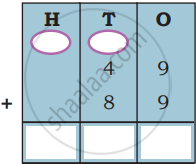
Find the sum of 49 and 89.
Let Us Solve
Add the following numbers. Wherever possible, find easier ways to add the pair of numbers.
15 + 79
Add the following numbers. Wherever possible, find easier ways to add the pair of numbers.
46 + 99
Add the following numbers. Wherever possible, find easier ways to add the pair of numbers.
38 + 35
Add the following numbers. Wherever possible, find easier ways to add the pair of numbers.
5 + 89
Add the following numbers. Wherever possible, find easier ways to add the pair of numbers.
76 + 28
Add the following numbers. Wherever possible, find easier ways to add the pair of numbers.
69 + 20
Find the relationship between the numbers in the given statements and fill in the blanks appropriately.
If 46 + 21 = 67, then,
67 − 21 = ______.
67 − 46 = ______.
Find the relationship between the numbers in the given statements and fill in the blanks appropriately.
If 198 − 98 = 100, then,
100 + ______ = 198.
198 − ______ = 98.
Find the relationship between the numbers in the given statements and fill in the blanks appropriately.
If 189 + 98 = 287, then,
287 − 98 = ______.
287 − 189 = ______.
Find the relationship between the numbers in the given statements and fill in the blanks appropriately.
If 872 - 672 = 200, then,
200 + ______ = 872.
872 − ______ = 672.
In the following, write the subtraction and addition sentences that follow from the given sentence.
If 78 + 164 = 242, then,
In the following, write the subtraction and addition sentences that follow from the given sentence.
If 462 + 839 = 1301, then,
In the following, write the subtraction and addition sentences that follow from the given sentence.
If 921 − 137 = 784, then,
In the following, write the subtraction and addition sentences that follow from the given sentence.
If 824 − 234 = 590, then,
Let Us Solve
What is the difference between 82 and 37?
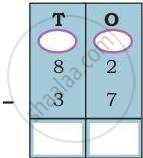
What is the difference between 57 and 11?
57 − 11 = ______
What is the difference between 23 and 19?
23 − 19 = ______
What is the difference between 49 and 21?
49 − 21 = ______
What is the difference between 56 and 18?
56 − 18 = ______
What is the difference between 93 and 35?
93 − 35 = ______
What is the difference between 84 and 23?
84 − 23 = ______
What is the difference between 70 and 43?
70 − 43 = ______
What is the difference between 65 and 47?
65 − 47 = ______
Sums of Consecutive Numbers
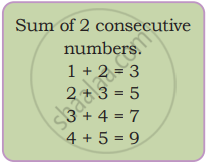
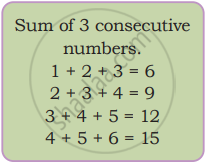
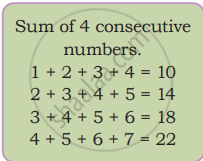
In each of the boxes above, state whether the sums are even or odd. Explain why this is happening.
What is the difference between two successive sums in each box? Is it the same throughout?
What will be the difference between two successive sums for—
- 5 consecutive numbers
- 6 consecutive numbers
Use your understanding to find the following sum without adding the numbers directly.
67 + 68 + 69
Use your understanding to find the following sum without adding the numbers directly.
24 + 25 + 26 + 27
Use your understanding to find the following sum without adding the numbers directly.
48 + 49 + 50 + 51 + 52
Use your understanding to find the following sum without adding the numbers directly.
237 + 238 + 239 + 240 + 241 + 242
Let Us Solve
Find the following sum. Try not to write TTh, Th, H, T, and O at the top. Just align the digits properly, at least for the smaller numbers.
238 + 367
Find the following sum. Try not to write TTh, Th, H, T, and O at the top. Just align the digits properly, at least for the smaller numbers.
1,234 + 12,345
Find the following sum. Try not to write TTh, Th, H, T, and O at the top. Just align the digits properly, at least for the smaller numbers.
12 + 123
Find the following sum. Try not to write TTh, Th, H, T, and O at the top. Just align the digits properly, at least for the smaller numbers.
46,120 + 12,890
Find the following sum. Try not to write TTh, Th, H, T, and O at the top. Just align the digits properly, at least for the smaller numbers.
878 + 8,789
Find the following sum. Try not to write TTh, Th, H, T, and O at the top. Just align the digits properly, at least for the smaller numbers.
1,749 + 17,490
The great Indian road trip!
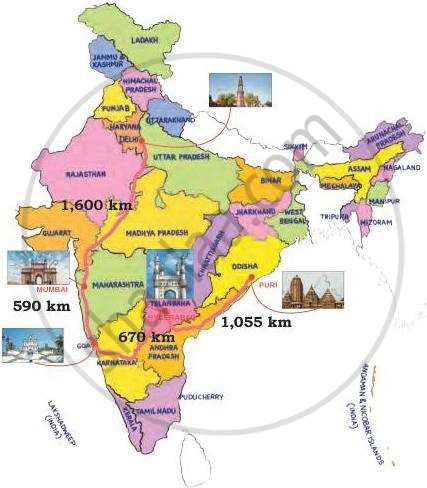
Nazrana and her friends planned a road trip across India, starting from Delhi. They first drove to Mumbai, then Goa, then Hyderabad, and finally Puri.
Look at the distances marked on the map and help them find the total distance travelled.
Find 2 numbers among 5,205, 6,220, 7,095, 8,455, and 4,840 whose sum is closest to the following.
10,000
Find 2 numbers among 5,205, 6,220, 7,095, 8,455, and 4,840 whose sum is closest to the following.
15,000
Find 2 numbers among 5,205, 6,220, 7,095, 8,455, and 4,840 whose sum is closest to the following.
13,000
Find 2 numbers among 5,205, 6,220, 7,095, 8,455, and 4,840 whose sum is closest to the following.
16,000
Let Us Solve
Subtract the following. Try not to write TTh, Th, H, T, and O at the top. Align the digits carefully.
4,578 – 2,222
Subtract the following. Try not to write TTh, Th, H, T, and O at the top. Align the digits carefully.
15,324 – 11,780
Subtract the following. Try not to write TTh, Th, H, T, and O at the top. Align the digits carefully.
5,423 – 423
Subtract the following. Try not to write TTh, Th, H, T, and O at the top. Align the digits carefully.
123 – 12
Subtract the following. Try not to write TTh, Th, H, T, and O at the top. Align the digits carefully.
77,777 – 777
Subtract the following. Try not to write TTh, Th, H, T, and O at the top. Align the digits carefully.
826 – 752
Mary’s train journey to Delhi.
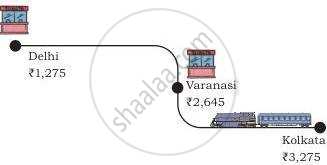
Mary is on a train journey. She starts from Kolkata with ₹12,540.
She spends ₹3,275 on food and other expenses during her trip to Varanasi. In Varanasi, her uncle gives her a gift worth ₹4,900. She then travels to Delhi, spending ₹2,645 on the train ticket. She spends ₹1,275 on souvenirs in Delhi. How much money is Mary left with at the end of the Delhi trip?

Members of a school council have raised ₹70,500. They plan to setup a Maths Lab with some games and models worth ₹39,785, buy library books worth ₹9,545, and purchase sports equipment worth ₹19,548.
- Estimate whether the school council has raised enough money to make the purchases. Share your thoughts in the class.
- Check your estimate with calculations.
A truck can carry 8,250 kg of goods. A factory loads 3,675 kg of cement and 2,850 kg of steel on it.
- What is the total weight loaded onto the truck?
- How much more weight can the truck carry before reaching its maximum capacity?
Quick Sums and Differences
Now, solve the following.
877 + ________ = 1,000 and 666 + ________ = 1,000
4,103 + ________ = 10,000 and 5,555 + ________ = 10,000
What other methods can you use to find the missing number to fill in the blank?
180 + ________ = 1,000
What other methods can you use to find the missing number to fill in the blank?
760 + ________ = 1,000
What other methods can you use to find the missing number to fill in the blank?
400 + ________ = 1,000
Namita likes the number 9. She wants to subtract 9 or 99 from number. Find a way to quickly subtract 9 or 99 from number.
67 − 9 = ________
Namita likes the number 9. She wants to subtract 9 or 99 from number. Find a way to quickly subtract 9 or 99 from number.
83 − 9 = ________
Namita likes the number 9. She wants to subtract 9 or 99 from number. Find a way to quickly subtract 9 or 99 from number.
144 − 9 = ________
Namita likes the number 9. She wants to subtract 9 or 99 from number. Find a way to quickly subtract 9 or 99 from number.
187 − 99 = ______
Namita likes the number 9. She wants to subtract 9 or 99 from number. Find a way to quickly subtract 9 or 99 from number.
247 − 99 = ______
Namita likes the number 9. She wants to subtract 9 or 99 from number. Find a way to quickly subtract 9 or 99 from number.
763 − 99 = ______
Namita wonders if she can get 9 or 99 as the answer to subtraction problem. Find a way to get the desired answer.
32 − ________ = 9
Namita wonders if she can get 9 or 99 as the answer to subtraction problem. Find a way to get the desired answer.
56 − ________ = 9
Namita wonders if she can get 9 or 99 as the answer to subtraction problem. Find a way to get the desired answer.
877 − ________ = 99
Namita wonders if she can get 9 or 99 as the answer to subtraction problem. Find a way to get the desired answer.
666 − ________ = 99
Let Us Think and Solve
Nitin likes numbers that read the same when read from left to right or from right to left. Such numbers are called palindrome numbers. The numbers 22, 363, 404, and 8,558 are some examples.
List all palindrome numbers between 100 and 200.
List all palindrome numbers between 900 and 1,200.
List all palindrome numbers between 25,000 and 27,000.
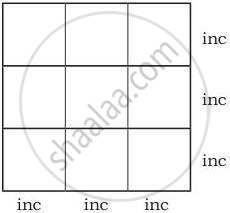
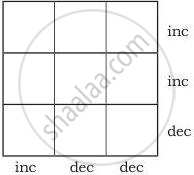
In a 3×3 grid, arrange the numbers 1 to 9 such that each row and each column has numbers in an increasing (inc) order. Each number should be used only once.
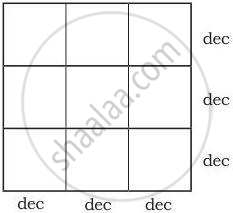
This time, fill the grid such that each row and column has numbers in decreasing (dec) order.
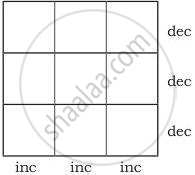
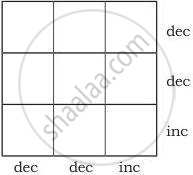
Now, fill the grids below with numbers (1–9) based on the inc (increasing) and dec (decreasing) conditions, as indicated below.
Even and Odd Numbers
Circle the numbers that are even.
- 297
- 498
- 724
- 100
- 199
- 789
- 49
- 6,893
- 846
- 111
- 222
- 1,023
Observe the given arrangement.

Paired arrangement for 18

Paired arrangement for 23
- Add 2 to 18. What changes or does not change in the arrangement?
- Add 2 to 23. What changes or does not change in the arrangement?
What do you notice about the sums in each of the following cases? Do you think it will be true for all pairs of such numbers? Explain your observations. You may use the paired arrangement to explain your thinking.
- 12 and 6 are a pair of even numbers. Choose 5 such pairs of even numbers. Add the numbers in each of the pairs.
- 13 and 9 are a pair of odd numbers. Choose 5 such pairs of odd numbers. Add the numbers in each of the pairs.
- 7 and 12 are a pair of odd and even numbers. Choose 5 such pairs of odd and even numbers. Add the numbers in each of the pairs.
Let Us Think
Jincy opened her piggy bank. She found 8 coins of ₹1, 9 coins of ₹2 and 5 coins of ₹5. She wants to buy stickers worth ₹38. What possible combination of coins can she use to pay the exact amount?
Raghu is fond of his grandfather’s torch. He starts playing with it. He presses the switch once and the light turns ON. He presses it a second time and the light turns OFF. He presses the switch a third time and the light turns ON. He keeps doing this several times. Will the torch be ON or OFF after the 23rd press? How do you know?
For what number of presses will the torch be ON? For what number of presses of the switch will the torch be OFF?
Mountain climbing
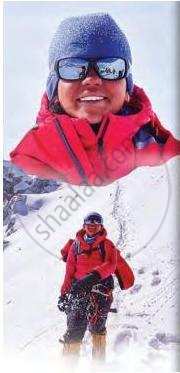
Priyanka Mohite is the first Indian woman to climb five Himalayan peaks above 8,000 metres. In addition to that, she has also climbed mountain peaks in other parts of the world. Read the table below and answer the questions that follow.
| Mountain Range | Height (in metres) |
Climbed in the Year |
|---|---|---|
| Mount Kanchenjunga (India and Nepal border) |
8,586 | 2022 |
| Mount Everest (Nepal–China border) |
8,848 | 2013 |
| Mount Makalu (China–Nepal border) |
8,485 | 2019 |
| Mount Lhotse (Tibet–Nepal border) |
8,516 | 2018 |
| Mount Kilimanjaro (Africa) |
5,895 | 2016 |
| Mount Elbrus (Russia) | 5,642 | 2017 |
| Mount Annapurna I (Nepal) |
8,091 | 2021 |
- Which is the highest peak she climbed?
- What is the difference in height between the highest and lowest peaks she has climbed, as per the table.
- What is the difference between heights of Mount Elbrus and Mount Kanchenjunga?
- If Priyanka was 20 years old when she summited Mount Everest in 2013, in which year was she born?
Math Metric Mela
A grand Math Metric Mela was held at the district level to celebrate young math whizzes. Every participating student was to receive a certificate of participation. The organisers got certificates printed for each district before the Mela. The number of certificates printed and the number of students who attended the competition in each district are as follows.
| District | Certificates Printed | Students Attended |
|---|---|---|
| Chittoor, A.P. | 18,225 | 18,104 |
| Jaunpur, U.P. | 19,043 | 19,265 |
| Raigad, Maharashtra | 20,863 | 19,974 |
For each district, find out if the number of certificates were sufficient?
If insufficient, calculate how many certificates fell short.
If extra, calculate how many certificates were in excess.
Let Us Do
Add:
2,009 + 7,388
Add:
26,444 + 71,111
Add:
777 + 888
Add:
1,234 + 1,234
Add:
56 + 56,789
Add:
777 + 77,777
Add:
5,922 + 9,221
Add:
4,321 + 8,765
Add:
50,050 + 55,000
Subtract:
458 − 226
Subtract:
7,777 – 4,449
Subtract:
65,447 – 47,299
Subtract:
1,234 – 123
Subtract:
12,345 – 1,234
Subtract:
56,789 – 56
Subtract:
87,326 – 11,111
Subtract:
878 – 52
Subtract:
749 – 222
Ambrish saved ₹92,375 over a year to buy cows and goats. He buys a cow for ₹26,000 and a goat for ₹17,000. He also buys a milking machine for ₹19,873. Does he have enough money to buy these? How much more or less does he have than he needs?
A factory produces 54,000 nuts and bolts in a day. An order is placed for 85,300 nuts and bolts. How many more nuts and bolts does the factory need to produce to complete the order?
Virat Kohli has scored 27,599 runs. He has 6,758 runs less than Sachin Tendulkar. How many runs has Sachin Tendulkar scored?
Solutions for 4: We the Travellers-2
NCERT solutions for Maths Mela [English] Class 5 chapter 4 - We the Travellers-2
Shaalaa.com has the CBSE Mathematics Maths Mela [English] Class 5 CBSE solutions in a manner that help students grasp basic concepts better and faster. The detailed, step-by-step solutions will help you understand the concepts better and clarify any confusion. NCERT solutions for Mathematics Maths Mela [English] Class 5 CBSE 4 (We the Travellers-2) include all questions with answers and detailed explanations. This will clear students' doubts about questions and improve their application skills while preparing for board exams.
Further, we at Shaalaa.com provide such solutions so students can prepare for written exams. NCERT textbook solutions can be a core help for self-study and provide excellent self-help guidance for students.
Concepts covered in Maths Mela [English] Class 5 chapter 4 We the Travellers-2 are .
Using NCERT Maths Mela [English] Class 5 solutions We the Travellers-2 exercise by students is an easy way to prepare for the exams, as they involve solutions arranged chapter-wise and also page-wise. The questions involved in NCERT Solutions are essential questions that can be asked in the final exam. Maximum CBSE Maths Mela [English] Class 5 students prefer NCERT Textbook Solutions to score more in exams.
Get the free view of Chapter 4, We the Travellers-2 Maths Mela [English] Class 5 additional questions for Mathematics Maths Mela [English] Class 5 CBSE, and you can use Shaalaa.com to keep it handy for your exam preparation.
