Advertisements
Chapters
1: Elementary Theory of Demand
2: Elasticity of Demand
3: Theory of Supply
Unit II - Factors of Production : Basic Concepts
▶ 4: Factors of Production
Unit III - Alternative Market Structures : Basic Concepts
5: Nature and Structure of Markets
Unit IV - The State and Economic Development
6: The State and Economic Development
Unit V - Money and Banking : Basic Concepts
7: Meaning and Functions of Money
8: Commercial Banks
9: Central Banks
10: Inflation
![Goyal Brothers Prakashan solutions for Economic Applications [English] Class 10 ICSE chapter 4 - Factors of Production - Shaalaa.com](/images/economic-applications-english-class-10-icse_6:4e056063b64247cab65a92e42cef2973.jpg "Goyal Brothers Prakashan solutions for Economic Applications [English] Class 10 ICSE chapter 4 - Factors of Production")
Advertisements
Solutions for Chapter 4: Factors of Production
Below listed, you can find solutions for Chapter 4 of CISCE Goyal Brothers Prakashan for Economic Applications [English] Class 10 ICSE.
Goyal Brothers Prakashan solutions for Economic Applications [English] Class 10 ICSE 4 Factors of Production QUESTIONS [Pages 116 - 127]
Multiple Choice Questions
Factors of production are ______.
Natural
Man-made
Both Natural and Man-made
Neither Natural nor Man-made
______ is not a primary factor of production.
Land
Labour
Capital
Fuel
Choose the correct term for the given definition. 'An activity which creates an economic value'.
Development
Consumption
Distribution
Production
Which of the following is not a characteristic feature of land?
Free gift of nature
Supply is fixed
A mobile factor of production
A passive factor of production
Identify the correct statement from the following.
Land is indestructible.
Labour is perishable.
Capital is a passive factor of production.
All the above.
______ is a produced means of production.
Land
Labour
Capital
Entrepreneur
Identify the incorrect statement from the following:
Capital is a means and its end is income.
Money is a factor of production.
All capital is wealth, but all wealth is not capital.
Land is not a produced means of production like capital.
Advantage of division of labour to the workers.
Use of right man for right work.
Increases worker's efficiency.
Improvement in standard of living.
Use of right man for right work and increases worker's efficiency.
When the same work is done by two or more persons it is called ______.
Simple division of labour
Occupational division of labour
Complex division of labour
Horizontal division of labour
______ is an example of the geographical division of labour.
Concentration of jute mills in Kolkata
Cardiologist doctor
Work done in an apparel industry
None of these
Match the following and select the correct option.
| Factor of Production | Reward of factor of production | ||
| (i) | Land | (A) | Wage |
| (ii) | Labour | (B) | Profit |
| (iii) | Capital | (C) | Rent |
| (iv) | Entrepreneur | (D) | Interest |
(i) C, (ii) A, (iii) B, (iv) D
(i) A, (ii) C, (iii) D, (iv) B
(i) C, (ii) A, (iii) D, (iv) B
(i) A, (ii) C, (iii) B, (iv) D
Read the given statements carefully and select the correct option that follow:
- Land is an active factor of production
- Capital is produced means of production
Both A and B are true
Both A and B are false
A is true but B is false
A is false but B is true
According to 'Adam Smith' production means production of material goods only.
True
False
The reason behind destruction of ecosystem ______.
Industrialisation
Urbanisation
Mining activities
All of the above
Which of the following is not considered labour in economics?
Driving his master's car by a driver
Playing cricket by Virat Kohli
Washing of children's clothes by mother
The work of teacher in a classroom
Match the following and select the correct option.
| Column I | Column II | ||
| (i) | Capital which is given to workers in form of wages | (A) | Circulating capital |
| (ii) | Producer goods having long life | (B) | Floating capital |
| (iii) | Goods which can be used for a specific purpose only once | (C) | Fixed capital |
| (iv) | Goods which can be put to alternative uses or by several industries | (D) | Remunerative capital |
(i) D, (ii) C, (iii) A, (iv) B
(i) D, (ii) C, (iii) B, (iv) A
(i) A, (ii) D, (iii) B, (iv) C
(i) A, (ii) B, (iii) D, (iv) C
Savings are essential for capital formation.
True
False
Tick the one which does not belong to the following group.
Land
Interest
Labour
Entrepreneur
Observe the relationship of the first pair of words and complete the second pair.
Office furniture; Fixed capital
Power of running the plant ______
Remunerative capital
Circulating capital
Debt capital
Sunk capital
Choose the correct term for the given definition.
Any activity which creates present and future utility.
Development
Production
Consumption
Distribution
Shifting cultivation involves ______.
Clearing of forests
Burning of trees
Movement from one place to another
All of the above
Land is considered a passive factor of production because ______.
It is a free gift of nature
It is hetrogeneous
It is immobile
It cannot produce any thing on its own
Choose the correct order of capital formation.
Mobilisation of savings → Investment → Savings
Saving → mobilisation of savings → Investment
Investment → Savings → mobilisation of savings
None of the above
Construction of dams always have positive effects.
True
False
Observe the relationship of the first pair of words and complete the second pair.
Chartered Accountant : Skilled labour
Welder ______.
Unskilled
Semi skilled
Skilled
Over skilled
Which of these is not a function of an entrepreneur?
Innovation
Risk taking
Delegation
Having good inter personal skills
Land is hetrogeneous because ______.
- It varies in fertility
- It varies in productivity
- It varies in density of population
only (i) and (iii) are applicable
only (i) and (ii) are applicable
All of them are applicable
Only (ii) and (iii) are applicable
Which of these will NOT be considered as capital?
Stationery owned by a student
Stationery owned by firm
Stationery owned by the government
All the three options will be considered capital
An entrepreneur's income can be negative.
True
False
Which of the following used in the production of textile by a firm would be classfied as land in economics?
Weaving machines
Factory building
Unskilled workers
Water taken from a nearby river
Which of these features of capital as a factor of production makes it different from other factors of production?
It is a mobile factor of production
The supply of capital can be increased
It is man-made factor of production
It will lead to increased productivity
Mobilisation of savings is an important step in ______.
Credit Creation
Capital Formation
Increasing demand
Decreasing the cost of production
Which of the following will affect the productivity of land adversely?
Lack of government support
Security of tenancy
Good transport
Good irrigation facilties
Emission of greenhouse gases is largely due to ______.
Excessive use of chemical fertilisers
Noise pollution
Mining
Urbanisation
Efficiency of Indian labour is low because of ______.
Hot and enervating tropical climate
Fair wages
Demographic pressure
Mobility of labour
Which of the following is not a reason for deforestation?
Construction of dams
Soil erosion
Mining activities
Over grazing
Which of the following statements is TRUE?
The labourer sells himself when he takes up a job as he is completely involved in it.
The supply of labour is fixed.
Labour carries with it an element of judgement or inteligence.
Labour performing the same kind of job will have the same efficiency.
______ capital is used once in production whereas ______ capital can be used for long time.
Circulating; Fixed
Fixed; Working
Sunk; Floating
Real; Debt
Which of the following statements is NOT a necessary condition for the division of labour?
The production process must be long enough to be divided.
Enough labour must be available.
The government policy should support division of labour.
Workers must co-operate with each other in the production process.
Identify the active factors of production.
Labour, land
Entrepreneur, labour
Labour, capital
Entrepreneur, capital
The transformation of resources into economic goods and services is called ______.
Technical efficiency
Augmentation
Production
Transfiguration
Interest is a payment for ______.
Use of durable goods
Use of capital
Use of public goods
Use of only services
When an entrepreneur appoints managers and supervisors, which function is he performing?
Innovation
Planning
Delegation
Risk bearing
Which of these factors of production is called produced means of production?
Land
Labour
Capital
Entrepreneur
Which of the following types of capital can be used only for a specific purpose?
Floating capital
Money capital
Debt capital
Sunk capital
Interest is a factor income for ______.
Land
Labour
Capital
Entrepreneur
Which of the following goods will be considered circulating capital?
Computers in the office
The factory buildings
The furniture used by the workers
Water used in the production process
Which of the following factors of production has a unique supply curve?
Land
Labour
Capital
Entrepreneur
All factors of production are equally mobile.
True
False
A labourer's income can be negative.
True
False
The Income of an entrepreneur is ______.
Contractual
Always positive
Residual
Always negative
Sunshine is considerd land in Economics
True
False
Use of high yielding variety of seeds of related to productivity of ______.
Entrepreneur
Capital
Land
Labour
Which factor of production is not a hired factor?
Land
Labour
Capital
Entrepreneur
The reward of an entrepreneur is in the nature of ______.
contractual income
residual income
constant income
positive income
Complete division of labour cannot be implemented for ______.
Construction of bridges
Manufacturing of cycles
A sculptor sculpting a human statue
Computer manufacturing unit
Which of the following causes low efficiency of Indian labour?
Prevalence of high wage rate
Presence of social security schemes
Inadequate skill training facilities
Favourable climatic conditions
Innovation is the implementation of new ideas and changes into reality-this function is carried out by ______.
An engineer
An architect
An army man
An entrepreneur
Mining operations result in ______.
Formation of barren land
Depleting the the stock of natural resources
Deforestation
All of the above
Which of the following is not a characteristic of land?
Heterogeneous
Immobile
Carries an element of judgement
Fixed supply
The income of a person who carries the risk bearing function is called as ______.
Wages
Salary
Profit
Interest
Production of cotton textile products is an example of ______.
Vertical division of labour.
Horizontal division of labour.
Occupational division of labour.
Simple division of labour.

Identify the produced means of production factor from the picture.
Land
Labour
Capital
Entrepreneur
Which of the following is the adverse outcome of mining operation?
Aquatic ecosystem remains intact
Depleted the stock of natural resources
Cutting down of forest trees is absent
Soil quality remains the same
Which of the following is NOT a land? (Amenable to human control)
Rain water
Gold mine
Crude oil in pipelines
Forest
Coal in mines
Which of the following is not a correct match?
Land - free gift of nature
Entrepreneur - employs other factors
Capital - results savings
Labour - passive factor of production

Identify what type of capital is it?
Social Capital
Revolving Capital
Money Capital
Real Capital
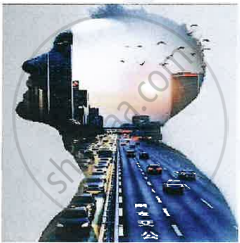
The picture above shows which factor of production.
Land
Labour
Capital
Entrepreneur
The process of adding to the stock of capital over time is capital formation.
True
False
Observe the image given below and identify the division of labour:
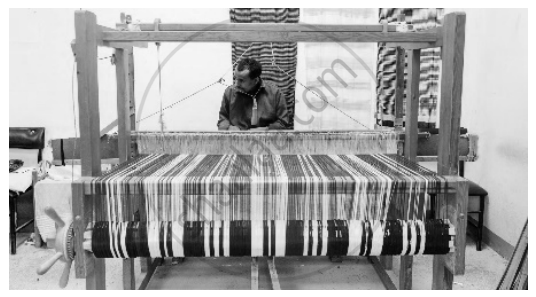
Horizontal Division of labour
Simple Division of labour
Vertical Division of labour
Partial Division of labour
Name the function of an entrepreneur as shown in the picture given below.

Innovation
Planning
Delegation
Risk bearing
The phenomenon of increasing share of urban population to the total population of a country is known as ______.
Migration
Urbanisation
Industrialisation
Civilisation
Choose the correct term for the given definition:
Shifting of people from villages and small towns to larger cities for better living conditions.
Industrialisation
Shifting Cultivation
Migration
Capital formation
Identify the type of division of labour in the industry shown in the image below.
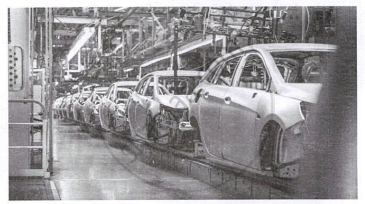
Simple
Complex
Compound
Complex and compound
Steel as a capital good can be used in various lines of production. Steel is a ______.
Fixed Capital
Circulating Capital
Floating Capital
Sunk Capital
Assertion-Reasoning & Matching Based Questions
Match the following:
| Column I | Column II |
| 1. Factors of production | P. Human resources |
| 2. Land | Q. Man-made resources |
| 3. Capital | R. Economic resources |
| 4. Entrepreneur | S. Natural resources |
Choose the correct alternative:
1. (R), 2. (S), 3. (P), 4. (Q)
1. (S), 2. (R), 3. (P), 4. (Q)
1. (R), 2. (P), 3. (S), 4. (Q)
1. (R), 2. (S), 3. (Q), 4. (P)
Read the following statements carefully and choose the correct alternative:
Assertion (A): Land is a passive factor of production.
Reason (R): Capital is subject to depreciation.
Both Assertion (A) and Reason (R) are true and Reason (R) is the correct explanation of Assertion (A).
Both Assertion (A) and Reason (R) are true and Reason (R) is not the correct explanation of Assertion (A).
Assertion (A) is true but Reason (R) is false.
Assertion (A) is false but Reason (R) is true.
Read the following statements carefully and choose the correct alternative:
Assertion (A): Labour is perishable.
Reason (R): Capital is an active factor of production.
Both Assertion (A) and Reason (R) are true and Reason (R) is the correct explanation of Assertion (A).
Both Assertion (A) and Reason (R) are true and Reason (R) is not the correct explanation of Assertion (A).
Assertion (A) is true but Reason (R) is false.
Assertion (A) is false but Reason (R) is true.
Match the following:
| Factor of Production | Characteristic |
| A. Land | (i) Subject to depreciation |
| B. Mannual labour | (ii) Risk and Bearing |
| C. Capital | (iii) Permanent |
| D. Entrepreneur | (iv) Involves physical work |
Choose the correct alternative:
A. (iv), B. (iii), C. (ii), D. (i)
A. (iii), B. (iv) C. (i), D. (ii)
A. (iii), B. (iv), C. (ii), D. (i)
A. (i), B. (ii), C. (iii), D. (iv)
Match the following:
| Factor of Production | Characteristic |
| 1. Higher standard of living | P. Increase in labour productivity |
| 2. Removal of income inequality | Q. Higher per capita income |
| 3. Capital formation | R. Impose higher income tax on the rich people |
| 4. Creation of healthy working conditions | S. Growth in terms of factories, roads, machinery etc. |
1 - P, 2 - Q, 3 - R, 4 - S
1 - S, 2 - R, 3 - Q, 4 - P
1 - R, 2 - Q, 3 - S, 4 - P
1 - Q, 2 - R, 3 - S, 4 - P
Short Answer Type Questions
Explain the meaning of production.
With the help of an example, explain the process of creation of form utility.
Give two characteristic features of land as a factor of production.
Explain two functions of land.
Land is heterogeneous in nature. Explain.
Land can be destroyed by man.
True
False
Land is mobile
True
False
Land is a free gift of nature.
True
False
Supply of land is unlimited.
True
False
Which of the following is NOT a land? (Amenable to human control)
Rain water
Gold mine
Crude oil in pipelines
Forest
Coal in mines
Why is land considered a passive and an indestructible factor of production.
What is meant by labour in economics?
Define labour.
Name the factor of production to which uncertainty-bearing belongs.
Name the factor of production whose supply is fixed.
Mention the characteristics of Labour.
Which of the following is considered as labour in economics?
Action done by a film star
The judgement given by a judge in the court
Washing of clothes by a washerman
Preparation of tea by a housewife
Define capital.
Define an entrepreneur.
What is regarded as a factor of production and why?
Capital
Interest
Profit
Rent
Briefly explain why labour is considered to be the means and end of production.
List two factors affecting the supply of labour.
State two characteristics of capital as a factor of production.
Why is capital considered an important factor of production in the modern world? Give two reasons in support of your answer.
Define the division of labour.
Explain one benefit of division of labour.
Give two reasons for low efficiency of Indian workers.
Mention two ways by which efficiency of labour can be improved.
State Distinguish between the simple division of labour and complex division of labour?
Distinguish between an entrepreneur and an organiser.
Explain any three factors affecting productivity of land.
Suggest two measures to improve productivity of land.
Explain briefly the meaning of efficiency of labour.
An entrepreneur can use either capital or labour in the production process. Out of the options A, B, C and D given below, which two would the entrepreneur choose if he had to replace labour with capital? Justify your answer.
Price of Capital Price of Labour Constant Falling Price of Capital Price of Labour Falling Rising Price of Capital Price of Labour Rising Constant Price of Capital Price of Labour Falling Falling
Which of the following will be treated as labour in economics? Give a reason for each.
- Preparation of food by a housewife.
- Singing for ones own pleasure.
- Driving his master's car by a driver.
- Playing cricket by Mahendra Singh Dhoni.
Briefly explain the impact of division of labour on cost of production by a firm.
Explain any three disadvantages of division of labour.
The extent of division of labour depends on the size of the market. Briefly explain.
State two characteristics of capital as a factor of production.
Why is capital called a 'produced means of Production?
Define capital formation.
Capital is a passive factor of production. Justify the statement.
Explain in brief the term sunk capital.
Distinguish between fixed and circulatory capital.
Distinguish between sunk and floating capital. Give an example of each.
Capital is the result of past labour. Briefly explain.
What is the difference between land and capital?
Define real capital.
Give two examples of real capital.
Differentiate between capital and capital formation.
Classify the following into fixed capital and working capital. Give reasons:
A television in a hotel room.
Classify the following into fixed capital and working capital. Give reasons:
Iron ore in steel plant.
Out of the following capital used in the cotton textile industry classify the following as fixed or circulating capital.
- Cotton yarns
- Dyes
- Power
- Weaving machines
State any two factors which determine capital formation in a country.
'Savings is essential for capital formation.' Explain.
Explain in brief the first stage of capital formation.
State two reasons for low capital formation in a developing economy.
Briefly explain the impact of constructing dams on the ecosystem.
Differentiate between an entrepreneur and labour on the basis of:
- Nature of work
- Nature of risk involved
Both labour and entrepreneur are human factors of production. Is there any difference between them? Explain any two such differences.
What is the difference between a labourer and an entrepreneur?
Differentiate between an entrepreneur and labour on the basis of:
- Nature of work
- Nature of risk involved
'An entrepreneur is an organiser but an organiser need not be an entrepreneur'. Explain.
"Entrepreneurs are innovators" said Schumpeter. Explain briefly.
Mention five qualities of a good entrepreneur.
State two active factors of production. Give reasons to support your answer.
State an adverse impact of urbanisation on the ecosystem.
Mention two adverse effects of mining on the environment.
Briefly explain two impacts of shifting cultivation on the eco-system.
Mining operations can destroy the eco system. Give two reasons to support the statement.
State any two differences between an entrepreneur and other factors of production.
What do you mean by 'innovative ability' of an entrepreneur?
Explain complex division of labour with the help of an example.
'One of the most important functions of an entrepreneur is to bear the risk associated with the business'. Explain the statement.
Differentiate between labour and land.
Mention any two adverse impacts of construction of dwelling units on the ecosystem.
Mention any two adverse impacts of industrialisation on the ecosystem.
Long Answer Type Questions
Define land.
Explain any five characteristics of the land.
Suggest two measures to improve productivity of land.
Define production.
State three factors on which production depends.
Define land.
Explain any three factors that affect the productivity of the land.
'Land is the original source of all material wealth' in this context explain four determinants that influence the productivity of land.
Explain four reasons as to why land is considered to be an important factor of production.
What is meant by Ecosystem?
Mention two adverse effects of mining on the environment.
Why is labour an important factor of production?
Explain the following characteristic of labour:
Labour cannot be separated from the labourer.
Explain the following characteristic of labour:
Labour can improve its efficiency.
Explain the following characteristic of labour:
Labour is perishable.
Discuss any three advantages of the division of labour.
Explain any three disadvantages of division of labour.
What do you understand by division of labour?
Explain three ways by which division of labour is beneficial to producers.
Differentiate between mental and physical labour.
State four ways in which the division of labour will influence production in an economy.
Define 'efficiency of labour'.
Explain any three benefits of efficiency of labour.
Explain three causes of low efficiency of labour in India.
Explain briefly the meaning of efficiency of labour.
The Indian labour suffers from low efficiency. Explain your answer with three reasons for low efficiency of Indian labour.
Explain briefly the meaning of efficiency of labour.
Explain three causes of low efficiency of labour in India.
Suggest one measure to improve efficiency of labour?
Name two industries where division of labour is possible.
Explain any three disadvantages of division of labour.
What is considered as capital in economics?
Explain any two characteristics of capital.
Define capital.
Explain any two characteristics of capital.
Define capital.
Mention two functions of capital.
How will you treat the following : as fixed or as circulating capital?
- Factory buildings
- Machines
- Stocks of raw material lying in a factory
- A car owned by a taxi-driver
- Coal used in a factory
- Cotton used by a doctor
What is an entrepreneur?
Discuss three functions of an entrepreneur.
State any two differences between an entrepreneur and other factors of production.
Mention five qualities of a good entrepreneur.
State two ways through which an entrepreneur contributes towards economic development.
What is the meaning of capital formation?
Explain three important stages of capital formation.
What do you understand by the term 'Capital formation'?
Explain any three factors which affect capital formation.
Explain three causes of low capital formation in India.
State one important function of capital.
Differentiate between:
Capital and wealth
Differentiate between:
Capital and income
What is the difference between land and capital?
Explain the following concept with examples.
Industrialisation
Explain four impacts of industrialisation on the environment.
What do you mean by migration?
Explain three ways by which migration impacts the ecosystem.
Define eco-system.
Explain four impacts of industrialisation on the environment.
Explain any two impacts of Automobiles on the eco-system.
Explain any two impacts of Dwelling units on the eco-system.
Explain the following concept with examples.
Urbanisation
Explain four impacts of urbanization on the environment.
Explain the following concept with examples.
Urbanisation
Explain four impacts of urbanization on the environment.
Indicate the adverse impacts of urbanisation on the ecosystem.
What is meant by land use pollution?
Identify the agricultural practice shown in the image given below. Explain any three adverse effects of it on ecosystem.
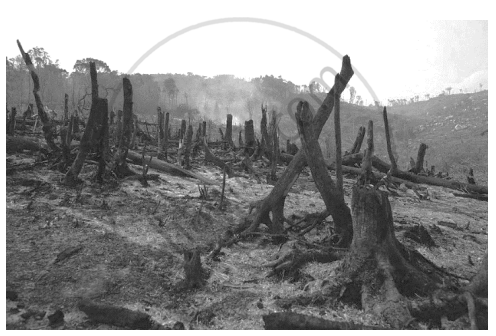
What is capital?
Explain the following features of Capital:
- Capital is the produced means of production.
- Capital is a passive factor.
- Capital is the result of past savings.
Goyal Brothers Prakashan solutions for Economic Applications [English] Class 10 ICSE 4 Factors of Production QUESTION BANK [Pages 127 - 133]
Define land.
Land is heterogeneous in nature. Explain.
State two functions of land as a factor of production.
What is the meaning of the productivity of land?
Explain four characteristics of land as a factor of production.
Improved technology affects the productivity of land. Explain this statement with the help of suitable examples.
Suggest two measures to improve productivity of land.
Land is one of the most important factors of production. In this context, mention two ways in which the efficiency of land can be enhanced?
How is land as a factor of production differ from any other factor of production?
What is meant by the efficiency of labour?
Explain three causes of low efficiency of labour in India.
What do you mean by factors of production?
What are the four basic factors of production?
State two differences between labour services provided by a surgeon and a farmer.
Give the different forms of division of labour.
State Distinguish between the simple division of labour and complex division of labour?
Give two limitations of a division of labour.
Define capital.
State two characteristics of capital as a factor of production.
Mention two functions of capital.
Distinguish between fixed capital and working capital.
Distinguish between stocks of capital goods and capital formation using a suitable example.
Distinguish between sunk and floating capital. Give an example of each.
Using suitable examples, classify capital into fixed capital and circulating capital.
Distinguish between real capital and money capital.
Which of the two is more important in economic growth (higher impact on national income) real capital and money capital?
Give three causes of slow rate capital formation in India.
How can capital formation be raised in India?
What is an entrepreneur?
Discuss the three functions of an entrepreneur.
Distinguish between an entrepreneur and an organiser.
'Entrepreneur is not labour even though there are human factors associated with the same business'. Explain.
Explain the importance of an entrepreneur.
Mention five qualities of a good entrepreneur.
"Entrepreneurs are innovators" said Schumpeter. Explain briefly.
Define land.
Explain four characteristics of land as a factor of production.
Define 'efficiency of labour'.
State four factors which determine the efficiency of labour.
Define the division of labour.
Discuss any three advantages of the division of labour.
Define labour.
Mention the characteristics of Labour.
With respect to division of labour, state the following:
An example of vertical division of labour.
With respect to division of labour, state the following:
An example of horizontal division of labour.
With respect to division of labour, state the following:
Two advantages to the producers.
With respect to division of labour, state the following:
Two disadvantages to the workers.
Differentiate between mental and physical labour.
State four ways in which the division of labour will influence production in an economy.
With respect to the efficiency of labour answer the question that follow.
On what basis can the efficiency of labour be measured?
State four factors which determine the efficiency of labour.
Mention two ways by which efficiency of labour can be improved.
Explain any two characteristics of capital.
Define capital formation.
Explain three causes of low capital formation in India.
Define capital formation.
Explain three important stages of capital formation.
Explain how capital is a produced means of production.
State two reasons for low capital formation in a developing economy.
Discuss any two suggested remedies for low capital formation in India.
Discuss three ways by which an entrepreneur promotes economic growth.
'An entrepreneur is an organiser but an organiser need not be an entrepreneur'. Explain.
Classify the following capital goods:
- Machines
- Cotton yam
- Oil mill
- Bridge
Differentiate between labour and land.
Differentiate between an entrepreneur and labour on the basis of:
- Nature of work
- Nature of risk involved
State any two differences between an entrepreneur and other factors of production.
Mention five qualities of a good entrepreneur.
The income earned by an entrepreneur is residual in nature. Explain.
Define eco-system.
Explain four impacts of industrialisation on the environment.
Explain any two impacts of Automobiles on the eco-system.
Explain any two impacts of Dwelling units on the eco-system.
Explain four impacts of urbanization on the environment.
Define eco-system.
Explain any three such changes causing destruction to the ecosystem.
Define urbanization
Define the term Industrialisation.
Define the term Migration.
State any two differences between an entrepreneur and other factors of production.
Capital is immobile in the short run. Explain.
Solutions for 4: Factors of Production
Goyal Brothers Prakashan solutions for Economic Applications [English] Class 10 ICSE chapter 4 - Factors of Production
Shaalaa.com has the CISCE Mathematics Economic Applications [English] Class 10 ICSE CISCE solutions in a manner that help students grasp basic concepts better and faster. The detailed, step-by-step solutions will help you understand the concepts better and clarify any confusion. Goyal Brothers Prakashan solutions for Mathematics Economic Applications [English] Class 10 ICSE CISCE 4 (Factors of Production) include all questions with answers and detailed explanations. This will clear students' doubts about questions and improve their application skills while preparing for board exams.
Further, we at Shaalaa.com provide such solutions so students can prepare for written exams. Goyal Brothers Prakashan textbook solutions can be a core help for self-study and provide excellent self-help guidance for students.
Concepts covered in Economic Applications [English] Class 10 ICSE chapter 4 Factors of Production are Production is Transformation, Relative Importance of Different Factors of Production, Factors of Production, Meaning of Production Mechanism, Land, Characteristics of Land, Functions of Land, Importance of Land, Productivity of Land, Factors Affecting Productivity of Land, Industrialisation, Dwelling Units, Mining (Economy), Construction of Dams, Shifting Cultivation, Migration, Urbanisation in India, Causes of Destruction of Ecosystem, Characteristics of Labour, Labour: an Important Factor of Production, Labour and Economic Activities, Division (Specialisation) of Labour, Types of Division of Labour, Advantages of Division of Labour, Disadvantages of Division of Labour, Necessary Conditions for the Division of Labour, Efficiency of Labour, Reasons for Low Efficiency of Labour in India, Suggestions for Improving the Efficiency of Indian Workers, Entrepreneur - Special Type of Labour, Factors of Production, Difference Between Capital and Other Related Concepts, Characteristics of Capital, Types of Capital, Functions of Capital, Is Land Capital?, Factors Influencing Or Affecting Capital Formation, Factors of Production, Differences Between Land and Capital, Differences Between Capital and Labour, Significance of Capital Formation, Causes of Low Rate of Capital Formation, Suggestions to Raise Rate of Capital Formation, Distinction Between Labour and Entrepreneur, Distinction Between Capitalist and Entrepreneur, Role of Entrepreneurs in Economic Development, Concept of Entrepreneur, Factors of Production, Difference Between Entrepreneur and Organisation.
Using Goyal Brothers Prakashan Economic Applications [English] Class 10 ICSE solutions Factors of Production exercise by students is an easy way to prepare for the exams, as they involve solutions arranged chapter-wise and also page-wise. The questions involved in Goyal Brothers Prakashan Solutions are essential questions that can be asked in the final exam. Maximum CISCE Economic Applications [English] Class 10 ICSE students prefer Goyal Brothers Prakashan Textbook Solutions to score more in exams.
Get the free view of Chapter 4, Factors of Production Economic Applications [English] Class 10 ICSE additional questions for Mathematics Economic Applications [English] Class 10 ICSE CISCE, and you can use Shaalaa.com to keep it handy for your exam preparation.
