Advertisements
Advertisements
Evaluate: `int_0^(π/2) sin 2x tan^-1 (sin x) dx`.
Concept: undefined >> undefined
If x = a cos t and y = b sin t, then find `(d^2y)/(dx^2)`.
Concept: undefined >> undefined
Advertisements
Read the following passage and answer the questions given below:
|
The relation between the height of the plant ('y' in cm) with respect to its exposure to the sunlight is governed by the following equation y = `4x - 1/2 x^2`, where 'x' is the number of days exposed to the sunlight, for x ≤ 3.
|
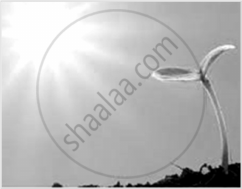
- Find the rate of growth of the plant with respect to the number of days exposed to the sunlight.
- Does the rate of growth of the plant increase or decrease in the first three days? What will be the height of the plant after 2 days?
Concept: undefined >> undefined
Find the distance between the point (7, 2, 4) and the plane determined by the points A(2, 5, −3), B(−2, −3, 5) and C(5, 3, −3).
Concept: undefined >> undefined
Differentiate xsinx+(sinx)cosx with respect to x.
Concept: undefined >> undefined
Evaluate `int_(-2)^2x^2/(1+5^x)dx`
Concept: undefined >> undefined
Find the distance of a point (2, 5, −3) from the plane `vec r.(6hati-3hatj+2 hatk)=4`
Concept: undefined >> undefined
Find the equation of the plane through the line of intersection of the planes x + y + z = 1 and 2x + 3y + 4z = 5 which is perpendicular to the plane x − y + z = 0. Also find the distance of the plane, obtained above, from the origin.
Concept: undefined >> undefined
In the given cases, find the distance of each of the given points from the corresponding given plane.
Point Plane
(0, 0, 0) 3x – 4y + 12 z = 3
Concept: undefined >> undefined
In the given cases, find the distance of each of the given points from the corresponding given plane
Point Plane
(3, – 2, 1) 2x – y + 2z + 3 = 0
Concept: undefined >> undefined
In the given cases, find the distance of each of the given points from the corresponding given plane.
Point Plane
(2, 3, – 5) x + 2y – 2z = 9
Concept: undefined >> undefined
In the given cases, find the distance of each of the given points from the corresponding given plane.
Point Plane
(– 6, 0, 0) 2x – 3y + 6z – 2 = 0
Concept: undefined >> undefined
Find the distance of the point (−1, −5, −10) from the point of intersection of the line `vecr = 2hati -hatj + 2hatk + lambda(3hati + 4hatj + 2hatk)` and the plane `vecr.(hati -hatj + hatk) = 5`.
Concept: undefined >> undefined
Distance between the two planes: 2x + 3y + 4z = 4 and 4x + 6y + 8z = 12 is
(A) 2 units
(B) 4 units
(C) 8 units
(D)`2/sqrt29 "units"`
Concept: undefined >> undefined
If `veca = 2hati + 2hatj + 3hatk, vecb = -veci + 2hatj + hatk and vecc = 3hati + hatj` are such that `veca + lambdavecb` is perpendicular to `vecc`, then find the value of λ.
Concept: undefined >> undefined
Find `|veca × vecb|`, if `veca = hati - 7hatj + 7hatk` and `vecb = 3hati - 2hatj + 2hatk`.
Concept: undefined >> undefined
Find a unit vector perpendicular to each of the vector `veca + vecb` and `veca - vecb`, where `veca = 3hati + 2hatj + 2hatk` and `vecb = hati + 2hatj - 2hatk`.
Concept: undefined >> undefined
If a unit vector `veca` makes an angles `pi/3` with `hati, pi/4` with `hatj` and an acute angle θ with `hatk`, then find θ and, hence the compounds of `veca`.
Concept: undefined >> undefined
Show that `(veca - vecb) xx (veca + vecb) = 2(veca xx vecb)`.
Concept: undefined >> undefined
Find λ and μ if `(2hati + 6hatj + 27hatk) xx (hati + lambdahatj + muhatk) = vec0`.
Concept: undefined >> undefined
