Advertisements
Advertisements
Hydrolysis of sucrose is called ______.
Concept: Classification of Carbohydrates >> Disaccharides
What is the role of sulphur in the vulcanisation of rubber?
Concept: Types of Polymerisation Reactions - Rubber
Write the names and structures of the monomers of the following polymers: Buna-N
Concept: Classification of Polymers> Based on Mode of Polymerisation
Write the names and structures of the monomers of the following polymers: Polyvinyl chloride
Concept: Classification of Polymers> Based on Structure
Write names and chemical formulae of monomers used in preparing Buna-N.
Concept: Types of Polymerisation Reactions - Rubber
Write the structures of monomers used the following polymers:
Nylon - 6, 6
Concept: Types of Polymerisation Reactions - Condensation Polymerisation Or Step Growth Polymerisation
Is 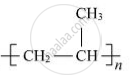 a homopolymer or copolymer? Give reason.
Concept: Types of Polymerisation Reactions - Copolymerisation
Write the monomers of the following polymer :
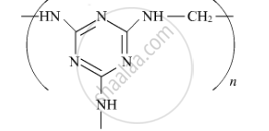
Concept: Some Important Polymers
What is meant by the term ‘broad spectrum antibiotics’? Explain.
Concept: Compounds with Medicinal Properties >> Antimicrobials
Explain any two chemical methods of food preservation.
Concept: Chemicals in Food - Artificial Sweetening Agents and Food Preservatives
Iron (z=26) is highly ferromagnetic. Explain.
Concept: Properties of Solids: Magnetic Properties
Silver crystallises in FCC structure. If density of silver is 10.51 gcm-3, calculate the volume of unit cell. [Atomic mass of slive (Ag) = 108 gm-1]
Concept: Calculations Involving Unit Cell Dimensions
The major binding force in diamond is_______________ .
(a) Covalent bond
(b) Ionic bond
(c) Metallic bond
(d) Co-ordinate covalent bond
Concept: Classification of Crystalline Solids
What is the covalency of nitrogen in N2O5?
Concept: Classification of Crystalline Solids
8 g of glucose, C6H12O6 (Molar Mass = 180 g mol−1) is dissolved in 1 kg of water in a sauce pan. At what temperature will this solution boil?
(Kb for water = 0.52 K kg mol−1, boiling point of pure water = 373.15 K)
Concept: Colligative Properties and Determination of Molar Mass >> Elevation of Boiling Point
What type of semiconductor is obtained when silicon is doped with boron?
Concept: Properties of Solids: Electrical Properties >> Applications of n-type and p-type Semiconductors
What type of magnetism is shown in the following alignment of magnetic moments?

Concept: Properties of Solids: Magnetic Properties
What type of point defect is produced when AgCl is doped with CdCl2?
Concept: Imperfections in Solids - Introduction
Determine the osmotic pressure of a solution prepared by dissolving 2.5 × 10⁻² g of K2SO4 in 2L of water at 25°C, assuming that it is completely dissociated.
(R = 0.0821 L atm K−1 mol−1, Molar mass of K2SO4 = 174 g mol−1)
Concept: Colligative Properties and Determination of Molar Mass >> Osmosis and Osmotic Pressure
Give an example each of a molecular solid and an ionic solid.
Concept: Classification of Crystalline Solids
