Pleiotropy is the phenomenon in which a single gene influences or controls the expression of more than one phenotypic trait in an organism.
Definitions [64]
Definition: Heredity
Heredity (heirship or inheritance) is the transmission of genetically based characters from parents to their offsprings.
Definition: Mendelism
Mendelism refers to the principles of inheritance proposed by Gregor Mendel based on his experiments with pea plants. These principles explain that traits are inherited in a predictable manner through discrete hereditary units.
Definition: Recessive Trait
The trait that remains unexpressed in a heterozygous condition but appears in homozygous form is called recessive.
Definition: Alleles
Alternative forms of the same gene controlling a pair of contrasting traits are called alleles.
Definition: Homozygous
An organism having identical alleles for a character, such as TT or tt, is called homozygous.
Definition: Heterozygous
An organism having unlike alleles for a character, such as Tt, is called heterozygous.
Definition: Dominant Trait
The trait expressed in a heterozygous condition is called dominant.
Definition: Hybridization
The process of crossing two genetically different individuals to produce hybrids is called hybridization.
Definition: Hybrid
Offspring produced by crossing two individuals that differ in one or more characters are called hybrids.
Definition: Monohybrid Experiments
Mendel's first experiments were with the varieties of garden pea that differed in only one visible character. These are known as monohybrid experiments.
Definition: Dihybrid Cross
- Mendel investigated not only those crosses in which the parent differed in a single pair of characters but also others in which the parent differed in two pairs. Such a cross, which involves two pairs of contrasting characters simultaneously, is called a dihybrid cross.
- A genetic cross involving two pairs of contrasting characters simultaneously is called a dihybrid cross.
Definition: Genotype
The genetic constitution or allelic composition of an organism for a particular character is called its genotype.
Definition: Phenotype
The observable external expression of a character resulting from the interaction of genotype and environment is called the phenotype.
Definition: Genotypic Ratio
The numerical proportion of different genotypes obtained in a cross is called the genotypic ratio.
Definition: Phenotypic Ratio
The numerical proportion of different phenotypes expressed in the offspring of a cross is called the phenotypic ratio.
Definition: Monohybrid Cross
A genetic cross between two individuals differing in a single pair of contrasting characters is called a monohybrid cross.
Definition: Back Cross
A cross between an F₁ hybrid and either of its parental forms is called a back cross.
Definition: Test Cross
A cross between an F₁ hybrid and a homozygous recessive parent to determine the genotype of the hybrid is called a test cross.
Definition: Reciprocal Cross
Two crosses in which the same parental genotypes are used but their sex roles are reversed are called reciprocal crosses.
Definition: Trihybrid
An F₁ hybrid produced from a cross involving three pairs of contrasting characters is called a trihybrid.
Definition: Polyhybrid
An F₁ hybrid produced from a cross involving more than three pairs of contrasting characters is called a polyhybrid.
Definition: Alleles / Allelomorphs
Alternative forms of the same gene present at the same locus on homologous chromosomes and controlling the expression of a character are called alleles or allelomorphs.
Definition: Heterozygous
An individual possessing dissimilar alleles for a particular gene (e.g., Rr) is called heterozygous.
Definition: Homozygous
An individual possessing identical alleles for a particular gene (e.g., RR or rr) is called homozygous.
Definition: Incomplete Dominance
Incomplete dominance is the inheritance pattern in which neither allele of a gene is completely dominant over the other, so the heterozygous individual shows an intermediate phenotype between the two parental traits.
Definition: Co-dominance
Co-dominance is the pattern of inheritance in which both alleles of a gene express themselves equally and simultaneously in the heterozygous condition, so both parental traits appear side by side in the phenotype.
Definition: Pleiotropy
Definition: Multiple alleles
Multiple alleles are the three or more alternative forms of the same gene that occupy the same locus on homologous chromosomes and control the same character in a population, though only two alleles occur together in an individual.
Definition: Polygenic traits (Quantitative inheritance)
Definition: Pedigree analysis
Define the Homologous chromosomes
Homologous chromosomes are chromosome pairs that are similar in length, gene position and centromere location.
Definition: Linkage
The tendency of two or more genes located on the same chromosome to be inherited together and not assort independently during inheritance is called linkage.
Definition: Linkage group
All the genes present on a single chromosome that are inherited together as a unit are called a linkage group.
Definition: Linkage value
The degree or strength with which two genes remain associated on the same chromosome during inheritance is called linkage value.
Definition: Complete linkage
The condition in which genes located very close together on the same chromosome are inherited together without separation due to the absence of crossing over is called complete linkage.
Definition: Incomplete linkage
Definition: Linked genes
Genes located on the same chromosome and that tend to be inherited together as a unit are called linked genes.
Definition: Unlinked genes
Genes located on different chromosomes that assort independently during meiosis are called unlinked genes.
Definition: Crossing Over
Mutual exchange of blocks of homologous genes between a pair of homologous chromosomes is known as crossing over.
Definition: Sex Chromosomes
Sex chromosomes (also called allosomes) are the kind of chromosomes that determine the sex of an organism. Every human has only 1 pair of sex chromosomes.
Definition: Autosomes
Autosomes are the kind of chromosomes which determine general body features like complexion, height, seed colour, etc. Humans have 22 pairs of autosomes.
Definition: Sex determination
The biological mechanism by which the sex (male or female) of an individual is established based on genetic or chromosomal factors, is called sex determination.
Definition: Haplodiploid Sex Determination
Definition: Sex-Linked Inheritance
Sex-linked inheritance is the appearance of a trait which is due to the presence of an allele exclusively either on the X chromosome or on the Y chromosome.
Definition: Criss-Cross Inheritance
Inheritance of X-linked genes, as in colour blindness and haemophilia is also called 'criss-cross inheritance'.
Definition: Colour Blindness
Definition: Haemophilia
Give definition of non-disjunction.
Non-disjunction occurs when chromosomes fail to split during cell division, resulting in aberrant chromosomal combinations.
Definition: Non-disjunction
Failure of separation of homologous chromosomes or sister chromatids during meiosis, resulting in gametes with an abnormal number of chromosomes, is called 'non-disjunction'.
Definition: Variations
Even within the same race or tribe, the individual members in the population show differences. Further, within a family, members show differences in body features. These small differences among the individuals of the same species are called variations.
Definition: Traits
The alternative forms of a character are called traits.
Definition: Character
Any inheritable feature of an organism is a character.
Define the following term:
Variations
Variations are the term used to describe the minor differences between members of the same species. Minor variations among individuals within a single species, including those within the same breed, can be observed.
Definition: Recombination
The phenomenon by which maternal and paternal genes are reshuffled to produce new combinations of characters in sexually reproducing organisms is called recombination.
Definition: Recombinants
Organisms that exhibit a combination of characters derived from both parents are called recombinants.
Definition: Mutation
Mutation is a sudden change in one or more genes, or in the number or in the structure of chromosomes.
or
Mutation is a phenomenon which results in an alteration of DNA sequences and consequently results in changes in the genotype and the phenotype of an organism.
Definition: Copy-Error Mutation
Gene mutations that occur during DNA replication due to errors in copying the DNA sequence are called copy-error mutations.
Definition: Point Mutation
A mutation that occurs at a specific fixed position (locus) of a gene on a chromosome due to change in one or few nucleotides is called a point mutation.
Definition: Frame Shift Mutation
A frame shift mutation is a type of gene mutation caused by the insertion or deletion of one or more nucleotides in a DNA sequence, which shifts the reading frame of codons and alters the entire amino acid sequence of the protein.
Definition: Chromosomal Mutations or Aberrations
The structural changes in chromosomes which appear phenotypically are known as chromosomal mutations or aberrations.
Definition: Duplication
The presence of a part of a chromosome double of the normal complement is known as 'duplication'.
Definition: Translocation
Definition: Aneuploidy
Definition: Euploidy
Variations that involve entire sets of chromosomes are known as euploidy.
Theorems and Laws [4]
Explain the law of dominance using a monohybrid cross.
The law of dominance states that when a pair of alleles or allelomorphs are combined in an F1 hybrid, only one of them expresses itself, hiding the expression of the other. A monohybrid cross was used to investigate the simultaneous inheritance of a single pair of Mendelian components. A monohybrid cross is one that considers only different versions of a single character. The feature that occurred in the F1 generation was referred to as dominant, whereas the trait that did not appear in the F1 population was known as recessive.

Thus, when a pair of alleles come together in an F1 hybrid, only one of them expresses itself, hiding the expression of the other entirely. In the above example, in the Tt - F1 hybrid (tall), only ‘T’ expresses itself as dominant, while ‘t’ remains hidden as recessive. This instance illustrates and indicates the law of dominance.
Laws: Law of Dominance
The law of dominance states that, out of a pair of allelomorphic characters, one is dominant and the other recessive.
- In a pair of contrasting traits, only one trait is expressed - this is the dominant trait.
- The trait that remains unexpressed is called recessive.
- The recessive trait can express itself only when both alleles are recessive (homozygous recessive).
Or
When two homozygous individuals with one or more sets of contrasting characters are crossed, the alleles (characters) that appear in F₁ are dominant, and those which do not appear in F₁ are recessive.
Laws: Law of Segregation
The law of segregation states that when a pair of alleles is brought together in the hybrid (F1), they remain together in the hybrid without blending but separate completely and pure during gamete formation.
- Each pair of alleles separates during gamete formation, with one going into each gamete.
- No blending occurs; alleles remain pure and distinct.
- Gametes fuse randomly during fertilisation to form a zygote.
or
When a hybrid (F₁) forms gametes, the alleles segregate from each other and enter different gametes.
Laws: Law of Independent Assortment
Mendel’s Law of Independent Assortment states that, when two pairs of independent alleles are brought together in the hybrid F1 they show independent dominant effects. In the formation of gametes, the law of segregation operates, but the factors assort themselves independently at random and freely.
- When two pairs of traits are considered, alleles of each trait assort independently during gamete formation.
- The inheritance of one trait does not affect the inheritance of the other.
- This law is clearly demonstrated in the F₁ generation of a dihybrid cross.
or
When a hybrid possessing two (or more) pairs of contrasting factors (alleles) forms gametes, the factors in each pair segregate independently of the other pair.
Key Points
Key Points: Heredity and Variation
- Genetics is the study of inheritance and variation in living organisms.
- Inheritance is the passing of traits from parents to offspring.
- Variation refers to differences between offspring and their parents.
- Early humans knew that sexual reproduction causes variation (around 8000–1000 B.C.).
- Humans used selective breeding to develop desirable traits (e.g., Sahiwal cows).
Key Points: Gregor Johann Mendel – Father of Genetics
- Gregor Johann Mendel (1822–1884), an Austrian monk, is known as the Father of Genetics for his pioneering work on heredity.
- He studied science and mathematics at the University of Vienna, which helped him apply a quantitative approach to biological problems.
- Mendel conducted systematic hybridization experiments on garden pea (Pisum sativum) from 1856 to 1863.
- From these experiments, he formulated the fundamental Laws of Inheritance, explaining how traits are transmitted across generations.
- Although his work was ignored during his lifetime, it was rediscovered in 1900, leading to widespread recognition and the foundation of modern genetics.
Key Points: Mendel's Experiments on Inheritance
- Gregor Mendel is known as the Father of Genetics; he worked on pea plants (1856–1863).
- He used true-breeding pea plants and studied inheritance using cross-pollination experiments.
- Mendel selected 7 pairs of contrasting traits (e.g., tall/dwarf, round/wrinkled, yellow/green).
- He introduced the concepts of dominant and recessive traits.
- His experiments had a large sample size and statistical analysis, making the results reliable.
- Mendel’s work formed the basic laws of inheritance, explaining how traits pass from parents to offspring.
- His findings were confirmed by repeated experiments across generations.
Key Points: Crossing Technique
- Emasculation is the process of removing anthers from a flower before they mature to prevent natural self-pollination.
- To control reproduction, the flower's stigma is covered to block unwanted pollen, and selected mature pollen from a male parent is manually applied.
- The original plants selected for crossing make up the parent generation (P₁), and their direct offspring constitute the first filial generation (F₁).
- When the F₁ offspring are allowed to self-fertilize, they produce the next set of offspring, known as the second filial generation (F₂).
- The overall process of crossing two plants with contrasting traits is called hybridization, which results in offspring known as hybrids.
Key Points: Monohybrid Cross
| Parameter | Monohybrid Cross |
|---|---|
| Meaning | Cross involving 1 pair of contrasting characters |
| Example | TT × tt (Tall × Dwarf) |
| Phenotypic Ratio | 3:1 (Tall: Dwarf) |
| Genotypic Ratio | 1: 2: 1 |
| Conclusion | Tallness is dominant; dwarfness is recessive |
Key Points: Dihybrid Cross
| Parameter | Dihybrid Cross |
|---|---|
| Meaning | Cross involving 2 pairs of contrasting characters |
| Example | TTRR × ttrr (Tall Round × Dwarf Wrinkled) |
| Phenotypic Ratio | 9 : 3 : 3 : 1 (Tall Round : Tall Wrinkled : Dwarf Round : Dwarf Wrinkled) |
| Genotypic Ratio | 1 : 2 : 1 : 2 : 4 : 2 : 1 : 2 : 1 |
| Conclusion | Tall/dwarf and round/wrinkled traits are independently inherited |
Key Points: The Law of Independent Assortment
- Mendel proposed the Law of Independent Assortment based on dihybrid crosses; it states that segregation of one pair of characters is independent of the other pair.
- In dihybrid crosses, the F₂ phenotypic ratio is 9:3:3:1, derived as a combination of 3 yellow:1 green with 3 round:1 wrinkled.
- During meiosis in F₁ (RrYy), each gene pair segregates independently, producing 4 types of gametes - RY, Ry, rY, ry, each with a frequency of 25%.
- A Punnett square of F₁ × F₁ produces 16 combinations, giving 9 different genotypes and 4 different phenotypes in F₂.
- F₂ phenotypic distribution - 4 genotypes give Round yellow, 2 genotypes give Round green, 2 genotypes give Wrinkled yellow, 1 genotype gives Wrinkled green (rryy).
- The genotypic ratio at the F₂ stage is 1:2:1:2:4:2:1:2:1, while the phenotypic ratio is 9:3:3:1.
Key Points: Genetic Terminology
| Term | Meaning |
|---|---|
| Character | Well-defined morphological/physiological feature, e.g. height of stem |
| Trait | Distinguishing feature of a character, e.g. tall or dwarf |
| Factor/Gene | Unit of heredity (Mendel) determines biological character |
| Alleles | Pair of contrasting characters of a given gene |
| Dominant allele | Expressed in both homozygous and heterozygous states |
| Recessive allele | Expresses only in the homozygous state |
| Phenotype | External appearance of an organism for any trait |
| Genotype | Genetic constitution/makeup of an organism |
| Homozygous | Two similar genes/alleles for a character (pure) |
| Heterozygous | Contrasting alleles for a character |
| Pureline | Homozygous/true-breeding individual or population |
| Monohybrid | Heterozygous for one trait; cross between two pure parents differing in one trait |
| F₁ generation | First filial generation: all offspring of a parental cross |
| F₂ generation | Second generation; produced by selfing of F₁ |
| Punnett square | Diagrammatic representation to predict the progeny of a cross |
| Phenotypic ratio | Ratio of F₂ offspring based on physical appearance |
| Genotypic ratio | Ratio of F₂ offspring based on genetic makeup |
| Monohybrid cross | A cross between parents differing in one heritable trait |
| Dihybrid cross | A cross between parents differing in two heritable traits |
| Back cross | A cross between an F₁ individual and one of its parents |
| Test cross | A back cross between an F₁ individual and its recessive parent (used to test heterozygosity) |
| Reciprocal cross | Two cross-experiments where the male and female parent roles are reversed |
| Trihybrid | An F₁ hybrid resulting from a cross involving three contrasting characters |
| Polyhybrid | An F₁ hybrid resulting from a cross involving many contrasting characters |
Key Points: Reasons for Mendel's Success
- The garden pea (Pisum sativum) was an excellent experimental choice due to its easily recognisable, naturally contrasting physical traits.
- Focusing on the inheritance of just one specific character at a time prevented complex and confusing outcomes.
- Conducting experiments on a massive scale provided a high degree of credibility and reliability to the collected data.
- Meticulous, quantitative records were maintained for every cross and the exact number of resulting progeny.
- Applying statistical methods and mathematical logic allowed for an accurate and objective analysis of the biological results.
- Unwanted pollination was strictly prevented by carefully utilising emasculation and bagging techniques.
- Starting all experiments exclusively with true-breeding (pure-line) plants ensured a perfectly accurate foundation for the studies.
Key Points: Applications and Beyond Mendel's Laws
Practical Applications
- Predicts Outcomes: Helps predict new trait combinations and frequencies in hybrid offspring.
- Breeding Utility: An essential foundation for plant and animal breeders.
- Crop Improvement: Enables the creation of new, desirable plant varieties through hybridization.
Post-Mendelian Genetics
- Terminology: Mendel’s discrete "factors" are what we now call genes.
- Limitations: Mendel’s original principles are broadly true but cannot explain every pattern of inheritance.
- Extensions: Later genetic complexities were resolved by modifying and extending Mendel's original framework.
Key Points: Exceptions to Mendel's Principles > Incomplete Dominance
- Incomplete Dominance - Exception to the law of dominance; neither allele is completely dominant; F₁ hybrid shows an intermediate expression of both characters.
- Example - Red (RR) × White (rr) in Mirabilis jalapa → F₁ offspring are Pink (Rr); neither red nor white dominates completely.
- F₂ Generation - Selfing of F₁ (Rr × Rr) gives:
Genotypic ratio - 1RR : 2Rr : 1rr
Phenotypic ratio - 1 Red : 2 Pink : 1 White - Both phenotypic and genotypic ratios are 1:2:1 (unlike Mendel's 3:1 phenotypic ratio), which is the key difference from complete dominance.
Key Points: Exceptions to Mendel's Principles > Co-Dominance
- Co-dominance - Both alleles of an allelomorphic pair express themselves equally in F₁ hybrids; neither allele is dominant or recessive over the other.
- Example - Red cattle (RR) × White cattle (WW) → F₁ hybrids are Roan (RW); roan coat has a mixture of red and white hair - both traits are expressed equally.
- F₂ Generation - Selfing of F₁ (RW × RW) gives:
Genotypic ratio - 1RR : 2RW : 1WW
Phenotypic ratio - 1 Red : 2 Roan : 1 White - In co-dominance, genotypic and phenotypic ratios are identical (1:2:1); the key difference from incomplete dominance is that both alleles are fully expressed, not partially.
Key Points: Exceptions to Mendel's Principles > Pleiotropy
- Pleiotropy - A single gene controls two or more different, unrelated traits; such a gene is called a pleiotropic gene; e.g., the sickle-cell anaemia gene (HbS).
- Example - Normal gene HbA is dominant; heterozygous carriers (Hbᴬ/Hbˢ) show mild anaemia with sickle-shaped RBCs under low O₂; homozygous recessive (HbS/HbA) die of total anaemia.
- Ratio - Cross between two carriers gives 1 Normal: 2 Carriers: 1 Sickle-cell anaemic; since anaemics die, the surviving ratio becomes 2:1 (carriers: normal) instead of the usual 3:1.
- The gene for sickle-cell anaemia is lethal in a homozygous condition but produces sickle-cell trait (mild anaemia) in a heterozygous condition - two different expressions from a single gene.
Key Points: Multiple Alleles
- Multiple alleles are defined as three or more alternative forms of the same gene that control a specific character in a given population.
- Despite the presence of multiple alleles in a population, a single individual will only carry two of these alleles at any given time.
- All alleles in a multiple allele series occupy the exact same position, or locus, on homologous chromosomes, which means crossing over does not occur between them.
- When any two mutant alleles from the series are crossed, the resulting phenotype will always be a mutant type rather than the original wild type.
- The human ABO blood grouping system serves as a classic and practical example of multiple allelic inheritance.
Key Points: Polygenic Traits – Quantitative Inheritance
- Polygenic inheritance occurs when a single physical trait is controlled by two or more independent genes working together.
- Each contributing allele adds a small, measurable amount to the final physical appearance of the organism.
- The combined genetic effect creates a continuous range of variation in a population rather than sharply separated categories.
- Examples of these quantitative traits include human skin colour, human height, and kernel colour in wheat.
- Environmental factors frequently interact with an organism's genetic potential to influence the final expression of the trait.
Key Points: Pedigree Analysis
- Pedigree Analysis is the study of inheritance patterns of traits across several generations of a family; the chart representing this is called a family tree (pedigree).
- Since controlled crosses (like in pea plants) cannot be done in humans, family history analysis is used as an alternative to study inheritance.
- Pedigree analysis is a powerful tool in human genetics used to trace the inheritance of a specific trait, abnormality or disease.
- Standard symbols used - Square = normal male, Circle = normal female, Diamond = sex unspecified; filled/shaded shapes = affected individuals.
- A horizontal line between two symbols = mating; a double horizontal line = consanguineous mating (mating between relatives); children are shown below parents in order of birth from left to right.
Key Points: Chromosomal Theory of Inheritance
- Mendel's work (1866) was unrecognised until 1900, when Hugo de Vries, Correns, and von Tschermak independently rediscovered it.
- Sutton and Boveri (1903) proposed the Chromosomal Theory of Inheritance; chromosomes are carriers of genetic material.
- Homologous chromosomes pair, segregate, and assort independently during meiosis; each gamete gets only one chromosome from a pair.
- Male and female gametes carry hereditary traits and are the link between parents and offspring; their fusion restores the diploid number.
- Genes and chromosomes always occur in pairs in diploid organisms; alleles segregate along with chromosomes during gamete formation.
Key Points: Linkage
- Linkage is the tendency of genes on the same chromosome to remain together.
- Chromosomes move as a unit during meiosis, transferring genes en bloc.
- Genes on the same chromosome do not follow independent assortment.
- The number of linkage groups equals the haploid number of chromosomes.
- The linkage value depends on the distance between genes on a chromosome.
Key Points: Complete Linkage
- Complete linkage takes place when genes for specific traits are located so closely on the same chromosome that they remain together during inheritance.
- This process occurs because there is an absolute lack of crossing over between these particular genes as gametes are formed.
- As a result of this tight connection, only the original parental combinations of traits are passed down to offspring, meaning no new trait variations are created.
- Although it is a foundational concept in genetic inheritance, true complete linkage is very rarely observed in natural environments.
- The most prominent demonstration of this was in 1920 by T.H. Morgan, who showed that test-crossing certain fruit flies produced only parental trait combinations instead of the standard varied outcomes expected from independent assortment.
Key Points: Incomplete Linkage
- Incomplete linkage allows linked genes to occasionally separate during meiosis.
- The separation is directly caused by crossing over between non-sister chromatids.
- It produces both parental and recombinant progeny (unlike complete linkage, which produces zero recombinants).
- The test cross ratio heavily deviates from Mendel's expected 1:1:1:1, favouring a higher proportion of parental traits (e.g., a 7:1:1:7 ratio).
- The total frequency of new combinations is greater than 0% but always less than 50%.
Key Points: Influencing Factors and Significance of Linkage
Factors Affecting Linkage
- Distance: More distance = weaker linkage.
- Age: Older age = stronger linkage.
- X-rays: Exposure = weaker linkage.
- Temperature: Higher temp = weaker linkage.
Significance
It stops genetic variation, ensuring parental trait combinations are passed down exactly as they are.
Key Points: Influencing Factors and Significance of Linkage
Factors Affecting Linkage
- Distance: More distance = weaker linkage.
- Age: Older age = stronger linkage.
- X-rays: Exposure = weaker linkage.
- Temperature: Higher temp = weaker linkage.
Significance
It stops genetic variation, ensuring parental trait combinations are passed down exactly as they are.
Key Points: Linked and Unlinked Genes
- Linked genes are located on the same chromosome and collectively form a specific linkage group.
- The total number of linkage groups in an organism is exactly equal to its haploid chromosome number (for example, 23 in humans and 4 in Drosophila).
- Unlinked genes are situated on different chromosomes and undergo independent assortment, consistently producing a classic 9:3:3:1 F2 phenotypic ratio and a 1:1:1:1 test cross ratio.
- Linked genes do not follow independent assortment; Mendel never observed linkage because the seven specific traits he studied were unlinked and assorted independently.
Key Points: Mechanism of crossing over
- Crossing over is the exchange of genetic segments between non-sister chromatids of homologous chromosomes.
- It occurs in pachytene of prophase I and becomes visible as chiasmata in diplotene.
- It produces recombinant chromatids and increases genetic variation.
- It is important for evolution, linkage studies, and gene mapping.
Key Points: Types of Crossing Over
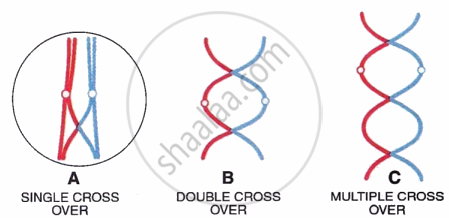
| Type of crossing over | Number of chiasmata | Description | Chromosome appearance |
|---|---|---|---|
| Single crossing over | One | Exchange occurs at only one point between homologous chromatids | Open cross |
| Double crossing over | Two | Exchange occurs at two points on the same chromosome pair | Ring shape |
| Multiple crossing over | More than two | Exchange occurs at several points on the same chromosome |
Multiple loops |
Key Points: Influencing Factors and Significance of Crossing Over
Factors Affecting Crossing Over
- Distance: More distance = more crossing over.
- Age: Older age = less crossing over.
- X-rays: Exposure = more crossing over.
- Temperature: Temp variations = more crossing over.
Significance
It creates genetic variability and new trait combinations, driving evolution and allowing for accurate chromosome mapping.
Key Points: Autosomes and Sex Chromosomes
- Chromosomes are classified into autosomes and sex chromosomes.
- In diploid organisms, the material presents autosomes as 2n − 2 and sex chromosomes as 2.
- Humans have 22 pairs of autosomes and 1 pair of sex chromosomes.
- XX = female and XY = male in humans.
- Heterogametic sex produces two kinds of gametes.
- Homogametic sex produces one kind of gamete.
- XO, XY, and WZ are major systems of sex determination discussed here.
Key Points: Sex Determination
- Sex determination is decided at fertilisation when sperm meets the egg.
- Females have XX chromosomes, while males have XY chromosomes.
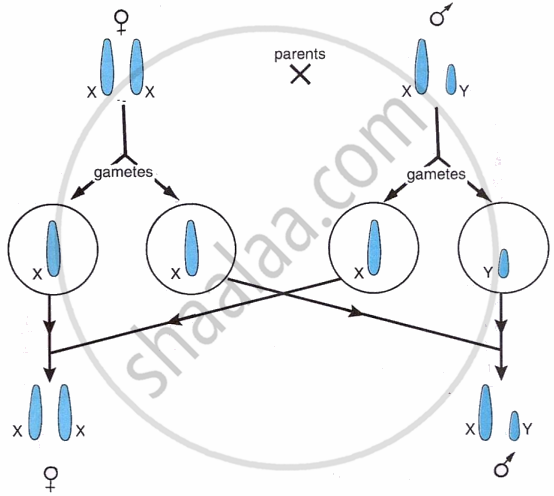
- The mother always provides an X chromosome, while the father provides either X or Y.
- X + X results in a girl, and X + Y results in a boy.
- The father’s sperm determines the sex of the child, and the chances of a boy or a girl are equal.
Key Points: Sex Determination
- Sex determination: It is the mechanism by which an organism develops into a male or a female based on genetic factors.
- Types of organisms: Organisms may be bisexual (hermaphrodite), having both sex organs, or unisexual (dioecious), like humans, with separate sexes.
- Discovery: Henking (1891) discovered the X-body, later identified as the X chromosome involved in sex determination.
- XX–XY system: Females are XX (homogametic) and males are XY (heterogametic), seen in humans and Drosophila.
- ZW–ZZ system: Females are ZW (heterogametic) and males are ZZ (homogametic), seen in birds and some reptiles.
- Haplodiploidy: In honeybees, unfertilized eggs develop into haploid males and fertilised eggs into diploid females.
Key Points: Basis of Sex Determination
- Sex determination in organisms occurs by three main mechanisms: environmental, genetic (genic), and chromosomal methods.
- Environmental sex determination depends on external factors like temperature; for example, in reptiles such as crocodiles and turtles, incubation temperature decides sex.
- Genetic (genic) sex determination is controlled by specific genes rather than chromosomes, as seen in bacteria (fertility plasmids) and algae like Chlamydomonas.
- Chromosomal sex determination is based on differences in sex chromosomes; organisms possess autosomes and one or more sex chromosomes (X, Y, Z, W).
- Chromosomal systems include:
- Female homogametic (XX–XY, XX–XO) as in humans and insects
- Male homogametic (ZW–ZZ, ZO–ZZ) as in birds, butterflies, and moths
Key Points: Sex-Linked Traits
- The Concept: Traits controlled by genes located specifically on sex chromosomes.
- The Chromosomes: Females are XX, while males are XY.
- Fathers: Pass their single X chromosome only to their daughters.
- Mothers: Pass an X chromosome to both their sons and daughters.
- Criss-Cross Inheritance: A mother with a recessive X-linked trait will pass that trait to all her sons, because sons inherit their only X chromosome directly from her.
Key Points: Morgan and Drosophila
The Scientist: T.H. Morgan (proved chromosomes carry genes).
The Subject: Fruit flies (Drosophila melanogaster).
Why Fruit Flies? (The 4 Big Reasons)
- Fast Breeding: They produce hundreds of offspring in just 2 weeks.
- Low Maintenance: Easy and cheap to keep in labs all year.
- Easy to Identify: Males and females look distinctly different (females are larger).
- Simple Genetics: They have only 4 pairs of chromosomes (3 pairs of autosomes + 1 pair of sex chromosomes).
Key Points: Sex Determination in Honey Bees
- Type of system: Honey bees show haplodiploid sex determination, where sex depends on the number of chromosome sets.
- Chromosome number: Females are diploid (2n = 32), and males are haploid (n = 16).
- Formation of gametes: The female produces haploid eggs by meiosis, while the male produces sperm by mitosis.
- Fertilisation: Fertilised eggs develop into diploid females (queen or worker), while unfertilised eggs develop into haploid males (drones) by parthenogenesis.
- Caste differentiation: Female larvae fed royal jelly develop into queens, while others develop into worker bees.
Key Points: Sex-Linked Inheritance in Drosophila
- Sex-linked inheritance involves genes on sex chromosomes.
- In Drosophila, the white-eye trait is X-linked and recessive.
- Morgan’s reciprocal crosses showed different results, proving sex linkage.
- Males show recessive X-linked traits more often because they are hemizygous.
- Criss-cross inheritance is a hallmark of X-linked inheritance.
Key Points: Sex Linked Inheritance
- Sex-linked inheritance: It is the inheritance of genes located on sex chromosomes (X and Y) from parents to offspring.
- X-linked genes: These genes are present on the X chromosome and usually do not have corresponding alleles on the Y chromosome.
- Expression in males and females: X-linked recessive traits appear more in males (one X chromosome), while females need two recessive alleles; females with one allele are carriers.
- Examples of X-linked traits: haemophilia, colour blindness, muscular dystrophy, and night blindness.
- Y-linked genes: These genes are present on the Y chromosome and are passed directly from father to son (e.g., hypertrichosis).
Key Points: Sex-linked Inheritance in Human Beings
- Human somatic cells possess 23 pairs of chromosomes, comprising 22 pairs of autosomes and one pair of sex chromosomes (XX in females and XY in males).
- The male gamete determines the sex of the offspring, as males produce two different types of gametes (X or Y) while females produce only one type (X).
- Sex-linked inheritance in humans follows the exact same pattern observed in Drosophila, with haemophilia and colour blindness being major examples of these traits.
Determination of sex by Y-chromosome in human beings:
Key Points: Colour Blindness
- Colour blindness is an X-linked recessive disorder.
- It mainly affects the ability to distinguish red and green colours.
- It is caused by a defect associated with the retina / cone cells.
- Males are more commonly affected than females.
- Females may act as carriers.
- It follows criss-cross inheritance.
- A colour-blind father can pass the gene to his daughter, who may pass it to her son.
Key Points: Haemophilia
- Haemophilia is an X‑linked recessive hereditary disorder in which blood fails to clot normally, causing prolonged bleeding even after minor injuries.
- It occurs due to deficiency of clotting factors VIII or IX, controlled by a recessive gene (Xʰ) on the X chromosome.
- Males (XʰY) are more commonly affected; females are affected only when both X chromosomes carry the recessive gene (XʰXʰ); otherwise, they are carriers (XᴴXʰ).
- Haemophilia shows criss‑cross inheritance, where the gene passes from an affected father to a carrier daughter and then to a haemophilic grandson.
- A haemophilic male × normal female produces carrier daughters, while a carrier female × normal male can produce 50% haemophilic sons.
Key Points: Human Genetic Disorders
- Meaning: Genetic disorders are diseases caused by abnormalities in genes or chromosomes.
- Types: They are broadly classified into Mendelian disorders and chromosomal disorders.
- Mendelian Disorders: Caused by a mutation in a single gene; examples include thalassemia, sickle-cell anaemia, colour blindness, haemophilia, and phenylketonuria.
- Chromosomal Disorders: Caused by the absence or excess of chromosomes or structural abnormalities; examples include Down syndrome, Turner’s syndrome, and Klinefelter’s syndrome.
- Examples of Effects: Down’s syndrome causes mental retardation; Turner’s syndrome leads to sterile females; Klinefelter’s syndrome causes sterility in males; thalassemia affects haemoglobin production.
Key Points: Mendelian Disorders in Humans
| Disorder | Inheritance Type | Chromosome Involved | Main Defect | Key Features |
|---|---|---|---|---|
| Haemophilia | X-linked recessive | X-chromosome | Defective blood-clotting protein | Excessive bleeding from minor cuts; mainly affects males |
| Colour Blindness | X-linked recessive | X-chromosome | Defect in red/green cone pigments | Inability to distinguish red and green colours |
| Sickle-Cell Anaemia | Autosomal recessive | Autosome (Chr 11) | Valine replaces glutamic acid in β-globin | Sickle-shaped RBCs, anaemia, reduced oxygen transport |
| Phenylketonuria (PKU) | Autosomal recessive | Autosome | Lack of enzyme that converts phenylalanine to tyrosine | Mental retardation due to phenylalanine accumulation |
| Thalassaemia | Autosomal recessive | Autosomes (Chr 11 / 16) | Reduced synthesis of α or β globin chains | Severe anaemia, fragile RBCs |
| Albinism | Autosomal recessive | Autosome | Absence of tyrosinase enzyme → no melanin | Very pale skin, hair and eyes; sun sensitivity |
Key Points: Down’s Syndrome
- Down’s syndrome is a chromosomal disorder caused by trisomy of chromosome 21.
- Affected individuals have 47 chromosomes instead of the normal 46 due to non-disjunction.
- It is characterised by mental retardation, distinctive facial features, and short stature.
- Congenital heart defects and low muscle tone are commonly associated features.
- The risk increases with advanced maternal age (above 35 years) and can be detected by amniocentesis.
Key Points: Sex Chromosome Abnormalities
- Sex chromosome abnormalities are due to non-disjunction causing gain or loss of X/Y chromosomes.
- Klinefelter’s syndrome: 47, XXY, male, tall, underdeveloped testes, low sperm/infertility.
- Turner’s syndrome: 45, XO, female, short stature, webbed neck, broad chest, underdeveloped ovaries, infertility.
Key Points: Disorders of Sex Development due to Sex-Chromosome Abnormality
| Disorder | Genotype | Gonads | Key Features |
| Klinefelter’s Syndrome | XXY | Atrophied Testes | Male appearance, small reproductive organs, sterile (no sperm). |
| Turner’s Syndrome | XO | Absent (No ovaries/testes) | Female appearance, underdeveloped breasts, sterile (no menstruation). |
Key Points: Recombination
- Recombination is the biological process of mixing maternal and paternal characteristics to produce offspring with entirely unique genetic combinations.
- Genetic variation in sexually reproducing species stems from three primary sources: the independent assortment of chromosomes, crossing over during meiosis, and random fertilisation.
- Unlike a mutation, sexual reproduction does not generate new genetic information; instead, it shuffles existing genes from both parents to create a genetically distinct individual.
- While recombination does not alter the overall allele frequencies within a population, it can produce highly advantageous trait combinations that significantly increase an organism's chances of survival and reproductive success.
- Gene conversion is a specific form of recombination involved in DNA repair, utilising similar genomic regions as templates to correct damage and homogenise sequences over time.
Key Points: Mutations
- A mutation is a sudden heritable change in DNA sequences that leads to changes in the genotype and phenotype of an organism.
- Loss of DNA segment = deletion; gain of DNA segment = insertion/duplication; both cause chromosomal aberrations, commonly seen in cancer cells.
- Frame-shift mutation - caused by loss or gain of a DNA segment; Point mutation - change in a single base pair (e.g., sickle cell anaemia).
- Physical mutagens that cause mutation include UV radiation, X-rays, alpha, beta and gamma rays; Chemical mutagens include mustard gas, phenol and formalin.
- Mutation is an important source of genetic variation in organisms, alongside recombination.
Key Points: Gene Mutations
- Gene mutations involve changes in the fine structure and arrangement of nucleotides within DNA segments, directly influencing how a gene functions.
- Because a gene is located at a specific, fixed point on a chromosome, a mutation occurring at this location is referred to as a point mutation.
- These mutations typically occur at the molecular level during the process of DNA replication, which is why they are also classified as copy-error mutations.
- Any alteration in the standard nucleotide sequence can disrupt the genetic code, potentially causing adverse effects on the overall expression of the gene.
Key Points: Frame Shift Mutations
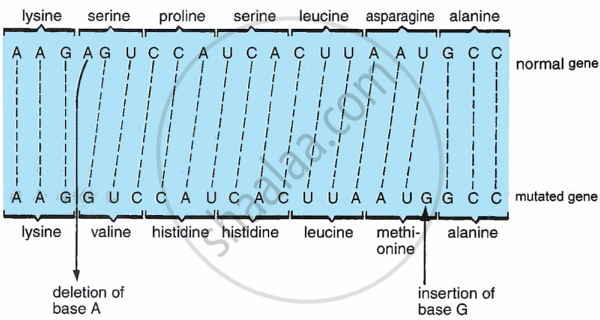
- Frame shift mutations occur when a single nucleotide is either inserted into or deleted from a DNA segment.
- Since the genetic code is continuous, this alteration shifts the entire reading frame of codons from the mutation site onwards.
- These changes are highly harmful because they completely change the resulting sequence of amino acids and overall gene expression.
- There are two distinct types of these mutations: insertion mutations (adding a nucleotide) and deletion mutations (removing a nucleotide).
- Such mutations can lead to severe hereditary diseases, like muscular dystrophy, by prematurely terminating the translation of essential proteins.
Shift in the triplet arrangement of the nucleotide sequence by a frame-shift mutation:
Key Points: Substitution (replacement) Mutations
- Substitution mutation is a type of point mutation where one nucleotide base in a gene is replaced by another.
- Two types: transition (purine→purine or pyrimidine→pyrimidine) and transversion (purine↔pyrimidine).
- Somatic mutations affect body cells only and are not inherited; germline mutations occur in gametes and can be passed to offspring.
- A single base change can alter an amino acid in a protein, which may significantly change its function and cause a disorder.
- Sickle cell anaemia is the key example - a point mutation in the β-globin gene replaces glutamic acid with valine, producing abnormal HbS and sickle-shaped RBCs.
Key Points: Deficiency or Deletion
- Chromosomal mutations, or aberrations, are structural alterations within chromosomes that produce observable phenotypic changes in an organism.
- A deletion mutation occurs when a chromosome segment breaks off and, typically lacking a centromere, is permanently lost during cell division.
- This missing segment permanently removes one or more genes, directly reducing the gene content and disrupting the cell's normal genetic balance.
- Deletions are categorised as either terminal (loss of the chromosome's end segment) or interstitial (loss of an internal segment, requiring two breaks).
- During meiotic pairing, a terminal deletion makes the affected chromosome appear shorter, whereas an interstitial deletion causes the normal, complete homologue to form a distinct loop.
- The study of deletion inheritance patterns is highly valuable to geneticists, as it helps determine relative gene positions and construct accurate linkage maps.
Key Points: Duplication
- Duplication is a chromosomal mutation where a segment is present in double the normal amount, increasing gene dosage.
- It arises when a broken chromosome section reattaches abnormally to homologous or non‑homologous chromosomes or exists independently if it has a centromere.
- Main types: extra‑chromosomal, tandem, reverse tandem, displaced and transposed duplications, based on how and where the extra segment joins.
- Duplication causes looped/unequal pairing of homologous chromosomes, is usually less harmful than deletions, and plays an important role in evolution by adding extra gene copies.
Key Points:
- Translocation is a structural chromosomal mutation where a piece of one chromosome breaks and attaches to a different, usually non-homologous, chromosome.
- It causes rearrangement of genes and chromosome sequence, with balanced forms often keeping overall DNA amount similar.
- Major types are simple, shift/insertion, and reciprocal translocation, where reciprocal involves segment exchange between non-homologous chromosomes.
- Translocation can disturb meiosis, produce unbalanced gametes, and is linked to problems like partial infertility and certain genetic disorders or cancers.
Key Points: Inversion
- An inversion is a structural chromosomal mutation where a segment breaks, rotates 180 degrees, and rejoins to completely reverse the original gene sequence.
- This mutational process alters the specific arrangement of genes on the chromosome without adding or removing any genetic material.
- Inversions are classified as 'paracentric' if the centromere lies outside the inverted segment and 'pericentric' if the centromere is included inside the loop.
- Crossing over within an inversion loop typically produces abnormal, non-viable chromatids, meaning primarily original parental-type combinations are recovered.
- By suppressing effective recombination, inversions help preserve specific heterozygous gene combinations and can safely conceal recessive lethal mutations.
Key Points: Aneuploidy
- Aneuploidy involves change in individual chromosomes, not whole sets.
- Hypoploidy means loss of chromosomes.
- Hyperploidy means gain of chromosomes.
- Monosomy = 2n - 1; nullisomy = 2n - 2; trisomy = 2n + 1; tetrasomy = 2n + 2.
- Trisomics are important in genetic studies because they help map genes to chromosomes.
Key Points: Euploidy
- Euploidy involves the variation of entire chromosome sets.
- Monoploidy refers to having a single basic set of chromosomes.
- Haploidy is the condition of having exactly half the standard somatic chromosome number.
- Haploid meiosis features independent univalents, which assists in studying genetic inheritance.
- Haploids can originate naturally (parthenogenesis, androgenesis, chromosome loss) or artificially (pollen culture).
- Polyploidy is defined by the presence of more than two complete chromosome sets.
- Autopolyploidy involves multiple chromosome sets derived entirely from a single species.
- Allopolyploidy arises from the hybridization of different species followed by chromosome doubling.
Key Points: Induction of Gene Mutation
| Mutagen | Category | Mode of Action / Effect |
| 5-Bromouracil (BU) | Chemical | Replaces thymine (pairs with guanine). |
| 2-Aminopurine (AP) | Replaces adenine (pairs with cytosine). | |
| Nitrous acid | Deamination and strand crossing over. | |
| Hydroxylamine | Hydroxylation of cytosine. | |
| Ethylmethane sulphonate | Alkylation of purines, transitions. | |
| Acridine dyes (e.g., orange) | Frameshift mutations by intercalation. | |
| Colchicine | Induces polyploidy (inhibits spindle formation). | |
| Ultraviolet (UV) rays | Radiation (Non-ionizing) | Forms pyrimidine dimers, causing repair errors. |
| X-rays & Ionizing Radiation | Radiation (Ionizing) | Breakage of single- and double-stranded DNA. |
| High Temperature | Physical | Disturbs genes, causing mutation. |
Key Points: Polyploidy
- Polyploidy is having multiple sets of chromosomes due to failure in chromosome separation during cell division.
- It causes instant reproductive isolation because the new chromosome count prevents successful breeding with the parent species.
- A single polyploid plant can quickly build a population by reproducing asexually.
- Members of this new population can then sexually reproduce with each other, creating a new species in just a few generations.
- It is highly common in plants (e.g., grasses, agricultural crops) but rare in animals (e.g., specific all-female lizards).
Important Questions [12]
- A homozygous pea plant with round seed coat and yellow cotyledons are crossed with another homozygous, pea plant having wrinkled seed coat and green cotyledons.
- Mention One Cause for Variation in Nature.
- In a karyotype analysis, X and Y chromosomes represent sex chromosomes. Name the scientist who discovered the X chromosome.
- Choose the Correct Options of the Following Question: Study the Given Monohybrid Cross: a Test Cross for this Fj Will Be:
- A haemophilic man marries a carrier woman and they have a daughter. What is the probability of their daughter being haemophilic?
- Define the Homologous Chromosomes
- Give an account of artificial chromosomes in the transfer of genetic material.
- Explain the process of sex determination in honey bees.
- Jacob is genetically a carrier of the disorder that affects the shape of the RBCs, as shown in the diagram below. His son James suffers from the same disorder.
- What is the genotype of Turner's Syndrome?
- Mention any one symptom of Turner's syndrome.
- The Genotype of a Person Withtumer'S Syndrome Will Be
Concepts [58]
- Heredity and Variation
- Gregor Johann Mendel – Father of Genetics
- Mendel's Experiments on Inheritance
- Crossing Technique
- Monohybrid Cross
- Dihybrid Cross
- Mendel's Laws > The Law of Dominance
- Mendel's Laws > The Law of Segregation (Law of Purity of Gametes)
- Mendel's Laws > The Law of Independent Assortment
- Genetic Terminology
- Reasons for Mendel's Success
- Applications and Beyond Mendel's Laws
- Exceptions to Mendel's Principles > Incomplete Dominance
- Exceptions to Mendel's Principles > Co-Dominance
- Exceptions to Mendel's Principles > Pleiotropy
- Exceptions to Mendel's Principles > Multiple alleles
- Exceptions to Mendel's Principles > Polygenic traits - Quantitative inheritance
- Pedigree Analysis
- Chromosomal Theory of Inheritance
- Linkage
- Types of Linkage > Complete Linkage
- Types of Linkage > Incomplete Linkage
- Influencing Factors and Significance of Linkage
- Influencing Factors and Significance of Linkage
- Linked and Unlinked Genes
- Mechanism of Crossing Over
- Types of Crossing Over
- Influencing Factors and Significance of Crossing Over
- Autosomes and Sex Chromosomes
- Sex Determination
- Sex Linked Traits
- Basis of Sex Determination
- Sex Determination in Honey Bees
- Morgan and Drosophila
- Sex Linked Inheritance
- Sex-linked Inheritance in Drosophila
- Sex-Linked Inheritance in Human Beings
- Colour blindness
- Haemophilia
- Human Genetic Disorders
- Mendelian Disorders in Humans
- Autosomal Abnormilities
- Sex Chromosome Abnormalities
- Disorders of Sex Development due to Sex-Chromosome Abnormality
- Variation
- Recombinations
- Mutations
- Gene Mutations
- Frame Shift Mutations
- Substitution (Replacement) Mutations
- Chromosomal Mutations or Aberrations: Deficiency or deletion
- Chromosomal Mutations or Aberrations: Duplication
- Chromosomal Mutations or Aberrations: Translocation
- Chromosomal Mutations or Aberrations: Inversion
- Genomic Mutations or Heteroploidy or Numerical Aberrations: Aneuploidy
- Genomic Mutations or Heteroploidy or Numerical Aberrations: Euploidy
- Induction of Gene Mutation
- Polyploidy: Instant Speciation
