Advertisements
Advertisements
Question
Write the set of values of k for which f(x) = kx − sin x is increasing on R ?
Advertisements
Solution
\[f\left( x \right) = kx - \sin x\]
\[f'\left( x \right) = k - \cos x\]
\[\text { For f(x) to be increasing, we must have }\]
\[f'\left( x \right) > 0\]
\[ \Rightarrow k - \cos x > 0\]
\[ \Rightarrow \cos x < k\]
\[\text { We know that the maximum value of cos x is 1 }.\]
\[\text { Since cos x<k,the minimum value of k is 1 }.\]
\[\Rightarrow k \in \left( 1, \infty \right)\]
APPEARS IN
RELATED QUESTIONS
Show that the function given by f(x) = 3x + 17 is strictly increasing on R.
Find the least value of a such that the function f given by f (x) = x2 + ax + 1 is strictly increasing on [1, 2].
The interval in which y = x2 e–x is increasing is ______.
Let f be a function defined on [a, b] such that f '(x) > 0, for all x ∈ (a, b). Then prove that f is an increasing function on (a, b).
Find the interval in which the following function are increasing or decreasing f(x) = x2 + 2x − 5 ?
Find the interval in which the following function are increasing or decreasing f(x) = 5 + 36x + 3x2 − 2x3 ?
Find the interval in which the following function are increasing or decreasing f(x) = 2x3 + 9x2 + 12x + 20 ?
Find the interval in which the following function are increasing or decreasing f(x) = x4 − 4x ?
Find the interval in which the following function are increasing or decreasing \[f\left( x \right) = \frac{3}{2} x^4 - 4 x^3 - 45 x^2 + 51\] ?
Show that f(x) = e2x is increasing on R.
Show that f(x) = x3 − 15x2 + 75x − 50 is an increasing function for all x ∈ R ?
Prove that the function f(x) = x3 − 6x2 + 12x − 18 is increasing on R ?
Show that f(x) = tan−1 x − x is a decreasing function on R ?
Show that the function f given by f(x) = 10x is increasing for all x ?
Write the interval in which f(x) = sin x + cos x, x ∈ [0, π/2] is increasing ?
Write the set of values of a for which f(x) = cos x + a2 x + b is strictly increasing on R ?
Let f(x) = x3 + ax2 + bx + 5 sin2x be an increasing function on the set R. Then, a and b satisfy.
Function f(x) = cos x − 2 λ x is monotonic decreasing when
If the function f(x) = cos |x| − 2ax + b increases along the entire number scale, then
The function f(x) = −x/2 + sin x defined on [−π/3, π/3] is
Test whether the following functions are increasing or decreasing : f(x) = x3 – 6x2 + 12x – 16, x ∈ R.
Find the values of x, for which the function f(x) = x3 + 12x2 + 36𝑥 + 6 is monotonically decreasing
State whether the following statement is True or False:
The function f(x) = `3/x` + 10, x ≠ 0 is decreasing
Which of the following functions is decreasing on `(0, pi/2)`?
The function f(x) = `(2x^2 - 1)/x^4`, x > 0, decreases in the interval ______.
The function f(x) = x2 – 2x is increasing in the interval ____________.
The function f(x) = mx + c where m, c are constants, is a strict decreasing function for all `"x" in "R"` , if ____________.
The length of the longest interval, in which the function `3 "sin x" - 4 "sin"^3"x"` is increasing, is ____________.
The function f: N → N, where
f(n) = `{{:(1/2(n + 1), "If n is sold"),(1/2n, "if n is even"):}` is
Function given by f(x) = sin x is strictly increasing in.
Function f(x) = `log(1 + x) - (2x)/(2 + x)` is monotonically increasing when ______.
The interval in which the function f(x) = `(4x^2 + 1)/x` is decreasing is ______.
Read the following passage:
|
The use of electric vehicles will curb air pollution in the long run. V(t) = `1/5 t^3 - 5/2 t^2 + 25t - 2` where t represents the time and t = 1, 2, 3, ...... corresponds to years 2001, 2002, 2003, ...... respectively. |
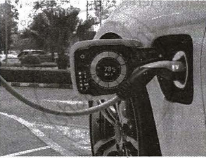
Based on the above information, answer the following questions:
- Can the above function be used to estimate number of vehicles in the year 2000? Justify. (2)
- Prove that the function V(t) is an increasing function. (2)
Find the interval/s in which the function f : R `rightarrow` R defined by f(x) = xex, is increasing.
In which one of the following intervals is the function f(x) = x3 – 12x increasing?
Let \[x_0\] be in the domain of a real-valued function \[f\]. When is \[f\] increasing at \[x_0\]?
After the domain has been divided into intervals, which quantity must be determined in each interval?
The critical points \[x=-2\] and \[x=3\] divide the real line into which three intervals?
