Advertisements
Advertisements
Question
Prove that the function given by f (x) = x3 – 3x2 + 3x – 100 is increasing in R.
Advertisements
Solution
It is known that- f (x) = x3 - 3x2 + 3x - 100
`therefore` f'(x) = 3x2 - 6x + 3
= 3 (x2 - 2x + 1)
= 3 (x - 1)2 ≥ 0 for all `x in R`
= 3(x - 1)2 > 0
∀ x ∈ R, f''(x) = positive
Hence, the function f is increasing.
APPEARS IN
RELATED QUESTIONS
The amount of pollution content added in air in a city due to x-diesel vehicles is given by P(x) = 0.005x3 + 0.02x2 + 30x. Find the marginal increase in pollution content when 3 diesel vehicles are added and write which value is indicated in the above question.
Find the least value of a such that the function f given by f (x) = x2 + ax + 1 is strictly increasing on [1, 2].
Let f be a function defined on [a, b] such that f '(x) > 0, for all x ∈ (a, b). Then prove that f is an increasing function on (a, b).
Water is dripping out from a conical funnel of semi-verticle angle `pi/4` at the uniform rate of `2 cm^2/sec`in the surface, through a tiny hole at the vertex of the bottom. When the slant height of the water level is 4 cm, find the rate of decrease of the slant height of the water.
Find the interval in which the following function are increasing or decreasing f(x) = 5 + 36x + 3x2 − 2x3 ?
Find the interval in which the following function are increasing or decreasing \[f\left( x \right) = \frac{x^4}{4} + \frac{2}{3} x^3 - \frac{5}{2} x^2 - 6x + 7\] ?
State when a function f(x) is said to be increasing on an interval [a, b]. Test whether the function f(x) = x2 − 6x + 3 is increasing on the interval [4, 6] ?
Find the value(s) of a for which f(x) = x3 − ax is an increasing function on R ?
Show that f(x) = x + cos x − a is an increasing function on R for all values of a ?
Find the interval in which f(x) is increasing or decreasing f(x) = sinx(1 + cosx), 0 < x < \[\frac{\pi}{2}\] ?
What are the values of 'a' for which f(x) = ax is decreasing on R ?
State whether f(x) = tan x − x is increasing or decreasing its domain ?
The interval of increase of the function f(x) = x − ex + tan (2π/7) is
Function f(x) = cos x − 2 λ x is monotonic decreasing when
Function f(x) = x3 − 27x + 5 is monotonically increasing when ______.
If the function f(x) = cos |x| − 2ax + b increases along the entire number scale, then
Show that f(x) = cos x is a decreasing function on (0, π), increasing in (−π, 0) and neither increasing nor decreasing in (−π, π).
Test whether the following functions are increasing or decreasing : f(x) = x3 – 6x2 + 12x – 16, x ∈ R.
Test whether the following functions are increasing or decreasing : f(x) = 2 – 3x + 3x2 – x3, x ∈ R.
Find the value of x, such that f(x) is decreasing function.
f(x) = 2x3 – 15x2 – 84x – 7
Choose the correct alternative:
The function f(x) = x3 – 3x2 + 3x – 100, x ∈ R is
The slope of tangent at any point (a, b) is also called as ______.
If the function f(x) = `7/x - 3`, x ∈ R, x ≠ 0 is a decreasing function, then x ∈ ______
The function f(x) = `x - 1/x`, x ∈ R, x ≠ 0 is increasing
If f(x) = [x], where [x] is the greatest integer not greater than x, then f'(1') = ______.
f(x) = `{{:(0"," x = 0 ), (x - 3"," x > 0):}` The function f(x) is ______
If f(x) = `x^(3/2) (3x - 10)`, x ≥ 0, then f(x) is increasing in ______.
The function f(x) = x2 – 2x is increasing in the interval ____________.
The interval in which the function f is given by f(x) = x2 e-x is strictly increasing, is: ____________.
Let h(x) = f(x) - [f(x)]2 + [f(x)]3 for every real number x. Then ____________.
The function f: N → N, where
f(n) = `{{:(1/2(n + 1), "If n is sold"),(1/2n, "if n is even"):}` is
Which of the following graph represent the strictly increasing function.
Function given by f(x) = sin x is strictly increasing in.
The function f(x) = `(4x^3 - 3x^2)/6 - 2sinx + (2x - 1)cosx` ______.
If f(x) = x5 – 20x3 + 240x, then f(x) satisfies ______.
Read the following passage:
|
The use of electric vehicles will curb air pollution in the long run. V(t) = `1/5 t^3 - 5/2 t^2 + 25t - 2` where t represents the time and t = 1, 2, 3, ...... corresponds to years 2001, 2002, 2003, ...... respectively. |
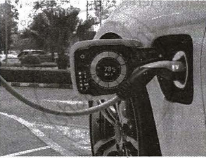
Based on the above information, answer the following questions:
- Can the above function be used to estimate number of vehicles in the year 2000? Justify. (2)
- Prove that the function V(t) is an increasing function. (2)
Find the values of x for which the function f(x) = `x/(x^2 + 1)` is strictly decreasing.
In which one of the following intervals is the function f(x) = x3 – 12x increasing?
A function \[f\] is monotonic in an interval when it is which of the following?
As one moves from left to right on a graph, what does a decrease in the \[y\]-values indicate?
