Advertisements
Advertisements
Question
Why does Bt toxin not kill the bacterium that produces it, but kill the insect that ingests it?
Advertisements
Solution
Bt toxin is produced by a soil bacterium called Bacillus thuringiensis. This toxin does not kill the bacteria because when it is present in the bacteria, it is in an inactive and crystalline form.
It becomes active and toxic when it is consumed by insects such as such as lepidopterans (armyworm), coleopterans (beetles) and dipterans (flies/ mosquitoes).
The activated toxin (delta endotoxins) binds to the epithelial cells in the midgut of an insect and creates pores that cause lyses and swelling, eventually killing the insect.
APPEARS IN
RELATED QUESTIONS
Describe the steps that are followed during secondary treatment of sewage.
Answer the following question.
Describe the roles of heat, primers, and the bacterium Thermus aquaticus in the process of PCR.
The genetic defect adenosine deaminase deficiency may be cured permanently by ____________.
Explain how “Rosie” is different from a normal cow.
Choose the correct option regarding retrovirus.
With regard to insulin choose the correct options.
- C-peptide is not present in mature insulin.
- The insulin produced by rDNA technology has C-peptide.
- The pro-insulin has C-peptide.
- A-peptide and B-peptide of insulin are interconnected by disulphide bridges.
Choose the correct answer from the options given below.
List the disadvantages of insulin obtained from the pancreas of slaughtered cows and pigs:
A host cell must be made competent, before it is able to receive an rDNA. Justify.
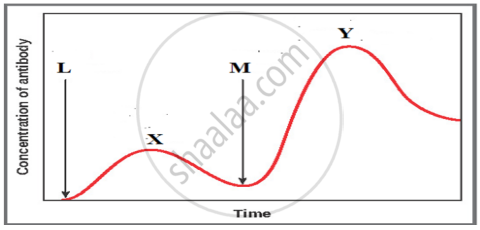
The graph given below indicates the administration of the first (L) and second dose (M) of a vaccine. The corresponding response of the body is indicated by X, and Y. Interpret the graph and explain the reason for such a response shown by the body.
Which type of vaccine uses an oral formulation produced using Bacillus subtilis?
