Advertisements
Advertisements
Question
The poet experiences sadness because ______.
Options
the blended notes are jarring
Nature is filled with negativity
he is worried about the destruction caused to Nature
natural calamities occur frequently
Advertisements
Solution
The poet experiences sadness because he is worried about the destruction caused to Nature.
APPEARS IN
RELATED QUESTIONS
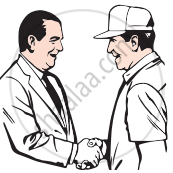
Guess what friendly words these two gentlemen exchange when shaking hands.
How does the poet compare his face with dresses?
Interpret each of the following expression used in the poem, in one or two line.
laugh with their eyes
Interpret each of the following expression used in the poem, in one or two line.
to unlearn all these muting things
Explain the following line with reference to the context.
There will be no thrice.
Do you think the narrator is heroic? Why?
Read the poem again and complete the summary using the words given in the box.
In the poem ‘Confessions of a Born Spectator,’ Ogden Nash talks about how people choose different sports in their lives or decide to become athletes. While admiring the talents of athletes and sportsmen, the poet (i)______he is glad that he is neither a sportsman nor an athlete. Children have different (ii)______and wish to play various games. Each child has in mind something in particular, but the narrator is (iii)______he is not one of the players. Though the narrator (iv) ______the talents of all athletes, he derives satisfaction from watching them, but does not wish to (v) ______places with them. He also sometimes regrets that (vi)______athletes play rough games without caring for the feelings of their sporting rivals. He feels that good sense and caution win over ego. The narrator wholeheartedly offers (vii) ______the modest (viii) ______of athletes. Ultimately the narrator is (ix)______that he himself is not an athlete.
|
thanksgiving exchange glad confesses physiques zealous satisfied aims admires |
Read the given line and answer the question that follow in a sentence or two
When snaps the knee and cracks the wrist….
Identify and explain the use of the literary device in this line.
You are the School Pupil Leader. Mention some qualities that can be drawn from the field of sports to improve your leadership skills.
Find words from the poem that convey the following ideas:
- connected together
- spread over the surface of the ground in a straggling manner
- make out or understand
- slender woody shoots growing from branches or stems of trees
Complete the summary of the poem by filling in the blanks with the words given below.
The poet, in a relaxed state of mind, is sitting in a (1) ______. He reflects on how his mood brings (2) ______thoughts, which are inevitably followed by (3)______ones. He feels connected to all of nature, and senses an inherent joy in all (4)______. He has faith in the fact that all the primroses and periwinkles around him (5)______ the air they breathe. He feels that every bird in the grove moves with (6)______. As the twigs catch the breezy air, they do so with the same pleasure (7)______ all life on earth. This joy of nature seems to be heaven-sent. Nature’s holy plan is to offer joy and peace to all forms of life on earth. The poet’s pleasant train of thought slowly leads to the sad reflection of how mankind alone has wrought sorrow and (8)______ upon itself. He firmly believes that man is meant to spend his days blissfully taking part in the vitality and joy surrounding him in (9)______. He therefore concludes rhetorically, emphasizing that he has good reason to (10)______ the distress, man unnecessarily brings upon himself.
| creations | abundance | savour |
| pleasant | suffering | grove |
| lament | pervading | sorrowful |
| ecstasy |
Read the following line and identify the figure of speech used in each extract.
What Man has made of Man?
Work in groups of 4−6. Discuss how you would preserve the environment and protect Nature. One or two representatives may share their ideas with the class.
Which law does Macavity break?
What makes the fakir stare in wonder?
Describe Macavity’s appearance.
Explain the following line with reference to the context.
He always has an alibi, and one or two to spare
What is the rhyme scheme used in the poem?
Which line is repeated in the poem? What is the effect created by this repetition?
What does ‘Everest’ in the title stand for?
Why does the speaker say ‘Everest is not the only peak’?
Read the given line and answer the question that follow.
Honour is a property, common to all: In dignity and pride no one need to be poor.
- Who are considered rich?
- What is their asset?
What does the executor mentioned in the poem do?
Who is Bolingbroke? Is he a friend or foe?
What does ‘flesh’ mean here?
Explain the following line with reference to the context in about 5 to 8 line:
“Comes at the last, and with a little pin
Bores through his castle wall, and farewell king!”
Explain the following line with reference to the context in about 5 to 8 line:
“How can you say to me, I am a king?”
Read the poem once again carefully and identify the figure of speech that has been used in each of the following line from the poem:
“Let’s talk of graves, of worms, and epitaphs;
Make dust our paper, and with rainy eyes Write sorrow on the bosom of the earth’’.
