Advertisements
Advertisements
Question
Read the lines in which the following phrases occur. Then discuss with your partner the meaning of each phrase in its context.
meadow houses
Advertisements
Solution
Meadow houses are a reference to several houses which inhabit the insects, birds and animals that live in the meadows. Such as burrows, nests and mounds.
RELATED QUESTIONS
Answer of these question in a short paragraph (about 30 words).
Did Margie have regular days and hours for school? If so, why?
How did Einstein react to the bombing of Hiroshima and Nagasaki?
Thinking about the Poem
Is the poet now a child? Is his mother still alive?
“Toto was a pretty monkey.” In what sense is Toto pretty?
What do Prashant and other volunteers resist the plan to set up institutions for orphans and widows? What alternatives do they consider?
In groups of six, work on one of the mysteries given below by surfing the net and through other sources. Create a power point presentation/a photo essay.
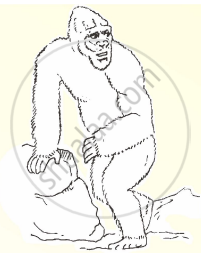
- Yeti, the abominable snowman
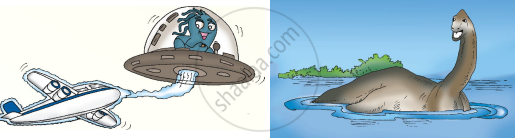
- Loch Ness Monster
- UFOs (Unidentified Flying Objects)
- Lost city of Atlantis
- Crop circles
- Nazca lines
Some are like fields of sunlit corn,
Meet for a bride on her bridal morn,
Some, like the flame of her marriage fire,
Or, rich with the hue of her heart's desire,
Tinkling,luminous,tender, and clear,
Like her bridal laughter and bridal tear.
Read the lines given above and answer the question that follow.
Besides visual imagery the poet also uses auditory imagery.Pick out the lines.
Such wondrous, fine, fantastic tales
Of dragons, gypsies, queens, and whales
And treasure isles, and distant shores
Where smugglers rowed with muffled oars,
And pirates wearing purple pants,
And sailing ships and elephants,
And cannibals crouching 'round the pot,
Stirring away at something hot.
(It smells so good , what can it be?
Good gracious, it's Penelope.)
The younger ones had Beatrix Potter
With Mr.Tod,the dirty rotter,
And Squirrel Nutkin,Pigling Bland,
And Mrs.Tiggy-Winkle and-
Just How The Camel Got His Hump,
And How the Monkey Lost His Rump,
And Mr. Toad, and bless my soul,
There's Mr.Rat and Mr. Mole-
Oh, books, what books they used to know,
Those children living long ago!
Read the lines given above and answer the question given below.
Which animal characters does Dahl mention?’
Continuous as the stars that shine
And twinkle on the milky way,
They stretched in never-ending line
Along the margin of a bay:
Ten thousand saw I at a glance,
Tossing their heads in springhtly dance.
Read the lines given above and answer the question that follow.
How many did the poet see at a glance?
Of the seven hundred villages dotting the map of India, in which the majority of India’s five hundred million live, flourish and die, Kritam was probably the tiniest, indicated on the district survey map by a microscopic dot, the map being meant more for the revenue official out to collect tax than for the guidance of the motorist, who in any case could not hope to reach it since it sprawled far from the highway at the end of a rough track furrowed up by the iron-hooped wheels of bullock carts. But its size did not prevent its giving itself the grandiose name Kritam, which meant in Tamil coronet or crown on the brow of the subcontinent. The village consisted of fewer than thirty houses, only one of them built from brick and cement and painted a brilliant yellow and blue all over with
gorgeous carvings of gods and gargoyles on its balustrade, it was known as the Big House. The other houses, distributed in four streets, were generally of bamboo thatch, straw, mud and other unspecified material. Muni’s was the last house in the fourth street, beyond which stretched the fields. In his prosperous days Muni had owned a flock of sheep and goats and sallied forth every morning driving the flock to the highway a couple of miles away.
Read the extract given below and answer the question that follow.
Describe the other houses.
I was in for a surprise. When the time came for the broad-jump trials, I was startled to see a tall boy hitting the pit at almost 26 feet on his practice leaps! He turned out to be a German named Luz Long. 1 was told that Hitler hoped to win the jump with him. I guessed that if Long won, it would add some new support to the Nazis’ “master race” (Aryan superiority) theory. After all, I am a Negro. Angr about Hitler’s ways, 1 determined to go out there and really show Der Fuhrer and his master race who was superior and who wasn’t. An angry athlete is an athlete who will make mistakes, as any coach will tell you. I was no exception. On the first of my three qualifying jumps, I leaped from several inches beyond the takeoff board for a foul. On the second jump, I fouled even worse. “Did I come 3,000 miles for this?” I thought bitterly. “To foul out of the trials and make a fool of myself ?” Walking a few yards from the pit, 1 kicked disgustedly at the dirt.
Read the extract given below and answer the question that follow.
I supposed that if Long won, it would add some new support to the Nazis’ Aryan- superiority theory. What did Jesse Owens want to show to Hitler?
Read the extract given below and answer the questions that follow:
Trotter: Yes. You've been extraordinarily foolish, you know. You've run a very good chance of being killed by holding out on me. As a result, you've been in serious danger more than once.
Mollie: I don't know what you mean.
Trotter: (moving slowly above the sofa table to the Right of the sofa, still quite natural and friendly) Come now, Mrs. Ralston. We, policemen, aren't quite so dumb as you think. All along I've realized that you had first-hand knowledge of the Langridge Farm affair. You know Mrs. Boyle was the magistrate concerned. In fact, you knew all about it. Why didn't you speak up and say so?
Mollie: (Very much affected) I don't understand. I wanted to forget-forget. (She sits at the Left end of the sofa.)
(i) What was the 'Longridge Farm' affair?
(ii) Trotter revealed to Mollie some facts that he had uncovered about her past. What were they?
(iii) What did Mollie want to forget? How was she linked with the ‘Longridge Farm affair’?
(iv) How did Trotter manage a pass himself off as a policeman? How had he reached Monkswell Manor?
(v) What did Trotter reveal to Mollie about this true identity? How was Mollie saved at the end of the play?
“He had the distinction of being the only member of the party to have bagged any game...”The phrase in underlined means
Mark the right answer.
The author felt sorry for complaining about his boots. What made him feel so?
Why did Makara dislike tortoises, snakes and lizards? Write a line about each.
Why do you think grown-ups say the kind of things mentioned in the poem? Is it important that they teach children good manners, and how to behave in public?
What happens when the winds blow?
What is the butterfly busy doing?
What did the author point out about the children in the playground?
Complete the following sentence by providing a reason.
The escape of Fleance in Act III Scene iii of the play, Macbeth, is significant because ______.
