Advertisements
Advertisements
Question
Read the given lines and answer the question that follow.
He’s the bafflement of Scotland
Yard, the Flying Squad’s despair:
For when they reach the scene of crime
— Macavity’s not there!..
- What is ‘Scotland Yard’?
- Why does the flying squad feel disappointed?
Advertisements
Solution
- Scotland Yard is the world-famous headquarters of the London metropolitan police service known for quick investigation of crime and nabbing the criminal in record time.
- The flying squad reaches the scene of the crime very fast. But Macavity is not at all there. The flying squad is disappointed because they are unable to arrest the crafty criminal.
APPEARS IN
RELATED QUESTIONS
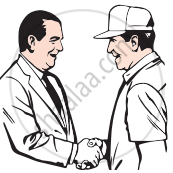
Guess what friendly words these two gentlemen exchange when shaking hands.
What does he desire to unlearn and relearn?
Fill in the blanks choosing the words from the box given and complete the summary of the poem:
The poet Okara in this narrative monologue painfully condemns the (a)______ displayed by adults, both in their words and actions. Here, a father laments to his son about the negative changes that creep into the attitude and behaviour of humans, when they grow into (b)______. He says that people used to be (c)______ when they laugh and the honesty would be reflected in their eyes. But, people of modern times laugh (d)______. Their handshakes used to be warm and happy conveying a sense of togetherness, but nowadays the handshakes have become a mere (e)______. He warns his son that people are not trust-worthy and have become so selfish that they are concerned only about their own (f)______benefits. People utter words of welcome and exchange (g)______, but those words come only from the tip of their tongues and not from the depth of their hearts. Humans have learnt the art of changing their (h)______ expressions according to situations merely to ensure social acceptance. They wear(i)______ and exhibit multiple faces. The narrator admits that he has also changed into a hypocrite. However, he tells his son that though he (j)______ his expressions, he does all these against his will. He says he wants to become a (k)______ again and laugh genuinely. He wants to (l)______ the unreal things and (m)______how to laugh as he had done once upon a time. When he laughs before the (n)______, he sees no expression. His teeth are bare like that of the (o)______of a snake. So, he asks his son to show him how to laugh the way he used to laugh when he was a kid like him.
| relearn | adults | facial |
| personal | fangs | child |
| fakes | superficially | duplicity |
| genuine | unlearn | falsity |
| masks | mirror | pleasantries |
Interpret each of the following expression used in the poem, in one or two line.
laugh with their eyes
Explain the things the poet has learnt when he grew into an adult.
The poet is satisfied just watching the heroic deeds of others. What could be the reason?
Why does the poet prefer to buy tickets worth their weight in radium? Bring out the significance of the metal referred to here.
Explain the following with reference to the context in about 50–60 word each.
They do not ever in their dealings Consider one another’s feelings…
Read the lines given below and answer the question that follow.
And I must think, do all I can,
That there was pleasure there…
- What did the poet notice about the twigs?
- What was the poet’s thought about then?
Read the following line and identify the figure of speech used in each extract.
What Man has made of Man?
The poem speaks of ______.
What scene in nature gives you pleasure? Talk for a minute describing a natural scene that gave you a lot of joy. What did you see, hear, smell or feel, that gave you joy?
‘Nature can nurture’. Describe how this process happens.
Who does the Secret Service suspect when a loss is reported?
Why is Macavity called the ‘Napoleon of Crime’?
What are the mysterious ways in which Macavity acts?
Read the given lines and answer the question that follow.
He sways his head from side to
side, with movements like a snake;
And when you think he’s half asleep,
he’s always wide awake…
- Explain the comparison made here.
- What does he pretend to do?
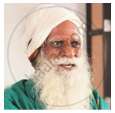
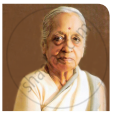
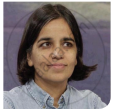
Identify the following personalities and their fields of achievement.
| Name | Field | |
 |
||
 |
||
 |
||
 |
||
 |
||
 |
||
 |
||
 |
- Mention a remarkable achievement of any of these personalities.
- What quality do you admire the most in each of these achievers?
- What are the qualities that you may share with them?
- Name a few more popular personalities who have made our nation proud.
- ______.
- ______.
- ______.
- ______.
Which path should we follow in life?
In what way is every hillock similar to Everest?
The poem does not focus on the destination but the journey towards it. Discuss
Fill in the blank with appropriate word from the box and complete the statement suitably:
Shravan never keeps his promises. His friends know that his words are ______.
Fill in the blank with appropriate word from the box and complete the statement suitably:
The fortress was ______and could not be conquered by the enemies.
What does ‘flesh’ mean here?
Explain the following line with reference to the context in about 5 to 8 line:
“Our lands, our lives, and all are Bolingbroke’s,
And nothing can we call our own but death;”
Working with your partner, discuss the following adages and share your views with the class. You may need to give your ideas and justify your point of view. Remember to take turns while making your presentation/short speech.
Uneasy lies the head that wears a crown
Read the poem once again carefully and identify the figure of speech that has been used in each of the following line from the poem:
“How can you say to me, I am a king?”
Based on your reading of King Richard’s speech, answer the following questions in about 100 - 150 words each. You may add your own ideas if required to present and justify your point of view.
What are the causes for King Richard’s grief?
Based on your reading of King Richard’s speech, answer the following questions in about 100 - 150 words each. You may add your own ideas if required to present and justify your point of view.
Death has been cited in many ways in this monologue. Identify the poetic devices used in those references.
