Advertisements
Advertisements
Question
Explain the following lines with reference to the context.
Once upon a time, son They used to laugh with their eyes:
Advertisements
Solution
- Reference: These lines are from the poem, “Once upon a time” written by Gabriel Okara.
- Context: The poet says these words to his son while discussing his own happy, childhood days.
- Explanation: The poet compares the behaviour of people in the past and those in modem times. He tells his son that people in the past used to laugh with their eyes. There was an expression of genuine warmth among f people when they laughed.
APPEARS IN
RELATED QUESTIONS
How is the poet’s laugh reflected in the mirror?
Interpret each of the following expression used in the poem, in one or two line.
like a fixed portrait smile
‘Face is the index of the mind.’ Does this adage concur with the views of the poet?
How does the poet establish the victory of common sense over ego?
The poet does not wish to exchange places with the athletes. How does he justify his view?
Complete the summary of the poem by filling in the blanks with the words given below.
The poet, in a relaxed state of mind, is sitting in a (1) ______. He reflects on how his mood brings (2) ______thoughts, which are inevitably followed by (3)______ones. He feels connected to all of nature, and senses an inherent joy in all (4)______. He has faith in the fact that all the primroses and periwinkles around him (5)______ the air they breathe. He feels that every bird in the grove moves with (6)______. As the twigs catch the breezy air, they do so with the same pleasure (7)______ all life on earth. This joy of nature seems to be heaven-sent. Nature’s holy plan is to offer joy and peace to all forms of life on earth. The poet’s pleasant train of thought slowly leads to the sad reflection of how mankind alone has wrought sorrow and (8)______ upon itself. He firmly believes that man is meant to spend his days blissfully taking part in the vitality and joy surrounding him in (9)______. He therefore concludes rhetorically, emphasizing that he has good reason to (10)______ the distress, man unnecessarily brings upon himself.
| creations | abundance | savour |
| pleasant | suffering | grove |
| lament | pervading | sorrowful |
| ecstasy |
Explain the following line with reference to the context in about four to five sentence each.
Have I not reason to lament
What Man has made of Man?
Read the following line and identify the figure of speech used in each extract.
To her fair works did Nature link
The human soul that through me ran.
How do people bring grief and sorrow to one another?
The poem speaks of ______.
Answer in a paragraph of about 100−150 words.
Do you think the poet wants to say that man is unhappy because he has lost his link with nature and forgotten how to enjoy nature, or because man is cruel to other men?
What scene in nature gives you pleasure? Talk for a minute describing a natural scene that gave you a lot of joy. What did you see, hear, smell or feel, that gave you joy?
What makes the fakir stare in wonder?
What are the mysterious ways in which Macavity acts?
Describe the appearance and qualities of Macavity.
Identify the following personalities and their fields of achievement.
| Name | Field | |
 |
||
 |
||
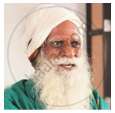 |
||
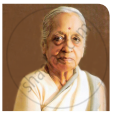 |
||
 |
||
 |
||
 |
||
 |
- Mention a remarkable achievement of any of these personalities.
- What quality do you admire the most in each of these achievers?
- What are the qualities that you may share with them?
- Name a few more popular personalities who have made our nation proud.
- ______.
- ______.
- ______.
- ______.
What does ‘Everest’ in the title stand for?
Why does the speaker say ‘Everest is not the only peak’?
Read the given line and answer the question that follow.
We are proud of the position we hold; humble as we are
- What is the speaker proud of?
- How is the speaker both humble and proud?
- Pick out the alliteration in these lines.
Read the given line and answer the question that follow.
He, who does not stoop, is a king we adore. We bow before competence and merit;
- Who is adored as a king?
- What is the figure of speech used in the first line?
The poem does not focus on the destination but the journey towards it. Discuss
Complete the passage given below, with suitable words from the box:
Lima, a (a)______and (b)______woman, kept (c)______at her colleagues and went on taxing them with hard labour. Though they were (d) ______to her, she being their head, they were offended and filled with (e)______. It so happened, that Lima was (f)______from her high position due to a serious blunder she had committed. Lima, having lost all her (g)______and glory, realized how arrogant she had been. She gave up her pride and with (h)______sought an apology from everyone. She thus turned over a new leaf and bid (i)______to them.
| farewell | ceremonious | deposed |
| reverence | vain | pomp |
| conceited | sorrow | scoffing |
Read the poem once again carefully and identify the figure of speech that has been used in each of the following line from the poem:
“And yet not so – for what can we bequeath
Save our deposed bodies to the ground?”
Read the poem once again carefully and identify the figure of speech that has been used in each of the following line from the poem:
“Keeps Death his court, and there the antic sits,…”
Read the poem once again carefully and identify the figure of speech that has been used in each of the following line from the poem:
“Scoffing his state and grinning at his pomp,…”
Read the poem once again carefully and identify the figure of speech that has been used in each of the following line from the poem:
“Bores through his castle wall, and farewell king!”
Based on your reading of King Richard’s speech, answer the following questions in about 100 - 150 words each. You may add your own ideas if required to present and justify your point of view.
What are the causes for King Richard’s grief?
