Advertisements
Advertisements
Question
Observe the following web diagram carefully and convert it into a paragraph.

Advertisements
Solution
Problems faced by birds
Due to the loss of habitat, prey and heavy hunting for meats, some of the Indian birds are on the verge of extinction. The life of birds is no more a bed of roses for they face various problems during their existence on the earth. Poaching and massive hunting took these beautiful species birds into the category of critically endangered birds of India. Their natural habitat - forests - are being cleared away to provide for human settlements, thus encroaching upon their space. Great Indian bustard, Indian Vulture, Himalayan quail, and Siberian Crane are few species of birds who are facing critical problems of extinction. Many birds are caught and caged and this prevents their breeding in natural circumstances. Further, due to the shrinking of water bodies, birds are almost dying for want of water and food. Deforestation is another major offender of birds and a threat to their existence. The exciting and fun-filled kite flying provides children and often adults with much joy and thrill, but does one realize the injuries inflicted on birds when they come in contact with the manga. A study by the International Crane Foundation said the last confirmed sighting of Siberian cranes in India was in 2002. Another report states that in 1974 close to 75 birds wintered in Bharatpur which declined to a single pair in 1992. In more recent times, the setting up of mobile towers are causing much harm to the birds by the radiation.
APPEARS IN
RELATED QUESTIONS
Read the following extract and extend it by adding an imaginary paragraph of your own in about 120 words :
Rosalind and Orlando were married at once in the forest
and on the same day Oliver who was 110 longer selfish and married Celia. Just as they were going to be married, a mess,enger came to ask Duke senior to go back to his dukedom. Celia s fathcr; Duke Frederick, had mended his wicked ways and asked his brother to return.
Frederick had set out with a11 anny to fight the old Duke, but on his way he had met a wise and holy man, who had persuaded him that it was wrong and wicked to drive his elder brother from the court. So Frederick had given up the dukedom and the good.
Duke could go home again. There was great rejoicing in the forest of Arden, under the greenwood tree. Frederick was forgiven and Duke senior and his followers returned from the forest to live happily in their Own homes.
|
Courses
|
Intake capacity
|
Vacant seats
|
|
Engineering:
|
||
|
Degree
|
1, 55, 102
|
42, 497
|
|
Diploma
|
1, 65, 413
|
55, 107
|
|
Post - graduation
|
13, 651
|
1, 810
|
|
Pharmacy:
|
||
|
Degree
|
9, 712
|
924
|
|
Diploma
|
12, 959
|
1, 771
|
|
Post - graduation
|
5, 296
|
3, 506
|
Do anyone of the following activities.
Transfer the given information into a paragraph.
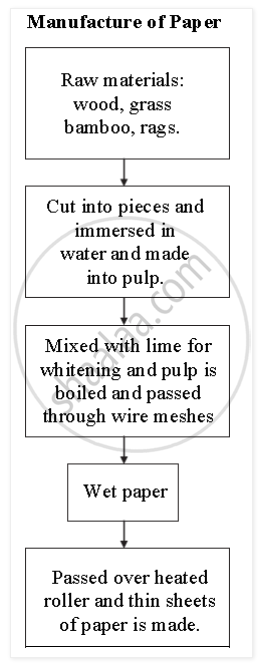
Transfer the information into a paragraph:
Read the following web diagram to transform into a paragraph:

Read the following paragraph and transfer the information in the form of a tree diagram:
The United Nations was established at the end of the second world war to maintain international peace and security.
In the central system of the UN, there are 15 members of the Security Council. The Economic and Social Council has 54 members. The Secretariat of the United Nations is headed by Secretary-General.
The UN has several specialized agencies such as the World Health Organisation (WHO), the Food and Agricultural Organisation (FAO), the International Labour Organization (ILO), the United Nations Educational, Scientific and Cultural Organisation (UNESCO).
Verbal to Non-Verbal:
Read the following information and complete the following table below it:
Chandrayaan-2, India’s second mission to the Moon will, for the first time, unravel secrets around the Moon’s the South Pole. Chandrayaan-2 is a three-part spacecraft - an orbiter, a lander, and a rover. The lander is named Vikram after Vikram Sarabhai, the founder of the Indian space programme. The rover is named Pragyan, meaning ‘wisdom’.
Chandrayaan-2 was launched on 22 July atop ISRO’s GSLV Mk-III at 2:43 p.m. from the Satish Dhawan Space Centre at Sriharikota. Performing as expected, the rocket released Chandrayaan-2 in a highly elliptic orbit around Earth about 17 minutes later. In fact, it was released 6,000 km higher than planned. The solar arrays on Chandrayaan-2 deployed smoothly as the probe began its journey.
| Table | Information | |
| 1. | Name of the Mission | |
| 2. | Date of Launch | |
| 3. | Centre of Launch | |
| 4 | Name of the Rover | |
| 5. | Founder of Indian Space Programme |
Read the following information and complete the table given below. Give a suitable title:
|
Turtles and tortoises are closely related. They are both reptiles from the same family (Testudines or Chelonian). The main difference between the two is that turtle is the name given to water-dwellers and tortoise is the name given to land-dwellers. They are easily identified by the presence of a shell, from which their head and limbs protrude. Turtles are found in Africa and America. Its shell is lighter and more streamlined than that of a tortoise. To enable swimming, it has webbed feet with long claws. Turtles are omnivores, eating both vegetation and meat. Their lifespan is shorter than that of the tortoise with an average of 20-40 years and a maximum of 86 years. Tortoises are found mainly in Asia and Africa, but also in America. It has a rounder, bumpier, heavier shell than a turtle. Its bent legs are short and sturdy. Tortoises are usually herbivores, but some eat meat, their lifespan is longer than that of the turtle with an average of 80-150 years and a maximum of 188 years. |
| FEATURES | TURTLES | TORTOISE |
| (i) Habitat | ||
| (ii) Places found in | ||
| (iii) Shell | ||
| (iv) Lifespan |
Non-Verbal to Verbal
Transfer the given information in the form of a paragraph.
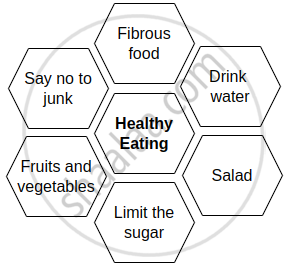
A survey was conducted in the National Capital in over twenty schools about 40 different activities that interest the children in the age group of 13 years to 15 years. Write a paragraph in not more than 120 words, analyzing the following information.

(A1) Verbal to Non-Verbal:
Read the following information and complete the flowchart for the same, and give a suitable title.
|
Sugar beet grows through the summer and is harvested in autumn and winter. When it arrives on site, the sugar beet is washed. The sugar beet is sliced into thin strips called cossettes.‘These thin strips are mixed with hot water to extract the sugar and a lime solution is added to the raw juice to remove any impurities. |
