Advertisements
Advertisements
प्रश्न
Observe the following web diagram carefully and convert it into a paragraph.

Advertisements
उत्तर
Problems faced by birds
Due to the loss of habitat, prey and heavy hunting for meats, some of the Indian birds are on the verge of extinction. The life of birds is no more a bed of roses for they face various problems during their existence on the earth. Poaching and massive hunting took these beautiful species birds into the category of critically endangered birds of India. Their natural habitat - forests - are being cleared away to provide for human settlements, thus encroaching upon their space. Great Indian bustard, Indian Vulture, Himalayan quail, and Siberian Crane are few species of birds who are facing critical problems of extinction. Many birds are caught and caged and this prevents their breeding in natural circumstances. Further, due to the shrinking of water bodies, birds are almost dying for want of water and food. Deforestation is another major offender of birds and a threat to their existence. The exciting and fun-filled kite flying provides children and often adults with much joy and thrill, but does one realize the injuries inflicted on birds when they come in contact with the manga. A study by the International Crane Foundation said the last confirmed sighting of Siberian cranes in India was in 2002. Another report states that in 1974 close to 75 birds wintered in Bharatpur which declined to a single pair in 1992. In more recent times, the setting up of mobile towers are causing much harm to the birds by the radiation.
APPEARS IN
संबंधित प्रश्न

The chart below shows information on the economics of the Annual
Sports Meet. Study the chart carefully.
| The Economics of the Annual Sports Meet |
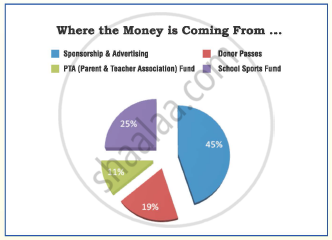
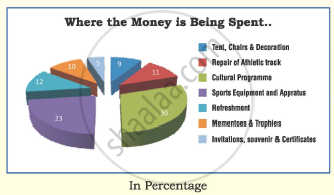
The total cost estimated of the Meet will be~ 11, 00, 000/-
No of athletes : 1250 (750 Girls+ 500 Boys; Category wise: sub-junior: 350, junior: 500 and senior: 400)
Staff on Duty : Teachers: 95 (35 men + 60 women), Support Staff 40 (21 men + 19 women), Staff on Parking and Security duty : 25 (20 men+ 5 women)
No of events : 100 ( 70 Track & Field events and 30 Jumps and Throws)
Medals : 100 Gold, 100Silver& 100Bronze
Best Athlete Trophies : Boys: 3, Girls: 3
Best House Trophies : 4( 1 for each category and 1 over all)
Suppose you are the Prin cipal of the school. Taking information from the chart, prepare an oral presentation for the Management Committee of the school. Use as many expressions of comparison as you can. You have been given some examples.
Extend the given extract by adding an imaginary paragraph of your own (about 120 words)
A couple of days later, I was walking around the camp, around the barracks, near the barbed-wire fence where the guards could not easily see. I was alone.
On the other side of the fence, I spotted someone: a little girl with light, almost luminous curls. She was half-hidden behind a birch tree.
I glanced around to make sure no one saw me. I called to her softly in German. 'Do you have something to eat?'
She didn't understand.
I inched closer to the fence and repeated the question in polish. She stepped forward. I was thin and gaunt, with rags wrapped around my feet, but the girl looked unafraid. In her eyes, I saw life.
She pulled an apple from her woollen jacket and threw it over the fence.
I grabbed the fruit and, as I started to run away, I heard her say faintly, 'I'II see you tomorrow."
Do anyone of the following activities.
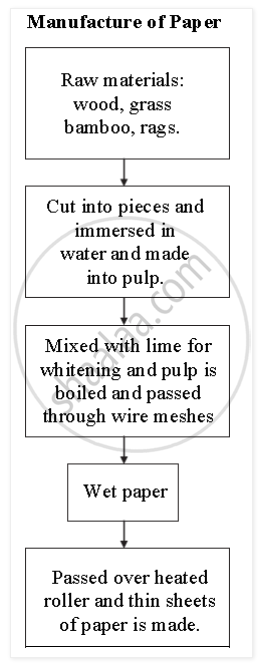
Transfer the given information into a paragraph.
Read the following paragraph and transfer the information in the form of a tree diagram:
|
The United Nations was established at the end of the second world war to maintain international peace and security. The UN has several specialized agencies such as the World Health Organisation (WHO), the Food and Agricultural Organisation (FAO), the International Labour Organization (ILO), the United Nations Educational, Scientific and Cultural Organisation (UNESCO). |
Verbal to Non-verbal:
Prepare a fact file using the following points:
Location, Modes of transport, Best time to visit, Accommodation, Places to visit Uniqueness
Ooty or Udhagamandalam’ is a hill station in Tamil Nadu. The queen of the blue mountains sits in the central region of the Nilgiri Range at 7,400 feet, 292 km south west of Bengaluru. The botanical garden, The Ooty Lake, Holy Trinity Church are the places which add to the beauty of Ooty. Wenlock downs is one of the most popular picnic spots in Ooty. Ooty’s hotels range from swanky to budget places. Hotel Surya, Nilgiri Hotel, Khims are some renowned hotels. It is best to visit the place during off season, i.e. March to May to avoid large crowd. Coimbatore is the nearest airport and from there cabs are available to Ooty. From Coimbatore to Udhagamandalam station you may travel by rail or meter gauge. For those taking the road NH 17 Bandipur via Maddur and Mysore will be convenient. From Bandlpur take the route to Mudumalai reserve to Ooty via Gudalur. Ooty is well known for its handmade chocolates, aromatic oils, spices and of course tea.
Read the following information and complete the table given below. Give a suitable title:
|
Turtles and tortoises are closely related. They are both reptiles from the same family (Testudines or Chelonian). The main difference between the two is that turtle is the name given to water-dwellers and tortoise is the name given to land-dwellers. They are easily identified by the presence of a shell, from which their head and limbs protrude. Turtles are found in Africa and America. Its shell is lighter and more streamlined than that of a tortoise. To enable swimming, it has webbed feet with long claws. Turtles are omnivores, eating both vegetation and meat. Their lifespan is shorter than that of the tortoise with an average of 20-40 years and a maximum of 86 years. Tortoises are found mainly in Asia and Africa, but also in America. It has a rounder, bumpier, heavier shell than a turtle. Its bent legs are short and sturdy. Tortoises are usually herbivores, but some eat meat, their lifespan is longer than that of the turtle with an average of 80-150 years and a maximum of 188 years. |
| FEATURES | TURTLES | TORTOISE |
| (i) Habitat | ||
| (ii) Places found in | ||
| (iii) Shell | ||
| (iv) Lifespan |
Transfer the given information in the form of a paragraph.
THE WATER CYCLE PROCESS

Verbal to Non - Verbal
Read the following information and write it into Do's and Don'ts. Give a suitable title for it:
Outside "The Central Library" there is a board displaying some rules and regulations for the members.
They are as follows:
- You should enter your name and registered number in the register, before entering in the library.
- You should pay your monthly/annual membership on time.
- You are not allowed to write anything in the book/magazine you have taken.
- You should not take any book or magazine out of the library without prior permission and registration.
- You should maintain pin-drop silence in the library.
- You are not allowed to eat, drink, chat or smoke inside the library.
- You should return the books or magazines you have taken on time.
- You should not disturb other members and the librarian when you are in the library.
Verbal to Non-verbal:
Read the following information and complete the given table below. Suggest a suitable title to it:
|
Chandrayaan-1 was India's first mission to the moon. It launched on Oct. 22, 2008 from the Satish Dhawan Space Centre in Sriharikota, India. Its scientific goals are to study the chemical, mineralogical and photogeological mapping of the moon. In addition to find out water on the moon. Then to perform high resolution remote sensing of the moon’s surface. The Chandrayaan-2 mission was successfully launched on 22nd July, 2019 from Satish Dhawan Space Centre, Sriharikota. The primary objectives were to demonstrate the ability to soft land and operate a robotic rover on the lunar surface. The mission was arranged to study the lunar topography, mineralogy, elemental abundance and the lunar ecosphere, conduct a detailed search for water and ice in polar region. Chandrayaan 2’s objectives are to find Chandrayaan-1 as reported by the ISRO. The mission targeted the “South Polar region” of the moon which was completely unexplored. The mission focused on the extensive mapping of the lunar surface for studying variations in its composition and tracing the moon's origin and evolution. Chandrayaan-3 launched to the moon on July 14, 2023 from the Satish Dhawan Space Centre in Sriharikota, India, the medium-life launch vehicle Mark-III (LVM3) rocket. The three main objectives of Chandrayaan-3 are to land safely on the surface, to demonstrate rover operations and to perform scientific experiments on site, according to the official website. |
Title: __________________
| Name of Chandrayaan | Date of launching | Objectives of Mission |
| Chandrayaan-1 | ||
| Chandrayaan-2 | ||
| Chandrayaan-3 |
