Advertisements
Advertisements
प्रश्न
Read the following information and complete the table given below. Give a suitable title:
|
Turtles and tortoises are closely related. They are both reptiles from the same family (Testudines or Chelonian). The main difference between the two is that turtle is the name given to water-dwellers and tortoise is the name given to land-dwellers. They are easily identified by the presence of a shell, from which their head and limbs protrude. Turtles are found in Africa and America. Its shell is lighter and more streamlined than that of a tortoise. To enable swimming, it has webbed feet with long claws. Turtles are omnivores, eating both vegetation and meat. Their lifespan is shorter than that of the tortoise with an average of 20-40 years and a maximum of 86 years. Tortoises are found mainly in Asia and Africa, but also in America. It has a rounder, bumpier, heavier shell than a turtle. Its bent legs are short and sturdy. Tortoises are usually herbivores, but some eat meat, their lifespan is longer than that of the turtle with an average of 80-150 years and a maximum of 188 years. |
| FEATURES | TURTLES | TORTOISE |
| (i) Habitat | ||
| (ii) Places found in | ||
| (iii) Shell | ||
| (iv) Lifespan |
Advertisements
उत्तर
Title - Turtles and tortoises
| FEATURES | TURTLES | TORTOISE |
| (i) Habitat | Water dwellers. | Land dwellers |
| (ii) Places found in | Africa and America. | Africa and Asia, also in America. |
| (iii) Shell | Lighter and more streamlined shell. | Rounder, bumpier and heavier shell. |
| (iv) Lifespan | 20-40 years. Maximum 86 years. | 80-150 years. Maximum 188 years. |
APPEARS IN
संबंधित प्रश्न
Study carefully the following pie-chart about the Income Sources of a City Budget and write a short continuing paragraph based on it in about 120 words :

|
Courses
|
Intake capacity
|
Vacant seats
|
|
Engineering:
|
||
|
Degree
|
1, 55, 102
|
42, 497
|
|
Diploma
|
1, 65, 413
|
55, 107
|
|
Post - graduation
|
13, 651
|
1, 810
|
|
Pharmacy:
|
||
|
Degree
|
9, 712
|
924
|
|
Diploma
|
12, 959
|
1, 771
|
|
Post - graduation
|
5, 296
|
3, 506
|
Information Transfer Non-Verbal to Verbal :
Observe the following web-chart carefully and write two short paragraphs of ‘Advantages of watching Television’ with the help of the points given.
Read the following information and prepare a pie diagram for the same.
Annual Water Usage in Maharashtra
Water is life. It is a universal solvent and an important resource. The annual usage of water differs in various sectors of Maharashtra. The major occupation of Maharashtra being agriculture, the maximum amount of available water is used for irrigation that is 86%. The distant following place 7% is contributed by domestic sector including drinking, washing, cooking, etc. There is a close competition of other sectors which is not far away with 6% usage of water. One of the key factors which plays an important role in the development of a nation is industrial sector. The consumption of water by industrial sector is very negligible which is 1%. We know energy sector plays a vital role in the development of a nation.
In this sector, the use of water is almost nil. If we try to observe its place in the chart we do realise that it holds 0% usage and is yet to open its account.
Information Transfer (Non-verbal to Verbal):
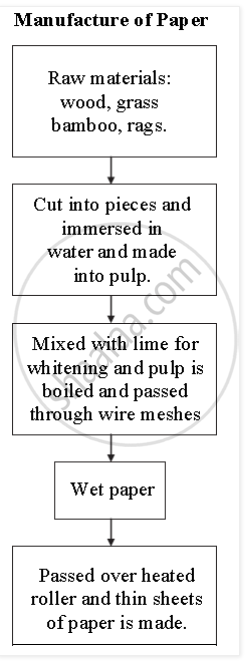
Look at the table given below and write a short paragraph based on it in about 120 words :
The following table shows irregular rainfall causing low groundwater level in Nashik district, and Talukawise its worst hit villages.
| Drop in water level | Talukas | |||
| 0 to 1 meter | Nashik, Igatpuri, Niphad, Chandwad, Kalwan, Deola, Tryambakeshwar | |||
| 1 to 2 meters | Sinnar, Yeola, Nandgaon, Satana, Malegaon | |||
| Worst Hit Areas | ||||
| Talukas | Situation over coming months | |||
| Oct.-Dec. | Jan-Mar. | Apr.-June | Total | |
| Igatpuri | 01 | 06 | 49 | 56 |
| Malegaon | 31 | 54 | 37 | 122 |
| Nandgaon | 08 | 17 | 37 | 62 |
| Niphad | 01 | 04 | 47 | 52 |
| Source: Times of India, Nashik Times, City Edn. Date: Oct. 18, 2018 |
||||
Read the following paragraph and transfer the information in the form of a tree diagram:
|
The United Nations was established at the end of the second world war to maintain international peace and security. The UN has several specialized agencies such as the World Health Organisation (WHO), the Food and Agricultural Organisation (FAO), the International Labour Organization (ILO), the United Nations Educational, Scientific and Cultural Organisation (UNESCO). |
Verbal to Non-verbal:
Read the following statements and prepare a chart of ‘Dos’ and ‘Don'ts’. Suggest a suitable title for it.
Nature is abode for all of us. It provides us with all our basic needs. However, we must take care of the following things so that our mother nature is not harmed.
- We must plant more trees.
- We should not cut trees.
- We must keep our area neat and clean.
- We should never discharge garbage without proper management.
- We should not pollute air and water.
- We should not use plastic bags.
- We should not hunt birds or animals.
- We should use more of public transport.
- We should spread awareness about the importance of maintaining balance in nature.
A survey was conducted in the National Capital in over twenty schools about 40 different activities that interest the children in the age group of 13 years to 15 years. Write a paragraph in not more than 120 words, analyzing the following information.

Non-verbal to verbal:
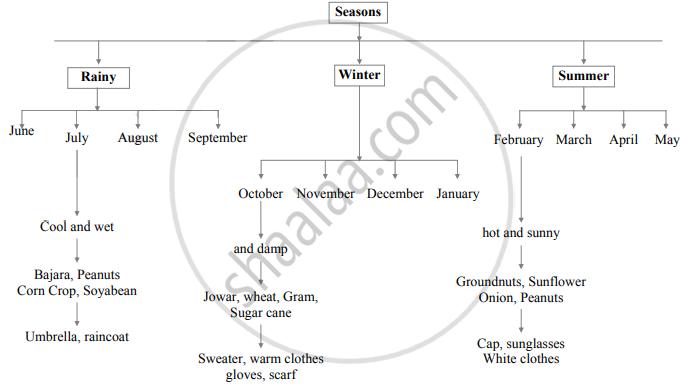
Read the information given in the following tree-diagram and write two short paragraphs based on it. Give a suitable title to your write up: