Advertisements
Advertisements
Question
Read the following information and complete the table given below. Give a suitable title:
|
Turtles and tortoises are closely related. They are both reptiles from the same family (Testudines or Chelonian). The main difference between the two is that turtle is the name given to water-dwellers and tortoise is the name given to land-dwellers. They are easily identified by the presence of a shell, from which their head and limbs protrude. Turtles are found in Africa and America. Its shell is lighter and more streamlined than that of a tortoise. To enable swimming, it has webbed feet with long claws. Turtles are omnivores, eating both vegetation and meat. Their lifespan is shorter than that of the tortoise with an average of 20-40 years and a maximum of 86 years. Tortoises are found mainly in Asia and Africa, but also in America. It has a rounder, bumpier, heavier shell than a turtle. Its bent legs are short and sturdy. Tortoises are usually herbivores, but some eat meat, their lifespan is longer than that of the turtle with an average of 80-150 years and a maximum of 188 years. |
| FEATURES | TURTLES | TORTOISE |
| (i) Habitat | ||
| (ii) Places found in | ||
| (iii) Shell | ||
| (iv) Lifespan |
Advertisements
Solution
Title - Turtles and tortoises
| FEATURES | TURTLES | TORTOISE |
| (i) Habitat | Water dwellers. | Land dwellers |
| (ii) Places found in | Africa and America. | Africa and Asia, also in America. |
| (iii) Shell | Lighter and more streamlined shell. | Rounder, bumpier and heavier shell. |
| (iv) Lifespan | 20-40 years. Maximum 86 years. | 80-150 years. Maximum 188 years. |
APPEARS IN
RELATED QUESTIONS
A1.Books have the power to inspire and do many more things. Observe the web diagram and convert the information into a paragraph. Add a few more points to the given information:

A2. Read the given information and fill the table provided:
Acclaimed in Indian classics as the Kalpavriksha, the all giving tree the coconut palm grows in several states in India. The coconut palm is member of the plant family Arecaceae popularly known as palm family. It flourishes on sandy soils requiring high humidity abundant sunlight and high rainfall for optimal growth. All parts of the palm are used in some way or another in the daily life of the people. Coconut water provides a refreshing and nutritious drink. The firm kernel that line the inside is high in calories and the white milk extracted from it is used in many different ways. Oil extracted from dried mature coconuts is used as cooking oil. The leaves are braided to make thatched roof and mats. The mid ribs of the leaves are dried and tied together to make brooms. The coconut shell and husk are good sources of efficient fuel. During religious ceremonies married women are often presented with a coconut along with a few grains of rice as a symbol of fertility and prosperity.
| Name : | |
| Scientific name : | |
| Place where grown : | |
| Climate required : | |
| Uses : | |
| (a) Liquid | |
| (b) Kernel | |
| (c) Leaves | |
| (d) Shell | |
| Symbolises : |
|
Courses
|
Intake capacity
|
Vacant seats
|
|
Engineering:
|
||
|
Degree
|
1, 55, 102
|
42, 497
|
|
Diploma
|
1, 65, 413
|
55, 107
|
|
Post - graduation
|
13, 651
|
1, 810
|
|
Pharmacy:
|
||
|
Degree
|
9, 712
|
924
|
|
Diploma
|
12, 959
|
1, 771
|
|
Post - graduation
|
5, 296
|
3, 506
|
A survey was conducted among the teachers of New Hope High School to find out whether Class X students should be allowed to use mobile phones in the campus. The results of the survey are shown in the pie-chart below.
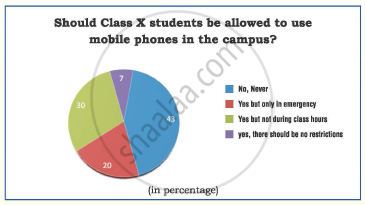
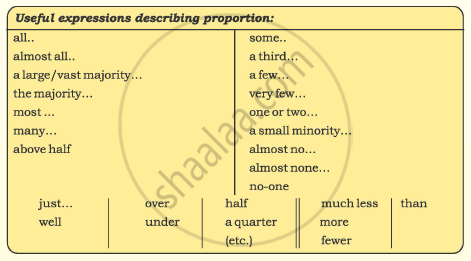
Look at the pie chart and the useful expressions above. Fill in the gaps in the following summary of results.
As can be seen from the above pie-chart, nearly a__________ of the teachers felt that Class X students must not be allowed to use mobile phones in the school campus. However, nearly one____________ believed
the phones should be permitted but not during class hours. About __________were of the opinion that the students may be allowed to use these phones only in times of emergency while a very__________ did not favour any restrictions on their use in the campus.
Information Transfer (Non-verbal to Verbal):
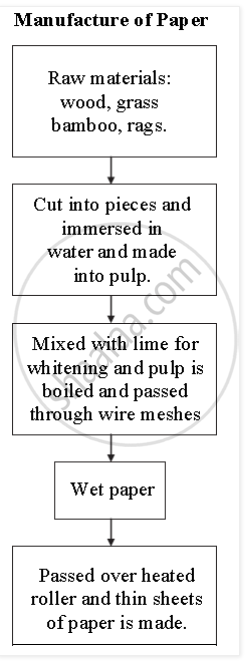
Study the concept chart from the self-help magazine section of a monthly publication.

Write a paragraph in not more than 120 words, analysing the listed responses to the situation when one faces setbacks.
Transfer the information into a paragraph:
Observe the chart and write a paragraph on it. Suggest a suitable title:

Verbal to Non-verbal
Read the information from the given paragraph and write it into a tree diagram.
| There are different kinds of musical instruments. They are divided into three main classes according to the way that they are played. Some instruments are played by blowing air into them. These are called wind instruments. Some of these are said to be of the wood wind family. Examples of woodwind instruments are the flute, the clarinet and the horn. There are also various other wind instruments such as the mouth organ and the bagpipes. Some instruments are played by banging or striking them. Instruments like this are called percussion instruments. The last big group of musical instruments have strings. There are two kinds of stringed instruments. Examples are the harp and the guitar, the violin and the cello. |
Gurmeet Kaur is an aspiring candidate for a public- funded engineering college in the suburbs. She belongs to a nearby village, has minimal technological skills and exposure, has the required cut-off percentage and is looking for a complete or partial scholarship.
Write a paragraph in about 100-120 words analysing her SWOT notes to support your stand on whether she should /not join the college.
|
STRENGTH
|
WEAKNESS
|
|
OPPORTUNITIES
|
THREAT
|
Verbal to Non - Verbal
Read the following information and write it into Do's and Don'ts. Give a suitable title for it:
Outside "The Central Library" there is a board displaying some rules and regulations for the members.
They are as follows:
- You should enter your name and registered number in the register, before entering in the library.
- You should pay your monthly/annual membership on time.
- You are not allowed to write anything in the book/magazine you have taken.
- You should not take any book or magazine out of the library without prior permission and registration.
- You should maintain pin-drop silence in the library.
- You are not allowed to eat, drink, chat or smoke inside the library.
- You should return the books or magazines you have taken on time.
- You should not disturb other members and the librarian when you are in the library.
Draw a table of comparison (tabular form) between Amir and Anita that includes the information given below. Give a suitable title:
|
Amir and Anita are good neighbours. They are cooperative and have happy families. Amir, an 18-year young chap is in std. 12 and goes to a famous college in the city. Anita, a 16-year charming girl will appear for her 10th class Board Exam this year. Amir’s father a big businessman in the city and Anita’s father is a government officer. Amir’s mother, a housewife, helps his father in their family business also. Anita’s mother is a doctor and has her own clinic. Amir is a good sportsman who likes to play outdoor games on the contrary Anita likes to remain indoors and enjoys indoor games. Amir is strong and dynamic. Though strong Anita is sensitive also. Photography and bird-watching are my interests of Amir. Anita spends her time in her hobbies of singing and painting. Amir after his 12th exam wants to pursue his career in wild-life photography. Anita would like to join Arts stream after her Board Exams. |
| Amir | Anita | |
| (1) Age | ||
| (2) Class | ||
| (3) Father’s occupation | ||
| (4) Mother's occupation | ||
| (5) His/Her qualities | ||
| (6) His/Her hobbies/interest | ||
| (7) His/Her ambitions/future plans |
