Advertisements
Advertisements
प्रश्न
Non-verbal to Verbal:
Transfer the information into a paragraph:
Observe the tree diagram of types of disease and write a paragraph on it. Suggest a suitable title.

Advertisements
उत्तर
Types of Diseases
Diseases are broadly classified into two types, viz. communicable diseases and non – communicable or lifestyle diseases. Communicable diseases spread through various mediums of infection. This includes air (e.g. influenza), food (e.g. dysentery), and water (e.g. typhoid). On the other hand, the major causes of non – communicable or lifestyle diseases are either faulty eating habits or faulty living habits. Faulty eating habits generally result in diseases like obesity and diabetes, while faulty living habits are associated with stress and hypertension. Public awareness regarding different types of infection and their causes is essential to prevent and control the spread of diseases in society.
APPEARS IN
संबंधित प्रश्न

Read the following paragraph about ‘The causes of pollution and the possible solutions’ and tabulate the same information.
|
Pollution is the contamination into the natural environment that causes adverse change. Pollution levels are increasing day by day. There are various reasons for it. Air pollution is caused chiefly by industrial pollutants and by increased levels of RSPM due to higher flow of vehicular traffic. Water pollution is caused to a large extent by industrial effluents and the immersion of POP idols. Sound pollution levels have increased due to blaring loudspeakers during festival time and increased volume of traffic. In order to solve the problems of air pollution, the chief method seems to be tree plantation. More and more citizens and NGO’s should take up green causes with civic authorities. We need to protect our forest and conserve our mangroves. In order to solve the problem of water pollution, we need to develop effective waste management techniques. Also eco-friendly idols should be used during festival time. An awareness in general populace is very necessary to solve the problem of sound pollution. Strict enforcement of decibel levels during occasions and festival time by the police is a must. |
Use the following table for your answer.
| Pollution | Caused by | Solution |
Information Transfer: Verbal to Non-verbal
Read the following paragraph and prepare a tree-digram using the information given in the paragraph.
Quite often it is your family and friends who are the only source of solace in times of tension and confusion. Whether it is the time of exams, results and admission, school issues or a misunderstanding with a dear friend, you will notice
that your family members might want you to share your worries with them. One great advantage about sharing problems with your family members is that they actually care about your happiness. Your problem will not go beyond the people whom you are confiding in and will ensure that you are relieved of the stress and worries besides being the source of practical solutions for your problems.The relief it brings is immense not just for you but also for them as they would be the happiest to see you relaxed and calm. This is what makes family bonding
special. Situations such as these can bring you closer to your siblings and make you realise that such oneness is unique and special.
Read the following information and prepare a pie diagram for the same.
Annual Water Usage in Maharashtra
Water is life. It is a universal solvent and an important resource. The annual usage of water differs in various sectors of Maharashtra. The major occupation of Maharashtra being agriculture, the maximum amount of available water is used for irrigation that is 86%. The distant following place 7% is contributed by domestic sector including drinking, washing, cooking, etc. There is a close competition of other sectors which is not far away with 6% usage of water. One of the key factors which plays an important role in the development of a nation is industrial sector. The consumption of water by industrial sector is very negligible which is 1%. We know energy sector plays a vital role in the development of a nation.
In this sector, the use of water is almost nil. If we try to observe its place in the chart we do realise that it holds 0% usage and is yet to open its account.
Observe the following table and transfer the information into a paragraph:
Statewise Distribution of Urban and Rural Population in India:
| States | Population in Millions | |
| Rural | Urban | |
| Maharashtra | 560 | 410 |
| Gujarat | 320 | 190 |
| Madhya Pradesh | 440 | 160 |
| Chhattisgarh | 170 | 40 |
| Andhra Pradesh | 550 | 210 |
| Karnataka | 350 | 180 |
Information Transfer (Non-verbal to Verbal):
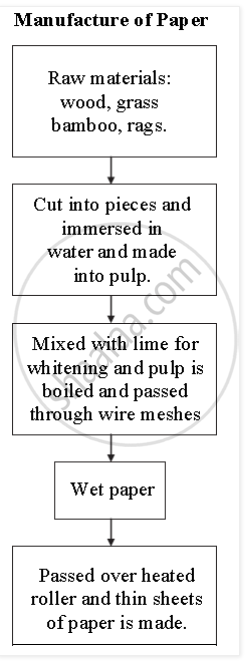
Views :
Develop a paragraph on the view by using the points given below :
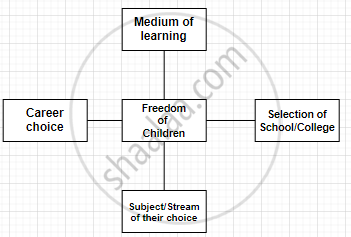
Write two short paragraphs on ‘Village life’ by using the points given in the following web diagram:

Non-verbal to verbal:
Transfer the information into a paragraph.
Observe the web diagram and write a paragraph on it. Suggest a suitable title.

Given below is a web diagram containing information about the different means of electronic devices of entertainment-some audio, some visual and some audio-visual.
Write a short paragraph based on information from the web. Give a suitable title to it.

